Among these DIY home security systems with cameras, I would choose the Ring Alarm 14-Piece Kit as the best overall starting point for buyers who want a broad alarm kit and camera options within a familiar smart-home ecosystem. The SimpliSafe 9-Piece System stands out for a simpler alarm-and-camera bundle, while the ANNKE 3K Lite suits households that value wired cameras and recorded footage over quick installation. The main tradeoff is between easy wireless setup and the steady power and recording capacity of wired systems, with solar kits offering another route that depends on camera placement and sunlight. Storage choices, camera coverage, and whether you want sensors as well as video can matter as much as resolution. Read on for the full breakdown and guidance on matching a system to your home.

Get privacy and security gear delivered free with Prime
- Fast, free delivery on millions of items
- Prime Video, Amazon Music and more included
- Member-only deals all year
Key Takeaways
- Alarm kits and camera kits solve different problems: Ring and SimpliSafe include entry sensors alongside security features, while most solar and wired kits focus on video coverage.
- The Ring 14-piece kit leads for a broader DIY setup: its larger alarm bundle gives buyers more room to cover doors and windows than camera-only kits, though camera needs should be checked separately.
- SimpliSafe’s 9-piece bundle adds a camera to an alarm-first system: it makes more sense for buyers wanting a more direct alarm-and-video package than the 8-piece kit.
- Wired recording favors consistent coverage over easy installation: ANNKE includes eight cameras and a 1TB HDD, while smaller wired kits trade camera count or storage capacity for a less extensive setup.
- Solar and local-storage options reduce dependence on wiring or subscriptions: several four-camera kits offer solar power or local storage, but placement, network coverage, and recording limits still shape their usefulness.




More Details on Our Top Picks
Ring Alarm 14-Piece Kit (Newest Model) Wireless Smart Home Security System
I’d choose the Ring Alarm 14-Piece Kit when the priority is covering doors and rooms with a coordinated alarm system, rather than putting cameras at every angle. Its sensors, motion detectors, and base station are aimed at 2–4 bedroom homes, and the app and Alexa compatibility make daily arming and status checks straightforward. Cellular backup and a rechargeable battery backup add resilience if home internet or power is interrupted. Compared with the SimpliSafe 8 Piece Wireless Home Security System, Ring’s listed kit is sized for a larger home and offers several connection types, including Z-Wave. The key limitation for this camera-focused roundup is that the kit description does not list an included camera. Professional monitoring and some app or voice features also depend on a subscription, so I’d pick it for alarm coverage that can be expanded—not as a ready-made camera bundle.
Pros:- 14-piece kit is designed to cover multiple rooms and entry points.
- App control and Alexa compatibility simplify routine arming and status checks.
- Ethernet, Wi-Fi, Z-Wave, Bluetooth, and cellular backup provide multiple connection options.
- Rechargeable 24-hour backup helps keep the base station running during a power interruption.
Cons:- The listed kit does not include a camera, so camera coverage requires a separate purchase.
- Professional monitoring and some voice or app features require a subscription.
- Permit and false-alarm fees may apply depending on local rules and use.
Best for: Owners of two- to four-bedroom homes who want a DIY sensor-and-alarm foundation, Alexa control, and the option to add compatible Ring cameras.
Not ideal for: Buyers who want cameras included in the box or want professional monitoring and advanced features without a subscription.
- Kit size:14 pieces
- Intended home size:2–4 bedrooms
- Connectivity:Ethernet, Wi-Fi, Z-Wave, Bluetooth, cellular backup
- Security modes:Disarmed, Away, Home
- Base station power:100–240V, 50/60Hz
- Backup battery:Rechargeable, 24-hour backup
- Base station dimensions:6.65 × 6.65 × 1.46 inches
- Operating conditions:-4°F to 104°F (-20°C to 40°C)
Our verdict“Choose Ring if you want a scalable alarm system for a multi-bedroom home and are comfortable adding cameras and subscription features separately.”
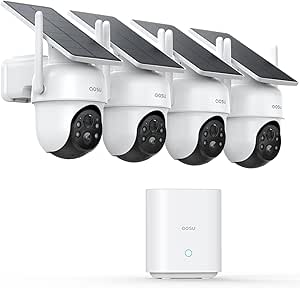
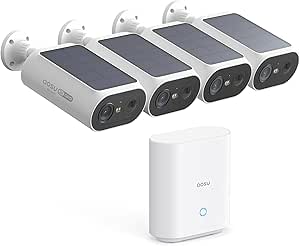
Aosu D1 Classic 4-Cam Kit Wireless Outdoor Security Cameras with Solar Power
The Aosu D1 Classic 4-Cam Kit is the strongest fit here for buyers who want outdoor cameras with local storage and no required subscription. Four solar-powered cameras, 2K video, color night vision, and 360-degree pan-and-tilt coverage can reduce blind spots without running power cables to each position. Its 32GB aosuBase storage also gives the system a local recording option, unlike kits that depend on a cloud plan for stored footage. Compared with the 2K Security Camera System, 5GHz & 2.4GHz WiFi Solar Wireless Cameras, Aosu specifies its local storage capacity and does not list an SD card as an extra purchase. The tradeoff is that these are outdoor cameras, not a door-and-window alarm system, and solar charging works best where panels get adequate sunlight. I’d favor Aosu for camera-led perimeter monitoring, not full indoor alarm coverage.
Pros:- Four wireless outdoor cameras simplify coverage across several sides of a home.
- 32GB local storage is included, with no subscription required for the described storage setup.
- 2K video and full-color night vision support clearer identification after dark.
- 360-degree PTZ coverage and auto motion tracking help follow activity across a camera’s view.
Cons:- Solar charging depends on enough sunlight at each camera location.
- Outdoor-only design does not provide indoor monitoring or a complete sensor-based alarm system.
- Wi-Fi connectivity is required, and the product description does not specify cellular backup.
Best for: Homeowners seeking four outdoor cameras, local recording, and solar charging without a required cloud subscription.
Not ideal for: Buyers who need indoor cameras, entry sensors, or dependable solar charging in heavily shaded camera locations.
- Number of cameras:4
- Resolution:3MP (2K)
- Storage:32GB aosuBase local storage
- Power source:Solar powered
- Connectivity:Wi-Fi
- Night vision:Full-color
- Field of view:360 degrees
- Camera type:PTZ (pan-tilt-zoom)
- Audio:Two-way audio
Our verdict“Pick Aosu for four solar outdoor cameras with included local storage, but choose an alarm-focused kit if you need entry sensors and indoor protection.”
SimpliSafe 8 Piece Wireless Home Security System – No Contract, Compatible with Alexa and Google Assistant
For a buyer who wants an approachable DIY alarm before building out a camera setup, the SimpliSafe 8 Piece Wireless Home Security System has a practical mix of entry sensors, motion detection, a panic button, and a smash-safe keypad. Wireless setup avoids the cabling burden of the ANNKE 3K Lite Wired Security Camera System, making SimpliSafe easier to place in a home where drilling and routing video lines are unwelcome. It also works with Alexa and Google Assistant and offers optional professional monitoring. The camera-related caveat is substantial: the supplied product details list 720p video capture but do not identify an included camera, so I would not treat this as a complete camera kit. Full alarm and dispatch functions require a monitoring plan, and its motion sensors are not intended for pets over 60 pounds. This is a simpler alarm foundation than a surveillance-first system.
Pros:- Wireless components support setup without running camera or sensor wiring.
- Includes entry sensors, motion detectors, a panic button, and a smash-safe keypad.
- Works with Alexa and Google Assistant for smart-home control.
- Optional professional monitoring and stated battery and network backup add alarm-system flexibility.
Cons:- The product details do not specify an included camera, limiting its value as a camera bundle.
- Full alarm and dispatch features require a professional monitoring plan.
- Motion sensors are designed for human detection, not pets over 60 pounds.
Best for: Renters and first-time DIY security buyers who want wireless entry sensors, a keypad, and optional monitoring, then plan to add camera coverage as needed.
Not ideal for: Shoppers seeking a camera-rich package in the box, or households with pets over 60 pounds that may trigger motion sensors.
- Kit size:8 pieces
- Power source:Battery powered
- Connectivity:Wireless
- Video capture resolution:720p
- Compatible devices:Smartphone
- Audible alarm:95 dB
- Maximum range:3,048 meters
- Battery cell type:Alkaline
Our verdict“Choose SimpliSafe for a straightforward wireless alarm starter kit, but look to a camera-focused system if included video coverage is your main need.”
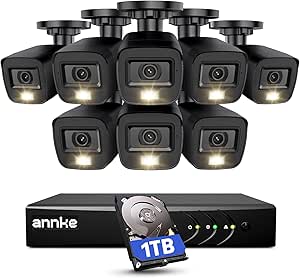
ANNKE 3K Lite Wired Security Camera System Outdoor, 8 Cameras, 1TB HDD
The ANNKE 3K Lite takes the most installation-heavy route in this group, but it brings a clear benefit: eight cameras and continuous DVR recording to cover a large property. Its 1TB hard drive records around the clock, while human and vehicle detection can make alerts more relevant than basic motion notices. Color night vision and a stated 100-foot night-vision range help extend monitoring beyond daylight. Compared with the wireless Aosu D1 Classic 4-Cam Kit, ANNKE trades fast, flexible placement for a wired recorder-based setup and twice the camera count. That may suit a home where cables can be routed once and cameras can stay in fixed positions. It is a poorer match for renters or anyone who wants quick installation: the cameras are wired, the system is more involved to configure, and the listed setup tops out at eight cameras.
Pros:- Eight cameras provide broad fixed coverage across a property.
- 1TB HDD supports continuous 24/7 recording, with capacity expandable up to 10TB.
- Human and vehicle detection can make alerts more targeted than generic motion detection.
- Weatherproof cameras and color night vision support outdoor monitoring after dark.
Cons:- Wired installation takes more planning and work than the solar wireless camera kits.
- DVR setup and configuration may be demanding for less technical users.
- The listed system supports up to eight cameras, limiting future expansion beyond that count.
Best for: Owners of larger properties who can route cables and want eight fixed outdoor cameras with continuous local recording.
Not ideal for: Renters, frequent movers, or DIY beginners who need wire-free installation and easy camera repositioning.
- Number of cameras:8
- Camera resolution:2MP
- Video capture resolution:1080p
- Night vision range:100 feet
- Hard drive:1TB HDD; supports up to 10TB
- Video input:BNC
- Viewing angle:82.2 degrees
- Recording frame rate:1080p at 15 fps
- Connectivity and power:Wired; corded electric
Our verdict“Choose ANNKE if you can run cables and value continuous recording across eight cameras more than quick, wire-free setup.”
2K Security Camera System, 5GHz & 2.4GHz WiFi Solar Wireless Cameras for Home Security, Wire-Free Installation, AI Detection, Two-Way Audio, Mobile Alerts, SD/Cloud Storage, Color Night Vision, 4 Packs
This four-camera kit suits buyers who want solar-powered outdoor cameras with dual-band Wi-Fi and flexible storage choices. The 2K image resolution, color night vision, human detection, and two-way audio bring useful everyday coverage: alerts can be more selective, and audio lets you speak through a camera rather than simply watch a clip. Pan-and-tilt control also helps adjust a view remotely. Compared with the Aosu D1 Classic 4-Cam Kit, this system lists both 2.4GHz and 5GHz Wi-Fi and offers SD-card or cloud storage, while Aosu specifies included 32GB local storage. Here, the SD card is not included, and cloud storage may involve a separate service, so the recording setup needs extra planning. Solar charging also depends on sunlight, and the stated 328-foot night-vision range is a product specification rather than a substitute for checking each camera’s actual placement and view.
Pros:- Four cameras provide multi-area outdoor coverage without running power cables.
- Supports both 2.4GHz and 5GHz Wi-Fi bands.
- 2K video, color night vision, and AI human detection support more useful monitoring.
- Two-way audio and pan-tilt control add remote interaction and adjustable framing.
Cons:- SD card is not included, so local recording requires an additional purchase.
- Solar charging performs best with adequate sunlight at each camera location.
- Cloud storage is listed as an option, but the product data does not specify plan terms.
Best for: Homeowners with compatible dual-band Wi-Fi who want four solar outdoor cameras, two-way audio, and a choice between SD-card and cloud recording.
Not ideal for: Buyers who want included local storage, prefer a subscription-free setup with storage capacity specified, or need dependable operation in shaded camera locations.
- Number of cameras:4
- Resolution:2K
- Wi-Fi bands:2.4GHz and 5GHz
- Power source:Solar and battery
- Night vision range:328 feet
- Storage options:SD card (not included) or cloud
- AI detection:Human detection
- Camera movement:Pan and tilt
- Audio:Two-way audio
Our verdict“Pick this kit if dual-band Wi-Fi and remote camera control matter most, but choose Aosu if you want specified local storage included.”
Soliom 5MP Wireless Outdoor Security Cameras 4-Cam Kit
The Soliom kit combines four solar-powered cameras with 5MP video and 360° auto motion tracking, making it a strong fit for buyers who want to watch several outdoor areas without running power cables to each camera. Its higher listed resolution gives it an edge over the 4MP 128GB solar kit when image detail is the priority, while encrypted local storage avoids a required subscription. The tradeoff is that its 32GB storage limit leaves less room for recordings than that rival’s 128GB, especially if motion events are frequent. Dual-band Wi-Fi adds setup flexibility, but initial router configuration may take more work than a simple plug-in system. Its IP65 rating also calls for caution in exposed locations with severe weather.
Pros:- Four solar-powered cameras reduce the need to route power cables to each location.
- 5MP video with magnifier zoom offers more listed image detail than the 4MP solar alternative.
- Encrypted 32GB local storage requires no subscription.
- 360° auto motion tracking can follow movement across a camera’s viewing area.
Cons:- 32GB of storage may fill quickly when cameras record frequent activity.
- IP65 protection may be a limitation in severe or highly exposed weather.
- Initial router configuration may require extra setup.
Best for: Homeowners who want four solar-powered outdoor views and prioritize higher listed resolution and subscription-free local recording.
Not ideal for: Households with frequent motion events or harsh outdoor exposure, since 32GB may fill quickly and the IP65 rating is less protective than IP66.
- Number of cameras:4
- Video resolution:5MP Ultra HD
- Night vision range:30 feet
- Storage:32GB encrypted local storage
- Power:Solar-powered, 5V, 1W
- Wi-Fi:Dual-band 2.4GHz and 5GHz
- Water resistance:IP65
- Mount:Wall mount
Our verdict“Choose Soliom for four solar outdoor cameras and higher listed resolution, but favor the 128GB solar kit if recording capacity matters more.”
4MP Wireless Outdoor Security Cameras with Solar Power, No Subscription, 128GB Local Storage, Color Night Vision, PTZ Auto Tracking, 5G & 2.4G WiFi, 4-Camera Kit
This four-camera kit is the more balanced solar choice for buyers who value recording capacity and seeing color after dark. Its 128GB encrypted local storage gives it substantially more headroom than the Soliom kit’s 32GB, while color night vision is specified up to 65 feet versus Soliom’s 30-foot night-vision range. The 4MP resolution is lower than Soliom’s 5MP, so the trade is longer stated night visibility and more local recording space for less listed detail. AI human detection and two-way audio add useful ways to filter alerts and communicate remotely. Setup is not fully hands-off: tracking must be activated in the app, and the wall-mounted cameras require drilling. Buyers who want a wired, continuous-recording arrangement may prefer the 512GB HDD system instead.
Pros:- 128GB encrypted local storage provides more recording capacity than the Soliom kit’s 32GB.
- Color night vision is specified up to 65 feet.
- Solar power and an 8000mAh battery reduce routine charging needs.
- AI detection, auto human tracking, and two-way audio support active monitoring.
Cons:- Auto-tracking requires manual activation in the app.
- Wall mounting requires drilling and installation work.
- The app may feel complex to buyers seeking a straightforward setup.
Best for: Homeowners seeking a four-camera solar setup with color night vision, substantial local storage, and no required monthly subscription.
Not ideal for: Buyers who want installation without drilling, a very simple app workflow, or the highest listed resolution among these solar kits.
- Number of cameras:4
- Resolution:4MP
- Night vision:Color, up to 65 feet
- Storage:128GB encrypted local storage
- Power:Solar-powered, 8000mAh battery
- Wi-Fi:Dual-band 2.4GHz and 5GHz
- Field of view:355 degrees
- Water resistance:IP66
- Additional features:AI detection, auto human tracking, two-way audio
Our verdict“Pick this kit over Soliom if larger local storage and longer-range color night vision matter more than a 5MP resolution.”
4CH Wired Security Camera System with 4 1080P Cameras and 512GB HDD
For buyers who value steady recording over wire-free placement, this system takes a different approach from the solar kits: four wired cameras feed a pre-installed 512GB HDD for 24/7 recording. That makes it a better match than Soliom or the 128GB solar kit for a fixed property where cameras can stay in place and keeping a longer local archive matters. Its 1080p resolution is lower than either solar competitor’s 4MP or 5MP, and the stated 12.5 fps is modest, so it is less suited to buyers prioritizing fine detail or smooth motion. Night vision reaches 100 feet, but the 82-degree viewing angle means each fixed camera covers less area than a pan-and-tilt model. Wiring also takes more installation effort, and remote access requires an internet connection.
Pros:- Pre-installed 512GB HDD supports local 24/7 recording.
- Four cameras provide coverage for multiple fixed indoor or outdoor locations.
- Night vision is specified up to 100 feet.
- Remote access and local backup are supported.
Cons:- Wired installation limits placement flexibility and takes more setup work.
- 1080p resolution is lower than the listed resolution of both solar camera kits.
- Remote access requires an internet connection.
Best for: Property owners who can route cables and want four fixed cameras recording continuously to a local hard drive.
Not ideal for: Renters or anyone needing flexible camera placement, solar power, higher resolution, or a wire-free installation.
- Number of cameras:4
- Video resolution:1080p
- Night vision range:100 feet
- Storage:512GB HDD
- Connectivity:Wired
- Viewing angle:82 degrees
- Frame rate:12.5 fps
- Power:Corded electric
Our verdict“Choose this system for fixed, continuous HDD recording if you can accept the wiring and lower resolution.”
Blink Outdoor 4 and Wired Doorbell 2K+ (Newest Model) – 2K HD Cameras and Hardwired Doorbell with Sync Module Core – Black
This bundle pairs five Outdoor 4 cameras with a hardwired doorbell, so it suits buyers who want to cover yard areas and the front entrance within one system. The doorbell’s 2K resolution adds a sharper stated feed at the entry than the Outdoor 4 cameras’ 1080p video, while two-way audio supports conversations from a phone. Compared with the four-camera Soliom and 128GB solar kits, Blink offers more listed outdoor cameras and a dedicated doorbell, but it lacks their solar power and stated local-storage capacity. The Outdoor 4 cameras use replaceable AA lithium batteries, with battery life listed up to two years, and connect over 2.4GHz Wi-Fi. Cloud storage beyond the trial requires a subscription, so this is less appealing to buyers committed to subscription-free recording.
Pros:- Bundle includes five Outdoor 4 cameras and a wired doorbell for entryway coverage.
- The doorbell has 2K resolution, while Outdoor 4 cameras record in 1080p.
- Outdoor camera battery life is listed up to two years.
- Supports two-way audio, smart detection, and Alexa compatibility.
Cons:- Cloud storage beyond the trial requires a Blink subscription.
- Outdoor 4 cameras use 2.4GHz Wi-Fi only.
- The wired doorbell requires a compatible 12–24V AC or DC supply.
Best for: Alexa-using households that want several battery-powered outdoor camera views plus a hardwired video doorbell.
Not ideal for: Buyers seeking solar power, dual-band Wi-Fi, or a clearly specified subscription-free local recording option.
- Outdoor cameras:5 Outdoor 4 cameras
- Outdoor camera resolution:1080p HD
- Doorbell resolution:2K (1920 × 1920)
- Field of view:143° diagonal for cameras; 140° horizontal and vertical for doorbell
- Outdoor camera power:2 AA lithium batteries per camera
- Doorbell power:12–24V AC or DC
- Outdoor camera battery life:Up to two years
- Connectivity:2.4GHz Wi-Fi, 802.11b/g/n
- Warranty:1-year limited warranty
Our verdict“Choose Blink if a dedicated 2K doorbell and multiple battery-powered views matter more than solar operation or subscription-free recording.”
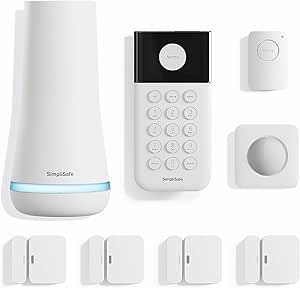
SimpliSafe 9-Piece Wireless Home Security System with HD Camera, No Contract, Compatible with Alexa and Google Assistant
Unlike the camera-first kits in this roundup, this nine-piece SimpliSafe package centers on a broader home alarm setup, with sensors, an HD indoor camera, and a smash-safe keypad. It makes more sense for buyers who want to monitor doors and indoor movement as well as view a camera feed, rather than cover multiple outdoor zones. Compared with the Blink bundle, SimpliSafe emphasizes self-installed sensors and optional professional monitoring instead of combining several outdoor cameras with a doorbell. It also works with Alexa and Google Assistant and does not require a long-term contract. The main limitation for a camera-focused shopper is that the included camera is a single 1080p indoor unit, not a multi-camera outdoor system. Monitoring is optional, and the supplied data does not specify sensor battery life.
Pros:- Nine-piece package combines sensors, an HD indoor camera, and a smash-safe keypad.
- Self-adhesive and screw-in installation supports DIY setup.
- Optional 24/7 professional monitoring is available without a long-term contract.
- Compatible with Alexa and Google Assistant.
Cons:- Includes one indoor camera rather than multiple outdoor cameras.
- The listed camera resolution is 1080p, below the 2K doorbell resolution in the Blink bundle.
- Sensor battery life is not specified in the supplied product data.
Best for: DIY households that want entry and motion sensors, a keypad, and one indoor camera with optional professional monitoring.
Not ideal for: Buyers whose main goal is multi-angle outdoor video coverage, solar cameras, or a bundled video doorbell.
- Package size:9 pieces
- Included camera:HD indoor camera
- Video resolution:1080p
- Power source:Battery powered
- Connectivity:Wireless
- Alert type:Motion
- Control method:Voice
- Installation:Self-adhesive or screw-in
- Smart home compatibility:Alexa and Google Assistant
Our verdict“Choose SimpliSafe for a sensor-led DIY alarm with one indoor camera, not for broad outdoor camera coverage.”
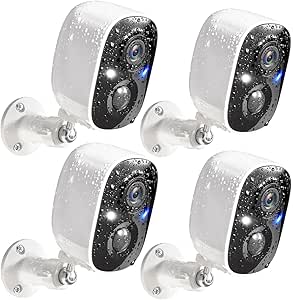
GMK 4 Pack Wireless Outdoor Security Cameras System 2K Video
Four battery-powered cameras make this GMK kit a practical pick for covering outdoor spots where running power is inconvenient. Its 2K video, color and infrared night vision, and two-way audio provide more detail and interaction than a basic motion-only setup, while the siren and flashing lights add an active deterrent. Compared with the Jennov 5MP system, GMK is easier to place without nearby outlets, but it gives up the Jennov’s dedicated monitor and built-in hard drive. The tradeoff is upkeep: battery life is listed as one to six months on standby and will vary with activity, so busy areas may need more frequent charging. It also connects only to 2.4GHz Wi-Fi, which can rule it out for buyers relying on a 5GHz-only network.
Pros:- Four wireless cameras can cover several entry points without outlet access.
- 2K resolution pairs with color and infrared night vision for day-and-night monitoring.
- Two-way audio, smart PIR detection, siren, and flashing lights provide more than passive recording.
- Local SD card and cloud storage options offer a choice of recording approach.
Cons:- 2.4GHz-only Wi-Fi excludes networks that do not support that band.
- Battery life varies with activity, so frequent alerts can mean more charging.
- The listed one-to-six-month standby range makes upkeep less predictable than a plug-in system.
Best for: Homeowners who want four outdoor viewpoints without installing power cables and have a 2.4GHz Wi-Fi network.
Not ideal for: People with a 5GHz-only network or anyone who wants continuously powered cameras and predictable recording without battery charging.
- Resolution:2K, 3MP
- Night vision:Color and infrared
- Power:Rechargeable battery
- Standby battery life:1–6 months
- Wi-Fi:2.4GHz only
- Storage:Local SD card and cloud
- Motion and audio:Smart AI PIR detection; two-way talk
Our verdict“Choose GMK if you need several easy-to-place outdoor cameras and can accept battery maintenance and 2.4GHz-only connectivity.”
Blink Outdoor 4 and Wired Doorbell 2K+ (Newest Model) — 3 Cameras + Doorbell, Black
This bundle stands out for combining three Outdoor 4 cameras with a wired 2K doorbell, giving the front entrance dedicated attention alongside other outdoor views. The Outdoor 4 cameras use 1080p video and AA lithium batteries rated for up to two years, while the doorbell raises resolution to 2K; that division suits buyers who value long intervals between camera battery changes more than uniformly high resolution. Compared with the GMK four-camera kit, Blink adds a purpose-built doorbell and longer stated camera battery life, but GMK’s cameras offer 2K video across the set and rechargeable power. Blink’s cameras need a compatible Sync Module for the ecosystem, and cloud storage and advanced detection features may require a plan. The doorbell also needs existing low-voltage wiring, so this is not a fully wire-free package.
Pros:- Three outdoor cameras and a wired doorbell cover both the entrance and other exterior areas.
- Outdoor 4 cameras use included AA lithium batteries rated for up to two years.
- The doorbell records in 2K, adding more detail at the main entry.
- Works with Alexa and compatible Blink Sync Modules.
Cons:- Doorbell installation requires compatible 12–24V AC or 24V DC wiring.
- Outdoor cameras record in 1080p rather than the 2K resolution offered by GMK across its cameras.
- Cloud video storage beyond the trial and some advanced detection features require a plan.
Best for: Households with existing doorbell wiring that want a dedicated video doorbell plus several outdoor cameras and Alexa compatibility.
Not ideal for: Renters without doorbell wiring, buyers seeking 2K resolution on every camera, or those who want cloud recording and advanced detection without a subscription.
- Included devices:Three Outdoor 4 cameras and one wired Doorbell 2K+
- Camera resolution:1080p HD
- Doorbell resolution:2K, 1920 × 1920
- Outdoor camera power:Two AA lithium batteries per camera
- Doorbell power:12–24V AC or 24V DC
- Outdoor camera battery life:Up to 2 years
- Wi-Fi:2.4GHz, 802.11b/g/n
- Compatibility:Blink Sync Modules and Alexa
Our verdict“Pick this Blink bundle if wired doorbell coverage and long-lasting outdoor camera batteries matter more than all-camera 2K video or subscription-free cloud features.”
aosu 2K QHD Solar Security Cameras Wireless Outdoor System, 4-Cam Kit
The aosu kit is the clearest fit for buyers who want four outdoor cameras with solar-assisted power and no regular cloud-storage bill. Its 2K, 3MP cameras pair color night vision with local encrypted storage, while smart tracking and multi-camera monitoring can help follow activity across a property. Against the battery-powered GMK four-camera system, aosu can reduce charging chores when the panels receive enough sun; GMK is the more flexible choice for shaded locations or areas where sunlight is limited. The IP67 rating also gives aosu a stronger stated water-resistance rating than GMK’s IP65, though the product is specified for outdoor use only. Solar power is not a guarantee of uninterrupted operation: placement and sunlight affect performance, and setup may feel less straightforward for buyers unfamiliar with multi-camera systems.
Pros:- Integrated solar panels can reduce the need to remove cameras for charging.
- Four 2K cameras offer color night vision and a 130-degree viewing angle.
- Local encrypted storage avoids relying on a cloud subscription for recordings.
- IP67 water resistance suits year-round outdoor placement.
Cons:- Solar charging depends on adequate sunlight and suitable camera placement.
- The kit is designed for outdoor use, limiting its fit for indoor monitoring.
- Multi-camera setup may take more effort for buyers new to security systems.
Best for: Owners of sun-exposed homes who want four outdoor cameras, local storage, and less routine battery charging.
Not ideal for: People who need cameras indoors or have heavily shaded mounting locations that cannot support reliable solar charging.
- Included cameras:4
- Resolution:3MP
- Viewing angle:130 degrees
- Night vision:Color
- Power:Solar and battery
- Water resistance:IP67
- Camera type:Bullet
- Mount:Wall mount
Our verdict“Choose aosu for sunlit outdoor coverage with local storage and solar-assisted power, but look elsewhere if your camera locations are shaded or indoors.”
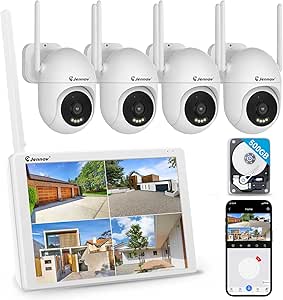
Jennov 5MP WiFi Security Camera System with Monitor, 4 Plug-in Cameras
Jennov takes a more fixed, recorder-centered approach than the battery and solar kits in this roundup. Four outlet-powered 5MP cameras send video to a 10-channel NVR with a 500GB hard drive, and the included monitor lets you check feeds without opening a phone app. That makes it a stronger fit than the GMK or aosu kits for buyers who want local recording and a dedicated viewing station, with no monthly cloud fee described in the product data. The cost of that steadier setup is placement: every camera needs access to an outlet, and the 80-degree viewing angle is narrower than the aosu kit’s 130 degrees. At 15 fps, footage is also less fluid than higher-frame-rate video. For a fixed home layout, the expandable recorder is useful; for flexible mounting, it is the least convenient option here.
Pros:- Included 500GB HDD stores footage locally without a stated monthly cloud fee.
- A dedicated monitor provides a direct way to view camera feeds.
- Four 5MP cameras offer higher listed resolution than the 2K GMK and aosu kits.
- The 10-channel NVR leaves capacity for additional cameras.
Cons:- Each camera needs outlet power, restricting placement and requiring nearby sockets.
- The 80-degree viewing angle is narrower than aosu’s listed 130 degrees.
- A 15 fps frame rate provides less fluid motion than higher-frame-rate systems.
Best for: Homeowners who can place cameras near outlets and want a dedicated monitor, local hard-drive recording, and room to add channels.
Not ideal for: Renters or anyone needing wire-free placement, wide scene coverage from each camera, or more fluid video than 15 fps.
- Camera resolution:5MP
- Cameras included:4
- Recorder:10-channel NVR
- Storage:500GB HDD
- Camera power:Corded electric, outlet powered
- Viewing angle:80 degrees
- Frame rate:15 fps
- Weather resistance:IP66
- Night vision range:20 m, color
Our verdict“Choose Jennov if you want a local-recording setup with a monitor and can plan camera locations around power outlets.”
Wireless Home Security System, 22-Piece WiFi + 4G with 2K HD Camera, App Control, No Monthly Fees, Alexa Compatible
This 22-piece package is better understood as a sensor-led alarm system with one 2K camera than as a multi-camera surveillance kit. Its mix of sensors, app alerts, tamper protection, and a stated 120 dB alarm puts perimeter and room alerts at the center; the camera adds visual context, while Wi-Fi and optional 4G support offer a backup connectivity path. Compared with the Blink bundle, it has a broader sensor focus and no monthly fee stated, but it lacks Blink’s three outdoor cameras and dedicated doorbell. The camera’s microSD card is sold separately, and cellular alerts require a 4G SIM that may add ongoing costs. It also supports only 2.4GHz Wi-Fi. This suits apartments or smaller homes where sensors matter more than monitoring several outdoor angles, but buyers seeking camera coverage should choose a camera-first kit instead.
Pros:- A 22-piece system combines a 2K camera with multiple sensors and alarm components.
- Wi-Fi and 4G connectivity provide options for alerts, with 4G requiring a SIM.
- The product states no monthly fees and supports Smart Life or Tuya app control.
- A stated 120 dB alarm and tamper protection add alarm-focused deterrence.
Cons:- Only one camera is included, so it cannot match the multi-view coverage of Blink, GMK, or aosu.
- A microSD card for camera storage is sold separately.
- 4G alerts require a SIM card that may carry additional service costs.
- Wi-Fi is limited to 2.4GHz.
Best for: Apartment dwellers who want a sensor-heavy alarm package, app alerts, and one camera for visual checks.
Not ideal for: Homeowners who need multiple outdoor camera views, a bundled video-storage card, or cellular service without extra SIM costs.
- System size:22 pieces
- Camera resolution:2K
- Connectivity:Wi-Fi and 4G
- App compatibility:Smart Life and Tuya
- Alarm sound level:120 dB
- Maximum range:1000 feet
- Power:Battery powered
- Wi-Fi band:2.4GHz only
Our verdict“Choose this package if sensors and an alarm are your priority and one 2K camera is enough; choose a multi-camera kit for broader visual coverage.”

How We Picked
I compared these systems by how well they address the two jobs implied by this roundup: detecting activity around the home and giving buyers usable camera coverage without requiring a professional installation. I gave more weight to kits that combine alarm sensors and cameras, provide a clear path to viewing or storing footage, and make their installation approach understandable. I also considered camera count, power source, connectivity, included storage, and whether the product is designed for indoor alarm coverage, outdoor video, or both.
The ranking favors systems with a useful balance of security coverage, setup flexibility, and practical ownership, not the biggest specification claim. Alarm-first systems rank higher for buyers who want sensors and cameras in one DIY plan; wired kits rank well for sustained, multi-camera recording but fall behind on installation flexibility. Solar and wireless camera bundles can be easier to place, yet they depend more on signal quality, sunlight, and the details of local or cloud storage. Product names alone do not establish performance, so buyers should confirm exact bundle contents and compatibility before choosing.
Factors to Consider When Choosing Diy Home Security Systems With Cameras
Before choosing a kit, decide what you expect the cameras to do alongside the alarm. Video coverage, entry detection, and recording are related but separate needs; a system can be strong in one and limited in another. These factors can help you avoid buying a camera bundle when you need door sensors, or an alarm kit that does not cover the outdoor areas you care about.
Choose Between an Alarm System and a Camera System
Start by listing the events you want to detect, rather than counting cameras. Door and window sensors can alert you when someone enters, while cameras help you check activity and review video; neither automatically replaces the other. Alarm-oriented bundles such as Ring and SimpliSafe fit buyers who want sensors in the same setup, whereas multi-camera kits focus on observing outdoor areas. A common mistake is assuming that a system with a camera covers every entry point or provides the same alerts as a full alarm kit. If you need both functions, check which sensors and cameras are actually included and which must be added separately. This choice often matters more than a small difference in camera resolution.
Plan Camera Placement Before Choosing Wireless, Solar, or Wired
Walk the property and identify the views you need: doors, driveways, side passages, or shared access points. Wireless cameras are easier to place, but they still need a reliable connection and a suitable power plan; solar models also need enough useful sunlight at their mounting locations. Wired systems can suit fixed, multi-camera coverage, though cable routes and installation effort may limit where cameras can go. Do not assume a four-camera kit gives complete coverage if walls, trees, or building layout block the important views. Check Wi-Fi reach at each proposed mounting spot before buying, and remember that a strong signal indoors does not guarantee a strong signal outdoors. Placement planning helps prevent blind spots and unnecessary cameras.
Compare Storage and Recording Behavior
Storage determines whether you can review an event after an alert, not just see it live. Some listed kits advertise an included hard drive or local storage; others mention SD or cloud options, so confirm what is included and what requires a separate purchase or service. Also check whether the system records continuously, only around detected events, or according to another schedule. Event-only recording can use less storage but may miss activity that does not trigger detection, while continuous recording creates more footage to manage. A frequent buying mistake is treating “no subscription” as a complete description of storage: local recording still has capacity limits and may depend on the recorder or camera staying operational. Choose a retention approach that fits how often you expect to review footage.
Check Detection Features Against Your Property
AI detection, motion alerts, and person tracking can help separate relevant activity from background movement, but their usefulness depends on camera position and how the system handles notifications. A camera facing a busy street may produce more alerts than one aimed at a private entrance. Features such as two-way audio or pan-and-tilt tracking can help with active monitoring, yet they do not replace a clear view, adequate lighting, or thoughtful alert zones. Before committing, look for details about detection settings, notification controls, and whether useful features rely on an app or service. Avoid choosing solely by a feature label; consider whether it addresses a real issue at your home. A quieter, well-aimed camera setup can be more usable than a feature-heavy system that sends too many alerts.
Decide How Much Installation Work You Will Take On
“DIY” can mean placing wireless cameras and pairing an app, or routing cables and setting up a recorder. The first approach is generally easier to change later, while a wired system may suit buyers comfortable planning cable paths for stable, fixed coverage. Check what the package includes, whether a monitor or recorder is supplied, and whether mounting hardware or additional components are needed. Another common mistake is measuring installation only by the initial setup: batteries, solar exposure, storage management, and network changes can all add ongoing tasks. If you rent or expect to move, removable wireless equipment may be more practical than a permanent wired layout. Match the installation style to both your skills and how long you expect to keep the system in place.
Evaluate Compatibility and Future Expansion
A DIY system is easier to live with when it fits the devices and routines you already use. Check whether the specific kit works with your preferred voice assistant, app, router bands, and any existing cameras or sensors; compatibility can vary by model and bundle. Think about expansion early, since a starter kit may leave uncovered doors or camera angles that you later want to add. Do not assume two products from the same brand automatically share every feature or recording method. For mixed-brand setups, confirm whether you will need separate apps and whether alerts can be managed in one place. A system that matches your current needs but cannot grow may cost more effort to replace than a slightly more flexible option.
Frequently Asked Questions
Should I choose an alarm kit with a camera or a camera-only system?
Choose an alarm-and-camera kit if you want entry sensors to detect doors or windows opening as well as video to check activity. A camera-only bundle can suit buyers focused on outdoor observation, but it does not automatically provide the same entry alerts or sensor coverage. The Ring and SimpliSafe options in this roundup are more aligned with alarm-first needs; the solar and wired multi-camera systems are chiefly video setups. Compare the included components rather than relying on the word “security” in a product name. If both jobs matter, confirm that cameras and sensors can work together in the exact bundle you plan to buy.
Is a wired camera system a better choice than a solar wireless kit?
Neither is better for every home: wired systems favor fixed coverage and a recorder-based setup, while solar wireless kits can be easier to mount where running cable is impractical. A wired kit may involve more planning and installation, especially if camera locations are far from the recorder or power. Solar models depend on suitable sunlight, wireless signal, and the battery and storage details of the specific product. Consider the locations first, then decide which power and installation approach is realistic. If a camera would sit in a shaded area or beyond reliable Wi-Fi, a solar label alone will not solve the placement problem.
Do I need a subscription to save or review camera footage?
Not always, but it depends on the system’s recording options and what the package includes. Several products here advertise local storage or an included hard drive, while others list SD or cloud storage options that may have different requirements. Check whether footage is stored locally, whether a card or recorder is included, and how long recordings remain available. Also find out whether remote viewing, smart alerts, or particular recording features depend on a paid service. A no-subscription claim does not by itself explain storage capacity or how footage is accessed after an alert.
Will a four-camera kit cover my whole home?
Camera count alone cannot tell you whether a system covers your property. Four cameras may be enough for a small home with a few clear approaches, but larger lots, multiple entrances, garages, or obstructed sightlines can need a different layout. Map the views you want and note where walls, landscaping, or neighboring properties affect each angle. Check whether each camera can reach the network and power source from its intended position. It is usually more useful to cover key entry routes well than to spread cameras evenly without a plan.
What should I prioritize if I want both easy setup and useful coverage?
First decide whether you need alarm sensors as well as cameras, since that separates the Ring and SimpliSafe bundles from most camera-only kits. Then check that the cameras can reach their planned locations over Wi-Fi and that their power approach fits the site. Favor a bundle with clear storage details and a manageable app experience over a long feature list you may not use. The Ring 14-piece kit is the broadest alarm-first starting point in this roundup, while the SimpliSafe 9-piece bundle pairs an alarm setup with an HD camera. If you need several outdoor views more than entry sensors, a dedicated camera kit may be a better fit.
Conclusion
For most buyers seeking one DIY starting point, I recommend the Ring Alarm 14-Piece Kit as best overall because its larger sensor bundle addresses more than camera monitoring alone. The best value for alarm-and-camera buyers is the SimpliSafe 8-piece system if a leaner alarm setup suits your home; choose the 9-piece version instead if the included HD camera better matches your needs. For a premium-style fixed camera setup, the ANNKE 3K Lite is the clearest fit for buyers who want eight wired cameras and a 1TB HDD, provided they accept the installation work. Beginners who want an alarm-first kit should start with SimpliSafe, while buyers prioritizing solar outdoor coverage should compare the Aosu and other four-camera solar bundles against their sunlight and Wi-Fi conditions. Choose by the job you need done—entry detection, outdoor video, or both—then verify the exact bundle contents and recording requirements.
Veterans Day Picks

Shark Matrix Plus 2-in-1 Robot Vacuum and Mop with 60-Day Self-Emptying Base
As an affiliate, we earn on qualifying purchases.