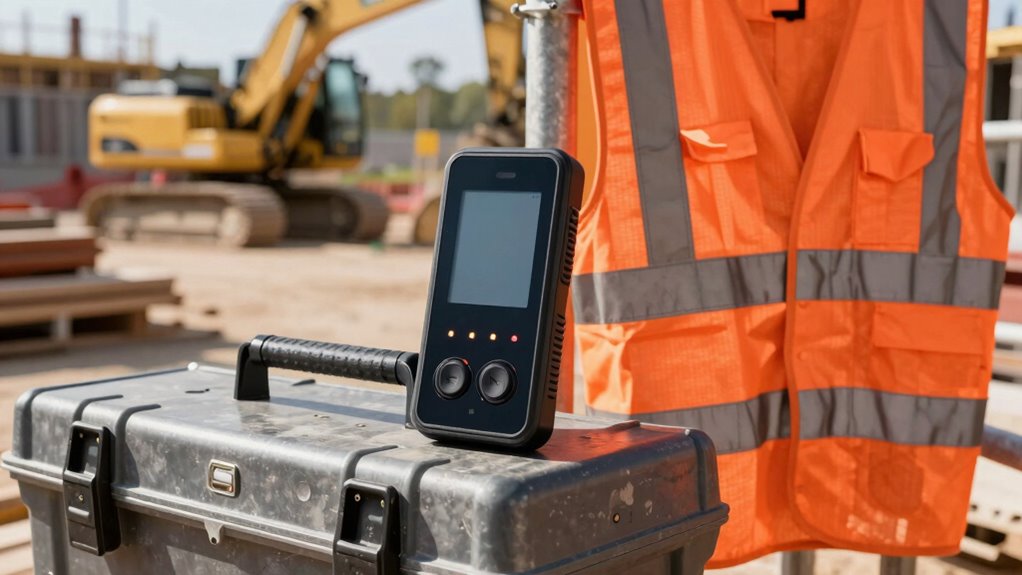

An asset tracker for construction tools can help locate equipment, but the right choice depends on whether you need live GPS updates or a low-maintenance tag that reports nearby devices. I rank the Trak-4 GPS Tracker as the best overall for its broad equipment use, while the DEWALT Tool Connect Tag suits crews already working with compatible DEWALT tools, and the five-year battery GPS tracker is a strong fit for long-term deployments. The main tradeoff is between coverage and update capability on one side, and battery life, installation, and reliance on nearby phones or networks on the other. I compare all seven options by their practical fit for job sites, tracking approach, and upkeep. Read on for the full breakdown and help matching a tracker to your tools and worksite.

Get privacy and security gear delivered free with Prime
- Fast, free delivery on millions of items
- Prime Video, Amazon Music and more included
- Member-only deals all year
Key Takeaways
- GPS coverage and nearby-device finding solve different problems: GPS models are better suited to checking equipment away from the crew, while Bluetooth-style tags depend on compatible devices within range.
- The Trak-4 GPS Tracker earns the overall lead for its broad fit across vehicles, assets, and equipment; it is a more flexible starting point than a tool-brand-specific tag.
- Long battery life changes the maintenance equation: the five-year battery tracker is aimed at equipment that stays deployed, while rechargeable or shorter-life options may need more frequent attention.
- The DEWALT DCE041 Tool Connect Tag is a system-fit choice for crews with compatible DEWALT tools, not a universal substitute for a GPS tracker.
- Power and mounting can outweigh feature lists: the hardwired Trak-4 makes more sense for powered equipment, while compact tags and battery trackers suit different portability and installation needs.
| Optimus 3.0 GPS Tracker Bundle – Vehicle & Asset Tracking – 1+ Month Battery |  | Best for Magnetic Tracking with Frequent Updates | Battery life: Up to 2 months | Battery type: Built-in rechargeable | Connectivity: Cellular | VIEW ON AMAZON | See Our Full Breakdown |
| DEWALT DCE041 Tool Connect Tag, 1 Pack |  | Best for Tool Connect Jobsite Inventory | Connectivity range: Up to 100 ft | Water resistance: IP68 | Battery: 1 CR2 battery, included | VIEW ON AMAZON | See Our Full Breakdown |
| Trak-4 GPS Tracker for Vehicles, Assets, and Equipment |  | Best for Long-Interval GPS Tracking | Battery life: 12–18 months | Connectivity: 4G LTE, 2G fallback, GPS, Wi-Fi, and Bluetooth | Dimensions: 3.25 x 1.75 x 1.25 in | VIEW ON AMAZON | See Our Full Breakdown |
| Tracki Pro GPS Tracker for Vehicles, 4G LTE, Long Battery Life |  | Best for International Fleet Coverage | Battery capacity: 10,000 mAh | Battery life: 2–7 months active; up to 12 months in sleep mode | Connectivity: 4G LTE Cat1 | VIEW ON AMAZON | See Our Full Breakdown |
| Air Tags for Android – 4 Pack with Cases, 2-Year Battery Life, Waterproof IP65, Compatible with Google Find Hub and Apple Find My |  | Best for Low-Overhead Small-Tool Labels | Pack size: 4 tags | Connectivity: Bluetooth | Range: 100 meters | VIEW ON AMAZON | See Our Full Breakdown |
| GPS Tracker for Trailers & Equipment – 5 Year Battery Life, Waterproof Asset Tracking Device for Construction, Rental Fleets & Heavy Equipment |  | Best for Unpowered Equipment | Battery life: Up to 5 years | Connectivity: GPS | Installation: Wireless; no wiring or tools required | VIEW ON AMAZON | See Our Full Breakdown |
| Trak-4 12V Hardwired GPS Tracker |  | Best for Real-Time Fleet Alerts | Power: 12V hardwired with internal battery backup | Connectivity: 4G LTE, Wi-Fi, GPS, GLONASS, Bluetooth | Coverage: Worldwide in about 100 countries | VIEW ON AMAZON | See Our Full Breakdown |
| asset tracker for construction tool | Connectivity | Battery life | Weight | Dimensions |
|---|---|---|---|---|
| Optimus 3.0 GPS Tracker Bundle | Cellular | Up to 2 months | 0.23 kg | — |
| DEWALT DCE041 Tool Connect Tag | — | — | 2.4 oz | 2.5 x 5 x 6 in |
| Trak-4 GPS Tracker for Vehicle | 4G LTE, 2G fallback, GPS, Wi-Fi, and Bluetooth | 12–18 months | — | 3.25 x 1.75 x 1.25 in |
| Tracki Pro GPS Tracker for Veh | 4G LTE Cat1 | 2–7 months active; up to 12 months in sleep mode | 263 g | 3.54 x 2.48 x 1.46 in |
| Air Tags for Android | Bluetooth | Up to 2 years | 8.5 g | — |
| GPS Tracker for Trailers & Equ | GPS | Up to 5 years | — | 2.75 x 1.75 x 1 inches |
| Trak-4 12V Hardwired GPS Track | 4G LTE, Wi-Fi, GPS, GLONASS, Bluetooth | — | — | — |
More Details on Our Top Picks
Optimus 3.0 GPS Tracker Bundle – Vehicle & Asset Tracking – 1+ Month Battery
The Optimus 3.0 suits crews that need to check the live location of a vehicle, machine, or other movable asset rather than rely on a nearby phone network. Its magnetic waterproof case gives supervisors a discreet way to attach it, while customizable alerts can help flag movement between site checks. The listed battery life is up to two months, but frequent location updates can shorten that window, so it calls for more charging attention than the Trak-4 GPS Tracker, which lists 12–18 months per charge. In return, the Optimus is a straightforward option for teams focused on North American tracking. A monthly subscription is required, and coverage is limited to the USA, Canada, and Mexico; crews working elsewhere should choose a different tracker.
Pros:- Magnetic case supports discreet placement on suitable metal surfaces.
- Waterproof, heavy-duty enclosure is suited to outdoor asset placement.
- Customizable alerts and real-time updates help flag asset movement.
- Listed battery life reaches up to two months.
Cons:- Tracking service requires a monthly subscription.
- Coverage is limited to the USA, Canada, and Mexico.
- Battery life can fall with frequent location updates.
Best for: Construction teams tracking vehicles or portable machinery across the USA, Canada, or Mexico that want magnetic mounting and live location updates.
Not ideal for: Crews that need multi-month tracking with minimal charging, operation outside North America, or tracking without a monthly service subscription.
- Battery life:Up to 2 months
- Battery type:Built-in rechargeable
- Connectivity:Cellular
- Coverage:USA, Canada, and Mexico
- Enclosure:Heavy-duty magnetic case
- Weight:0.23 kg
- Supported uses:Vehicles, machinery, valuables, and other assets
Our verdict“Choose the Optimus 3.0 if magnetic mounting and live tracking in North America matter more than the Trak-4’s longer listed battery life.”
DEWALT DCE041 Tool Connect Tag, 1 Pack
The DEWALT DCE041 is a jobsite inventory tag, not a standalone GPS tracker. It makes the most sense for crews already using Tool Connect-enabled devices: within its listed 100-foot range, the tag can support asset accountability, and its blue LED helps workers identify a tagged item. The IP68 water resistance and compact format suit tools exposed to demanding site conditions. Compared with the Optimus 3.0, it is less suited to locating equipment remotely across a yard or between sites, since it depends on nearby compatible devices rather than cellular GPS tracking. That limitation can be an advantage for local inventory workflows, but buyers should check their existing Tool Connect setup before outfitting a fleet. It also uses a replaceable CR2 battery, so ongoing battery checks are part of the routine.
Pros:- IP68 water resistance suits demanding jobsite conditions.
- Blue LED makes tagged items easier to identify.
- Small profile can be placed inconspicuously on tools and equipment.
- Three-year limited warranty is specified.
Cons:- Full functionality depends on Tool Connect-enabled devices.
- Listed connectivity range is limited to up to 100 feet.
- CR2 battery requires eventual replacement.
Best for: Contractors already using DEWALT Tool Connect who want to identify and account for tools within a local jobsite range.
Not ideal for: Teams needing remote GPS location, broad-area theft recovery, or tracking independent of Tool Connect-enabled devices.
- Connectivity range:Up to 100 ft
- Water resistance:IP68
- Battery:1 CR2 battery, included
- Weight:2.4 oz
- Dimensions:2.5 x 5 x 6 in
- Identification feature:Blue LED indicator
- Warranty:3-year limited warranty
Our verdict“Pick the DCE041 for local tool accountability inside a Tool Connect setup, not as a substitute for the remote GPS coverage of the Optimus 3.0.”
Trak-4 GPS Tracker for Vehicles, Assets, and Equipment
The Trak-4 GPS Tracker is a strong fit for construction equipment that may sit unattended between visits: its listed 12–18-month battery life reduces charging frequency compared with the Optimus 3.0’s up-to-two-month estimate. It combines GPS, Wi-Fi, and cellular connectivity, with geo-fencing and alerts to help crews monitor movement and location across indoor and outdoor settings. Its waterproof, durable design also suits equipment exposed to the elements. Unlike the DEWALT DCE041, this is a GPS tracker rather than a short-range tag tied to nearby Tool Connect devices, making it better suited to remote asset checks. The tradeoff is service dependence: a subscription is required, and the supplied details do not specify its cost. Buyers should also confirm that network coverage fits their operating area.
Pros:- Listed battery life of 12–18 months per charge can reduce maintenance visits.
- GPS, Wi-Fi, and cellular technologies support location tracking indoors and outdoors.
- Geo-fencing and alert notifications help flag equipment movement.
- Waterproof design is suited to varied equipment environments.
Cons:- A subscription is required for tracking service.
- Subscription cost details are not provided in the supplied product information.
- Requires a compatible app or device for operation.
Best for: Rental fleets and contractors who need GPS location, movement alerts, and long gaps between charging for equipment or vehicles.
Not ideal for: Buyers who want a tag without a service subscription or need confirmed coverage details for a specific remote work area.
- Battery life:12–18 months
- Connectivity:4G LTE, 2G fallback, GPS, Wi-Fi, and Bluetooth
- Dimensions:3.25 x 1.75 x 1.25 in
- Enclosure:Plastic
- Tracking features:Geo-fencing and alert notifications
- Compatible devices:Android, iPhone, browser, computer, and tablet
- Supported uses:Asset tracking, vehicle tracking, security, and theft recovery
Our verdict“Choose the Trak-4 over the Optimus 3.0 when longer listed battery life and GPS-based remote tracking outweigh subscription dependence.”
Tracki Pro GPS Tracker for Vehicles, 4G LTE, Long Battery Life
The Tracki Pro suits contractors whose equipment travels across borders or whose fleet needs broad geographic coverage: the listing specifies service in 185+ countries through 4G LTE Cat1. Its 10,000mAh battery is rated for two to seven months in active use and up to 12 months in sleep mode, giving buyers a clearer distinction between frequent updates and low-activity storage than the Optimus 3.0. Weatherproof construction and magnetic or screw mounting offer flexibility for trailers and machinery. However, it is larger and heavier than a small tool tag, and its sleep-mode figure should not be mistaken for active tracking endurance. Like the Trak-4, it needs a subscription for full functionality, so this is better for valuable fleet assets than for tagging every hand tool.
Pros:- Coverage is listed for more than 185 countries.
- 10,000mAh battery supports up to 12 months in sleep mode.
- Magnetic and screw-mount options suit different asset surfaces.
- Weatherproof design and alerts support outdoor asset monitoring.
Cons:- Full functionality requires a subscription.
- Active-use battery life is listed as 2–7 months, shorter than the sleep-mode maximum.
- At 263 g, it is relatively heavy for tagging individual tools.
Best for: Fleet managers tracking trailers, vehicles, or larger construction assets across multiple countries who can plan around subscription service.
Not ideal for: Crews seeking a lightweight tag for individual hand tools, or buyers who need long battery life while requesting frequent live updates.
- Battery capacity:10,000 mAh
- Battery life:2–7 months active; up to 12 months in sleep mode
- Connectivity:4G LTE Cat1
- Coverage:185+ countries
- Dimensions:3.54 x 2.48 x 1.46 in
- Weight:263 g
- Mounting:Magnetic or screw mount
Our verdict“Choose the Tracki Pro for internationally mobile, higher-value assets; for a smaller local tool tag, the DEWALT DCE041 is a better fit.”
Air Tags for Android – 4 Pack with Cases, 2-Year Battery Life, Waterproof IP65, Compatible with Google Find Hub and Apple Find My
This four-pack of Bluetooth tags is a lower-overhead way to label small tools or cases when crews mainly need help finding misplaced items nearby. At a listed range of 100 meters, it can support local searches through Google Find Hub or Apple Find My, and the IP65 rating offers protection from rain and splashes. Its up-to-two-year battery claim also compares favorably with the DEWALT DCE041’s replaceable CR2 battery, though the supplied details say this tag’s battery is non-serviceable. The key distinction is that Bluetooth item finding is not the same as cellular GPS tracking: unlike the Trak-4, it does not provide the listed GPS, cellular, or geo-fencing features for remote equipment monitoring. I would reserve it for smaller items and nearby recovery, not high-value machinery left at a remote site.
Pros:- Four tags provide a way to label multiple small items.
- Compatible with Google Find Hub and Apple Find My.
- Listed battery life is up to two years.
- IP65 protection and a loud alert support nearby searches in wet conditions.
Cons:- Bluetooth range is listed as 100 meters, not GPS-based remote coverage.
- Not compatible with GPS or Huawei devices.
- Battery is non-serviceable.
Best for: Small contractors who want to label tool cases or compact equipment and can use compatible Android or Apple tracking apps for local finding.
Not ideal for: Fleet managers tracking remote or high-value machinery, users needing GPS or cellular coverage, and crews using Huawei devices.
- Pack size:4 tags
- Connectivity:Bluetooth
- Range:100 meters
- Battery life:Up to 2 years
- Battery:1 included; non-serviceable
- Water resistance:IP65
- Weight:8.5 g
- Compatibility:Google Find Hub and Apple Find My; not compatible with Huawei devices
Our verdict“Choose these tags for nearby searches of small tools or cases, but use a GPS option such as the Trak-4 for remote construction assets.”
GPS Tracker for Trailers & Equipment – 5 Year Battery Life, Waterproof Asset Tracking Device for Construction, Rental Fleets & Heavy Equipment
For construction teams tracking trailers, rental equipment, or machines without a convenient power connection, this tracker’s headline advantage is up to five years of battery life. Its wire-free installation avoids adding a wiring job when moving a tracker between assets, while the waterproof enclosure suits equipment left outdoors. Location history and movement tracking through web and mobile apps help managers review where an asset has been, rather than relying on a basic proximity tag such as the DEWALT DCE041 Tool Connect Tag. The tradeoff is update capability: the supplied details specify GPS tracking but not live updates, so it is less suited to rapid theft response than the Trak-4 12V Hardwired GPS Tracker, which offers real-time alerts. A tracking subscription is also required, and the plastic enclosure may be less reassuring than a ruggedized metal housing for exposed jobsite placement.
Pros:- Up to five years of battery life suits assets without a dependable power source.
- Wireless installation requires no wiring or tools.
- Waterproof design is suited to outdoor trailers and equipment.
- Location history and movement tracking are available through web and mobile apps.
Cons:- Tracking requires a subscription, starting at $9.95 per month.
- GPS tracking is specified without live updates, limiting immediate response.
- Plastic enclosure may be less suitable for highly exposed or impact-prone mounting locations.
Best for: Construction and rental-fleet managers tracking unpowered trailers or equipment outdoors who prefer wireless installation and infrequent battery maintenance.
Not ideal for: Teams that need live location updates for theft response, or buyers who want to avoid a recurring tracking subscription.
- Battery life:Up to 5 years
- Connectivity:GPS
- Installation:Wireless; no wiring or tools required
- Enclosure:Waterproof plastic
- Dimensions:2.75 x 1.75 x 1 inches
- Supported applications:Trailer tracking, asset tracking, fleet management
- Compatible devices:Computer, smartphone, tablet
Our verdict“Choose this tracker for long-term, low-maintenance monitoring of unpowered outdoor assets, but pick the Trak-4 12V Hardwired GPS Tracker if real-time alerts matter more than installation simplicity.”
Trak-4 12V Hardwired GPS Tracker
The Trak-4 12V is the stronger fit when a construction fleet can provide power and needs continuous tracking with real-time alerts. Its 12V hardwired connection supports ongoing vehicle or equipment monitoring, and the internal battery provides backup if external power is interrupted. Compared with the wireless, long-life GPS tracker in this roundup, installation takes more effort and the backup battery’s stated 12–18 months is far shorter than that model’s up-to-five-year life. In return, this unit adds 4G LTE, GPS, GLONASS, Wi-Fi, and Bluetooth, plus indoor positioning and SMS or email alerts. Worldwide coverage across about 100 countries can also suit fleets that move between regions. I would favor it for powered machines where a faster alert matters; teams mainly tracking unpowered trailers should weigh the wiring work and ongoing subscription against the simpler wireless option.
Pros:- 12V hardwired power supports continuous tracking of powered assets.
- Internal battery backup can keep tracking available if external power is interrupted.
- 4G LTE, GPS, GLONASS, Wi-Fi, and Bluetooth support varied positioning methods.
- Real-time SMS and email alerts and coverage in about 100 countries support fleet oversight.
Cons:- Installation may require technical expertise and access to the asset’s electrical system.
- Tracking service requires an ongoing subscription.
- Internal battery life of 12–18 months is much shorter than the up-to-five-year battery on the wireless GPS tracker.
Best for: Construction fleet operators tracking powered vehicles or equipment who can arrange hardwiring and want real-time movement alerts and broad cellular coverage.
Not ideal for: Small crews tracking unpowered trailers or frequently relocated tools, since hardwired installation adds work and the internal battery is not a long-term substitute for power.
- Power:12V hardwired with internal battery backup
- Connectivity:4G LTE, Wi-Fi, GPS, GLONASS, Bluetooth
- Coverage:Worldwide in about 100 countries
- Internal battery life:12–18 months
- Waterproof:Yes
- Alerts:Real-time SMS and email
- Supported devices:iOS, Android, web browsers
- Warranty:Lifetime warranty while subscribed
Our verdict“Choose the Trak-4 12V for powered construction assets that need real-time alerts and broad coverage, but favor the wireless five-year tracker for unpowered equipment and simpler installation.”

How We Picked
I compared these seven options as construction asset trackers, not as general-purpose location gadgets. The main criteria were the tracking method and its fit for a job site, the kind of equipment each device is designed to follow, power and battery upkeep, installation demands, and practical portability. I also looked at how much the tracking approach depends on cellular coverage, nearby compatible devices, or a vehicle’s power supply—factors that can change whether a tracker helps on a spread-out or frequently changing site.
The ranking favors options with a useful balance of tracking reach, equipment flexibility, and manageable upkeep. The Trak-4 GPS Tracker leads as a versatile GPS choice; the DEWALT tag ranks for crews who can use its connected-tool ecosystem, while the long-battery GPS device stands out for extended deployments. Specialized options rank lower when their power source, tracking network, or use case limits where they make sense. A tracker’s listed capability is not a guarantee of dependable location updates at every site, so I weigh the operating conditions buyers need to verify before deployment.
Factors to Consider When Choosing Asset Tracker For Construction Tools
Before choosing a device, decide what “tracking” needs to mean for your crew: finding a tool in a nearby laydown area, checking where equipment is across multiple sites, or monitoring powered machinery over time. Those jobs call for different networks, installation methods, and maintenance habits. These factors can help prevent a mismatch that looks suitable on a product page but fails to fit your workflow.
Choose the Location Method Around Your Site
GPS and nearby-device tags do not provide the same kind of location information. A GPS tracker is generally the better match when equipment may be moved beyond the crew’s immediate area, but check what connectivity and service the device requires where you work. A Bluetooth-style tag may be useful for locating tools around a busy site if compatible phones or devices can detect it, but it is not a substitute for independent GPS coverage. A common mistake is choosing based on the word “tracker” without checking how a location is actually reported. Map the distance, coverage, and update expectations for your typical jobs before buying.
Match Battery Life to How Often You Can Service Tools
Battery-life claims can reduce maintenance, but they depend on operating conditions and tracking behavior. Frequent location updates can draw more power than occasional reporting, so compare the expected use pattern rather than treating a long-life figure as a guarantee. For tools that rotate among crews, pick a device that can be checked and serviced during normal inventory routines. Equipment left at remote sites for months may benefit more from a long-life design, provided its reporting method meets your needs. Avoid placing trackers where a depleted battery would go unnoticed; assign a person or scheduled check for each device.
Plan for Mounting, Weather, and Job-Site Abuse
A tracker only helps while it stays attached and continues operating. Consider whether the unit needs a case, a protected mounting point, or a connection to equipment power, and check the maker’s stated weather protection before exposing it to dust, rain, or washdowns. A removable tag is convenient when tools move between crews, but can be easier to detach or misplace. A hardwired unit can suit machinery that stays in service, though installation takes more planning and may not fit portable tools. Choose a mounting approach that will not interfere with normal operation, tool handling, or maintenance.
Check Network and Phone Compatibility Before Buying
Some tracking systems rely on cellular service, while tags that use a device-finding network depend on compatible nearby phones and platform support. Coverage can vary across rural sites, enclosed structures, and remote storage areas, so check the exact network and service requirements for the places your equipment travels. If a crew uses different phone platforms, confirm that the tracker’s app and location network work with their devices before standardizing. Also check whether the device requires a subscription or ongoing service; the product name alone may not make that clear. A small pilot across one indoor and one outdoor site can expose compatibility gaps before a fleet-wide rollout.
Track the Tool, the Crew, or the Machine—Not Just the Asset Label
Decide what you need to learn when equipment goes missing: its last reported location, which crew had it, or whether it has left an approved area. A tracker provides location data, but a clear checkout process and reliable asset records help connect that data to a specific tool and responsible team. For small tools, label each item and keep its tracker assignment current when devices are swapped. For fleet equipment, consider who will review alerts and respond to a location change. Buying devices without a process for managing assignments can create false confidence while records drift out of date.
Frequently Asked Questions
Can a Bluetooth-style tag track a tool across a remote construction site?
It can help locate a tool when compatible devices in its finding network are nearby, but that is different from a self-contained GPS tracker reporting its position over cellular service. On an isolated site with few compatible phones, location updates may be limited or delayed. Check which phone ecosystem the tag supports and whether the crew’s devices participate in that network. For equipment that regularly travels between distant sites, compare it with a GPS model rather than assuming both tracking types offer the same reach. A tag may still be useful for tool recovery within a busy site or storage area.
Do I need a separate tracker for every tool?
Not always: the right number depends on replacement risk, how often tools move between crews, and whether equipment can be accounted for through check-in procedures. Tracking high-value or frequently misplaced items individually gives clearer location records, while lower-priority tools may be managed in kits or through inventory routines. Avoid sharing one tracker among several unlabelled tools, since the location will not identify which item is there. Also account for the time required to assign, inspect, and maintain each device. Start with the items whose loss would disrupt work most, then expand if the process proves useful.
Will GPS tracking work inside a metal storage container or building?
GPS reception can weaken indoors and around metal structures, so a device may not provide a precise, current fix in those locations. Cellular connectivity can also be limited inside a container or basement. Check how the specific tracker handles missed updates and whether it stores a last-known location, rather than expecting uninterrupted tracking everywhere. For indoor tool rooms, a nearby-device network or a disciplined sign-out system may complement GPS, depending on phone compatibility and site layout. Test the tracker in the actual storage locations before relying on it for loss prevention.
Should I choose a hardwired tracker or a battery-powered one for equipment?
A hardwired tracker is a better fit when the asset has a suitable power source and stays in service long enough to justify installation. It avoids routine battery replacement, but installation compatibility and access for maintenance matter. A battery-powered unit is easier to move among assets and can work on equipment without a practical power connection, though someone must monitor its battery condition. Portable tools generally favor a compact, self-powered approach; powered machinery may justify a fixed installation. Make the choice based on where the tracker can be mounted safely and how often the equipment is used, not on power alone.
What should I verify before buying trackers for an entire crew?
Confirm that the tracking method works with the crew’s phones, the sites’ coverage, and the locations where tools are stored. Check any app, account, cellular-service, or subscription requirements, then confirm how devices are assigned to specific assets. Review mounting, weather protection, battery servicing, and who will receive or act on alerts. A small pilot is a practical way to find dead zones, awkward mounts, or gaps in the checkout process before scaling up. Standardize the setup only after the crew can reliably identify a tracker, its asset, and the person responsible for maintaining it.
Conclusion
For a flexible starting point, I recommend the Trak-4 GPS Tracker as the best overall pick for construction assets. The DEWALT DCE041 Tool Connect Tag is the best fit for beginners who already use compatible DEWALT tools and want a tag within that ecosystem, while the five-year battery GPS tracker is my premium-style choice for long deployments where reduced battery attention matters. For a value-focused setup, consider the Air Tags for Android four-pack only if its supported finding networks suit your crew and the tools stay within likely device coverage; it is not a stand-in for independent GPS. Choose the Trak-4 12V Hardwired GPS Tracker for compatible powered equipment, and the Optimus or Tracki Pro when their GPS form factor and battery setup better match your fleet. The right pick follows the asset: use tags for nearby tool recovery, and GPS devices when equipment needs to be located across sites.