The GL.iNet Fortify GL-MT6000 is my best overall pick among the 14 best privacy-focused VPN routers, balancing Wi-Fi 6 performance with VPN-friendly features. The GL.iNet Flint 3 stands out for buyers who want newer Wi-Fi 7 hardware, while the GL.iNet Brume 3 suits people who want a wired security gateway rather than another Wi-Fi router. The main tradeoffs are wireless speed versus VPN workload, simple setup versus hands-on control, and home coverage versus travel portability. Decentralized VPN models also call for a different privacy and network-management approach than conventional VPN routers. Read on for the full comparison and guidance on choosing a router that fits your devices, provider, and privacy priorities.

Get privacy and security gear delivered free with Prime
- Fast, free delivery on millions of items
- Prime Video, Amazon Music and more included
- Member-only deals all year
Key Takeaways
- The Fortify GL-MT6000 leads as a balanced home pick: it pairs Wi-Fi 6 with VPN-oriented use, while the Flint 3 is the more forward-looking choice for Wi-Fi 7.
- A wired gateway can be a better privacy upgrade than a new Wi-Fi router: the Brume 3 is aimed at routing network traffic securely alongside existing access points.
- Travel routers solve a different problem from home routers: the Slate AX, Beryl AX, Opal, Slate 7, Maui, and Deeper Connect Air trade broad household coverage for portability and flexible connections.
- Deeper Connect models are not interchangeable with conventional VPN routers: their decentralized VPN approach may suit buyers seeking a different network model, but should be weighed against provider compatibility and operational preferences.
- Router throughput alone does not settle the choice: VPN encryption, internet speed, Wi-Fi coverage, and the number of devices all shape real-world performance, so headline wireless standards are only one part of the decision.
| GL.iNet Fortify GL-MT6000 AX6000 Wi-Fi 6 Router with ExpressVPN |  | Best Overall for Fast Whole-Home VPN | Wi-Fi: Wi-Fi 6, dual-band | Wireless speed: Up to 1,148 Mbps at 2.4 GHz and 4,804 Mbps at 5 GHz | VPN speed: Up to 900 Mbps with WireGuard; up to 880 Mbps with OpenVPN DCO | VIEW ON AMAZON | See Our Full Breakdown |
| TP-Link ER7206 Multi-WAN Gigabit VPN Router |  | Best for Wired VPN Networks and Multi-WAN | Connectivity: Wired Ethernet | WAN ports: Up to 4 | Ports: 1 Gigabit SFP WAN, 1 Gigabit WAN, 2 Gigabit WAN/LAN, 1 Gigabit LAN | VIEW ON AMAZON | See Our Full Breakdown |
| Deeper Connect SE Decentralized VPN Router |  | Best Compact Subscription-Free Privacy Device | Technology: Decentralized VPN (DPN) | Setup: Plug and play | Subscription fee: None specified | VIEW ON AMAZON | See Our Full Breakdown |
| GL.iNet Flint 3 Tri-Band Wi-Fi 7 Router |  | Best Premium Wi-Fi 7 VPN Router | Wi-Fi standard: Wi-Fi 7 | Bands: Tri-band, including 6 GHz | Maximum wireless speed: Up to 9 Gbps | VIEW ON AMAZON | See Our Full Breakdown |
| Deeper Connect Mini Decentralized VPN Router |  | Best for Simple Network-Wide DPN Protection | Wi-Fi standards: 802.11a/b/g/n/ac | Frequency band: Dual-band | Data transfer rate: 1,000 Mbps | VIEW ON AMAZON | See Our Full Breakdown |
| Deeper Connect Mini DPN Router with 1 Gbps ARM64 Quad-Core Gateway and Decentralized VPN |  | Best for Subscription-Free Decentralized VPN | Data transfer rate: 1 Gbps | Processor: ARM64 quad-core | RAM: 2 GB | VIEW ON AMAZON | See Our Full Breakdown |
| KeepYourHomeIP Maui MA-B256 VPN Travel Router |  | Best for Remote Access to Your Home Network | Wireless standard: 802.11ac | Network: Dual-band | Data transfer rate: 170 Mbps | VIEW ON AMAZON | See Our Full Breakdown |
| GL.iNet GL-SFT1200 Opal AC1200 Dual-Band Travel Router | 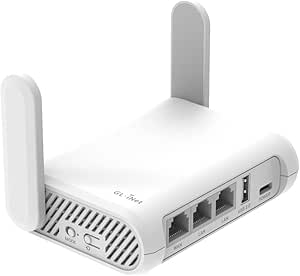 | Best Lightweight Travel VPN Router | Wi-Fi standard: Wi-Fi 5 (802.11a/b/g/n/ac) | Wireless speed: Up to 1200 Mbps | Ports: 2 Gigabit LAN, 1 Gigabit WAN | VIEW ON AMAZON | See Our Full Breakdown |
| GL.iNet GL-MT5000 Brume 3 Wired VPN Security Gateway |  | Best High-Speed Wired VPN Gateway | Connectivity: Wired Ethernet; no Wi-Fi | Ports: 3 × 2.5GbE | VPN protocols: WireGuard, OpenVPN-DCO | VIEW ON AMAZON | See Our Full Breakdown |
| GL.iNet Slate AX Wi-Fi 6 Travel Router with VPN |  | Best Wi-Fi 6 Travel Router for Multiple Devices | Wi-Fi standard: Wi-Fi 6 (802.11ax) | Frequency bands: Dual-band, 2.4 GHz and 5 GHz | Maximum combined Wi-Fi speed: 1800 Mbps | VIEW ON AMAZON | See Our Full Breakdown |
| TP-Link Omada ER706W AX3000 Wi-Fi 6 VPN Router | 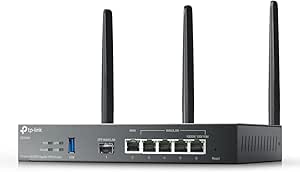 | Best for Managed Multi-WAN Networks | Wi-Fi: Wi-Fi 6 (802.11ax), AX3000 | 5 GHz speed: Up to 2402 Mbps | 2.4 GHz speed: Up to 574 Mbps | VIEW ON AMAZON | See Our Full Breakdown |
| Deeper Connect Air Portable Wi-Fi Router with VPN |  | Best for Simple Public-Wi-Fi Protection | Wireless standard: 802.11a/b/g/n/ac; listed Wi-Fi generation: Wi-Fi 4 | Frequency bands: Dual-band | Data transfer rate: 300 Mbps | VIEW ON AMAZON | See Our Full Breakdown |
| GL.iNet GL-BE3600 Slate 7 Wi-Fi 7 Travel Router with Touchscreen and Dual 2.5G Ethernet |  | Best Premium Travel Router for VPN Control | Wi-Fi: Wi-Fi 7, dual-band 2.4 GHz and 5 GHz | Wireless speeds: 688 Mbps (2.4 GHz) + 2882 Mbps (5 GHz) | Ethernet: 2 x 2.5G ports: 1 WAN and 1 LAN | VIEW ON AMAZON | See Our Full Breakdown |
| GL.iNet GL-MT3000 Beryl AX Wi-Fi 6 Travel Router | 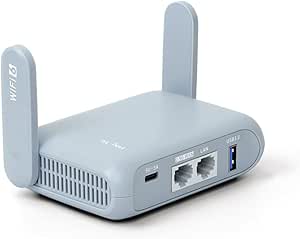 | Best Compact OpenWrt Travel Pick | Wi-Fi: Wi-Fi 6, dual-band | Wireless speeds: 574 Mbps (2.4 GHz) + 2402 Mbps (5 GHz) | Ports: 2.5G WAN, 1 Gbps LAN, USB 3.0 | VIEW ON AMAZON | See Our Full Breakdown |
| privacy focused vpn router | Ports | Operating system |
|---|---|---|
| GL.iNet Fortify GL-MT6000 AX60 | 1 × 2.5 GbE WAN, 1 × 2.5 GbE WAN/LAN, 4 × 1 GbE LAN, 1 × USB 3.0 Type-A | OpenWrt v21.02, kernel 5.4 |
| TP-Link ER7206 Multi-WAN Gigab | 1 Gigabit SFP WAN, 1 Gigabit WAN, 2 Gigabit WAN/LAN, 1 Gigabit LAN | — |
| Deeper Connect SE Decentralize | — | — |
| GL.iNet Flint 3 Tri-Band Wi-Fi | 5 × 2.5 Gbps | — |
| Deeper Connect Mini Decentrali | 2 | — |
| Deeper Connect Mini DPN Router | 2 | — |
| KeepYourHomeIP Maui MA-B256 VP | 2 | Linux |
| GL.iNet GL-SFT1200 Opal AC1200 | 2 Gigabit LAN, 1 Gigabit WAN | OpenWrt |
| GL.iNet GL-MT5000 Brume 3 Wire | 3 × 2.5GbE | OpenWrt |
| GL.iNet Slate AX Wi-Fi 6 Trave | — | OpenWrt 21.02 |
| TP-Link Omada ER706W AX3000 Wi | 1 Gigabit SFP slot, 5 Gigabit RJ45 ports, 1 USB 3.0 port | — |
| Deeper Connect Air Portable Wi | 1 | AtomOS |
| GL.iNet GL-BE3600 Slate 7 Wi-F | — | OpenWrt 23.05 |
| GL.iNet GL-MT3000 Beryl AX Wi- | 2.5G WAN, 1 Gbps LAN, USB 3.0 | — |
More Details on Our Top Picks
GL.iNet Fortify GL-MT6000 AX6000 Wi-Fi 6 Router with ExpressVPN
The Fortify makes the strongest case here for buyers who want fast VPN protection across a household without giving up mainstream Wi-Fi features. Its ExpressVPN integration and stated WireGuard speeds of up to 900 Mbps give it a clear performance advantage over the Deeper Connect SE and Mini, whose supplied details do not include VPN speed figures. Dual-band Wi-Fi 6, coverage rated up to 1,500 square feet, and support for 86 devices suit a busy home, while its two 2.5 GbE ports and four gigabit LAN ports leave room for fast wired equipment. OpenWrt features add flexibility, but they also mean more settings than a simple plug-and-play device. Coverage and VPN throughput depend on the network and service, and ExpressVPN performance can vary by server and protocol.
Pros:- ExpressVPN integration extends VPN protection to devices connected through the router.
- WireGuard VPN speeds are specified at up to 900 Mbps, with OpenVPN DCO up to 880 Mbps.
- Two 2.5 GbE ports, four gigabit LAN ports, and USB 3.0 provide flexible wired and accessory connections.
- OpenWrt features include VPN client/server support, multi-WAN, and parental controls.
Cons:- The advanced OpenWrt feature set may require more setup than a plug-and-play privacy device.
- Coverage and real-world VPN speeds vary with placement, network conditions, protocol, and VPN server.
Best for: Households that want ExpressVPN coverage for many devices, strong stated VPN throughput, and advanced OpenWrt controls.
Not ideal for: Buyers who want a minimal setup with little configuration, or those who need Wi-Fi 7 and broader stated coverage than 1,500 square feet.
- Wi-Fi:Wi-Fi 6, dual-band
- Wireless speed:Up to 1,148 Mbps at 2.4 GHz and 4,804 Mbps at 5 GHz
- VPN speed:Up to 900 Mbps with WireGuard; up to 880 Mbps with OpenVPN DCO
- Coverage:Up to 1,500 sq. ft.
- Connected devices:Up to 86
- Ports:1 × 2.5 GbE WAN, 1 × 2.5 GbE WAN/LAN, 4 × 1 GbE LAN, 1 × USB 3.0 Type-A
- Processor and memory:Quad-core 2.0 GHz; 1 GB DDR4 RAM
- Operating system:OpenWrt v21.02, kernel 5.4
- Warranty:2 years
Our verdict“Choose the Fortify if fast, configurable ExpressVPN protection for a full household matters more than the simpler setup of a compact DPN router.”
TP-Link ER7206 Multi-WAN Gigabit VPN Router
The ER7206 is the lineup’s wired-network specialist, not a conventional wireless router. Up to four WAN connections give small offices or advanced home networks options for bandwidth management and connection redundancy, while Omada SDN centralizes administration across compatible gear. Its support for IPsec, OpenVPN, L2TP, and PPTP offers protocol flexibility that differs from the Fortify’s more home-oriented Wi-Fi and ExpressVPN integration. Firewall policies, DoS defense, and IP/MAC/URL filtering add useful network controls, but this device has only one listed gigabit LAN port and no clear Wi-Fi capability in the supplied specifications. The listing also leaves cloud-controller plan details unclear. I’d choose it for a wired rack or Omada deployment, not as a direct wireless replacement for the GL.iNet Flint 3.
Pros:- Up to four WAN connections support flexible internet connections and bandwidth management.
- Supports multiple VPN protocols, including IPsec and OpenVPN.
- Omada SDN provides centralized management with cloud access and app control.
- Firewall policies, DoS defense, and IP/MAC/URL filtering add network-level controls.
Cons:- The supplied product details describe a wired router and do not establish built-in Wi-Fi capability.
- Only one gigabit LAN port is listed, limiting direct wired-device connections.
- Cloud-controller plan details are unclear in the provided listing.
Best for: Small-office administrators and technically confident households building a wired network with multiple internet connections and centralized Omada management.
Not ideal for: Buyers who need built-in Wi-Fi, several local LAN ports, or a clearly documented, simple cloud-management arrangement.
- Connectivity:Wired Ethernet
- WAN ports:Up to 4
- Ports:1 Gigabit SFP WAN, 1 Gigabit WAN, 2 Gigabit WAN/LAN, 1 Gigabit LAN
- VPN connections:Up to 100 IPsec, 50 OpenVPN, 50 L2TP, and 50 PPTP
- Data transfer rate:1 Gbps
- Management:Omada SDN, cloud access, and app control
- Security:Firewall policies, DoS defense, and IP/MAC/URL filtering
- Memory and operating system:512 MB RAM; Linux
Our verdict“Pick the ER7206 for a managed wired network with multiple WAN links, and skip it if you need an all-in-one Wi-Fi VPN router.”
Deeper Connect SE Decentralized VPN Router
The Deeper Connect SE takes a different route from the Fortify: rather than presenting specified WireGuard or OpenVPN throughput, it centers on decentralized VPN technology and a no-subscription model. Its compact, plug-and-play design and low-power operation suit buyers who want a small device for home, office, or travel use without adding a recurring service fee. Firewall, filtering, ad blocking, and threat-prevention features broaden its privacy role beyond encrypted browsing. The tradeoff is limited technical detail: the supplied information gives no speed figures, setup compatibility list, or clear explanation of how the DPN handles different devices and connections. Compared with the Deeper Connect Mini, the SE is also less specific about Wi-Fi, ports, and coverage. I’d treat it as a convenience-led privacy option, not a performance-led router.
Pros:- Decentralized VPN technology is designed to provide encrypted browsing and privacy protection.
- No subscription fee is specified.
- Compact, portable design supports use at home, in an office, or while traveling.
- Includes firewall, filtering, ad blocking, and threat-prevention features.
Cons:- No VPN speed or other performance figures are provided.
- The supplied details do not specify setup compatibility, Wi-Fi standards, or port configuration.
- The available information makes it harder to compare network capacity with the Fortify or Flint 3.
Best for: Privacy-minded users who want a compact, low-power DPN device with built-in filtering and no subscription fees.
Not ideal for: Buyers who need published VPN throughput, confirmed Wi-Fi and device compatibility, or detailed network-port specifications before choosing.
- Technology:Decentralized VPN (DPN)
- Setup:Plug and play
- Subscription fee:None specified
- Security features:Firewall, filtering, ad blocking, and threat prevention
- Design:Compact and portable
- Power consumption:Ultra-low
Our verdict“Choose the SE if compact, subscription-free DPN privacy matters more to you than published performance and detailed compatibility information.”
GL.iNet Flint 3 Tri-Band Wi-Fi 7 Router
The Flint 3 is the premium choice for households that want newer Wi-Fi capacity alongside router-level VPN support. Tri-band Wi-Fi 7, including 6 GHz, and wireless speeds listed up to 9 Gbps make it better suited than the Fortify to a home with many demanding wireless devices and a desire for the latest Wi-Fi generation. Its five 2.5 Gbps ports also offer more multi-gigabit wired connections than the Fortify’s two. For privacy controls, it supports WireGuard and OpenVPN, with AdGuard Home and parental controls adding filtering options. The main compromise is VPN throughput: up to 680 Mbps is below the Fortify’s stated WireGuard figure of 900 Mbps. Wi-Fi and VPN results vary in actual use, and the product information recommends a firmware update during initial setup.
Pros:- Tri-band Wi-Fi 7 includes the 6 GHz band and supports wireless speeds up to 9 Gbps.
- Five 2.5 Gbps ports provide extensive multi-gigabit wired connectivity.
- WireGuard and OpenVPN support pair with AdGuard Home and parental controls.
- Designed for coverage up to 2,000 sq. ft. and more than 100 devices.
Cons:- Stated VPN speed of up to 680 Mbps is lower than the Fortify’s listed WireGuard speed.
- A firmware update is recommended during initial setup.
- Actual Wi-Fi and VPN speeds depend on network, service, and device conditions.
Best for: Large, device-heavy households seeking Wi-Fi 7, multiple 2.5 Gbps wired connections, and VPN plus filtering controls.
Not ideal for: VPN-first buyers who prioritize the highest stated VPN throughput over Wi-Fi 7 features, or households that do not need tri-band capacity.
- Wi-Fi standard:Wi-Fi 7
- Bands:Tri-band, including 6 GHz
- Maximum wireless speed:Up to 9 Gbps
- VPN speed:Up to 680 Mbps for WireGuard and OpenVPN
- Coverage:Up to 2,000 sq. ft.
- Ports:5 × 2.5 Gbps
- Capacity:Over 100 devices
- Memory and storage:1 GB DDR4 RAM; 8 GB eMMC
- Security protocols:WPA2-PSK, WPA3, WPA2-Enterprise, WPA-Enterprise, and WPS
Our verdict“Choose the Flint 3 if Wi-Fi 7 capacity and five multi-gigabit ports matter more than the Fortify’s higher stated VPN throughput.”
Deeper Connect Mini Decentralized VPN Router
The Deeper Connect Mini is aimed at buyers who want privacy features for multiple devices without installing VPN software on each one. Its plug-and-play approach combines decentralized VPN protection with ad blocking, firewall features, traffic monitoring, and residential IP routing. The dual-band design and stated coverage of up to 1,500 square feet make it more clearly positioned as a home wireless device than the Deeper Connect SE, whose supplied information leaves Wi-Fi details open. Still, the Mini’s listed 802.11a/b/g/n/ac standards and WPA2-PSK security are less current than the Flint 3’s Wi-Fi 7 and WPA3 options. No real-world VPN performance figures are supplied, and the listed compatible-device categories are limited to computers, smartphones, and tablets. It favors convenience over a fully documented performance profile.
Pros:- Router-level VPN protection covers connected devices without separate installations.
- Includes network-level ad blocking, firewall features, and traffic monitoring.
- Plug-and-play operation is suited to buyers who want a simpler setup.
- Supports residential IP routing and lists coverage up to 1,500 square feet.
Cons:- The supplied details do not specify real-world VPN speeds.
- Listed device compatibility is limited to computers, smartphones, and tablets.
- Wi-Fi standards top out at 802.11ac and security is listed as WPA2-PSK, unlike the Flint 3’s Wi-Fi 7 and WPA3 options.
Best for: Households wanting plug-and-play DPN protection, ad blocking, and traffic monitoring across computers, phones, and tablets.
Not ideal for: Buyers who require published VPN performance, WPA3, confirmed support for a wider range of device types, or newer Wi-Fi standards.
- Wi-Fi standards:802.11a/b/g/n/ac
- Frequency band:Dual-band
- Data transfer rate:1,000 Mbps
- Coverage:Up to 1,500 sq. ft.
- Ports:2
- Memory:2 GB RAM
- Antennas:2 internal antennas
- Security protocol:WPA2-PSK
- Warranty:1 year
Our verdict“Choose the Mini for straightforward DPN coverage and built-in filtering, but favor the Flint 3 if newer Wi-Fi and security standards are priorities.”
Deeper Connect Mini DPN Router with 1 Gbps ARM64 Quad-Core Gateway and Decentralized VPN
The Deeper Connect Mini stands out for buyers who want decentralized VPN access without a recurring service subscription. Its plug-and-play setup, app control, and Layer 7 firewall make it more approachable than a configurable gateway such as the GL.iNet GL-MT5000 Brume 3, which is wired-only and better suited to people willing to tune advanced network settings. The Mini also adds tools aimed at reducing exposure to ads and trackers, giving privacy-minded households more than basic encrypted routing. Its 1 Gbps data transfer rate suits ordinary home browsing, but the listed Wi-Fi standards stop at Wi-Fi 5 and its entry-level positioning makes it less compelling for demanding networks. I’d choose it for straightforward decentralized protection, not for the newest wireless performance or fine-grained networking control.
Pros:- Decentralized VPN access includes lifetime access without recurring subscription payments.
- Plug-and-play setup and app control suit buyers who prefer a simpler configuration.
- Layer 7 firewall and ad- and tracker-reduction tools add privacy features beyond VPN routing.
- Gigabit data transfer rate supports everyday home networking.
Cons:- Wi-Fi standards are limited to Wi-Fi 5 rather than Wi-Fi 6.
- Entry-level positioning makes it a weaker fit for demanding home networks.
- Two ports limit wired-device connections compared with the GL.iNet GL-MT5000 Brume 3’s three 2.5GbE ports.
Best for: Home users who want app-managed decentralized VPN access and basic ad and tracker protections without a recurring VPN subscription.
Not ideal for: Households seeking Wi-Fi 6, high-end wireless performance, or extensive hands-on network configuration.
- Data transfer rate:1 Gbps
- Processor:ARM64 quad-core
- RAM:2 GB
- Wireless bands:Dual-band
- Wi-Fi standards:802.11a/b/g/n/ac
- Ports:2
- Security protocol:WPA2
- Included service:Decentralized VPN with lifetime access
Our verdict“Choose the Deeper Connect Mini for simple, subscription-free decentralized VPN protection, but skip it if you need newer Wi-Fi or more networking headroom.”
KeepYourHomeIP Maui MA-B256 VPN Travel Router
The Maui MA-B256 has a distinct travel use: it is designed to let you connect back to your home network while away, rather than simply route hotel Wi-Fi through a conventional VPN endpoint. That can suit travelers who want familiar home-network access alongside protection on public Wi-Fi. Compared with the GL.iNet GL-SFT1200 Opal, which supports OpenVPN and WireGuard without a named subscription requirement in its supplied details, the Maui depends on an active KeepYourHomeIP subscription; one month is included. Its WPA2 and WPA3 support is useful when sharing the connection across devices, but the 170 Mbps listed transfer rate is modest beside the Opal’s stated wireless capacity. I’d treat this as a purpose-built remote-access option, not the best pick for high-throughput travel networking.
Pros:- Designed to provide remote access to a home network while traveling.
- Supports multiple connected devices.
- WPA2 and WPA3 support gives users a choice of wireless security protocols.
- Includes one month of the required KeepYourHomeIP subscription.
Cons:- VPN use requires an active KeepYourHomeIP subscription after the included month.
- Listed data transfer rate of 170 Mbps is limited beside the GL.iNet GL-SFT1200 Opal’s stated wireless speeds.
- Its role is more specialized than a general-purpose travel router.
Best for: Frequent travelers who specifically need access to their home network and are comfortable maintaining a KeepYourHomeIP subscription.
Not ideal for: Travelers seeking high data throughput or a VPN router that does not depend on an ongoing subscription.
- Wireless standard:802.11ac
- Network:Dual-band
- Data transfer rate:170 Mbps
- Ports:2
- Connectivity:Ethernet, Wi-Fi
- Security protocols:WPA2, WPA3
- Operating system:Linux
- Subscription:Active KeepYourHomeIP subscription required; one month included
Our verdict“Pick the Maui MA-B256 if home-network access is your travel priority and a subscription is acceptable; choose the Opal for a more flexible travel VPN setup.”
GL.iNet GL-SFT1200 Opal AC1200 Dual-Band Travel Router
At 145 g, the Opal makes a strong case for travelers who want a small router with real VPN protocol choice. It supports both OpenVPN and WireGuard, and its OpenWrt operating system offers more configuration flexibility than the subscription-dependent KeepYourHomeIP Maui MA-B256. Three Gigabit Ethernet ports—two LAN and one WAN—also make it handy in hotel rooms or temporary setups where wired connections matter. The tradeoff is that this is a compact Wi-Fi 5 model, not a high-capacity Wi-Fi 6 option like the GL.iNet Slate AX. The physical VPN toggle must be configured in the admin panel before it works as intended, so the Opal is not entirely hands-off. I’d choose it for portable, configurable privacy, while travelers with many devices or higher speed needs may prefer the Slate AX.
Pros:- Lightweight 145 g design is easy to pack.
- Supports both OpenVPN and WireGuard on OpenWrt.
- Three Gigabit Ethernet ports provide flexibility for wired connections.
- Dual-band Wi-Fi 5 supports wireless speeds up to 1200 Mbps.
Cons:- The physical VPN toggle needs configuration in the admin panel before use.
- Wi-Fi 5 lacks the newer standard found on the GL.iNet Slate AX.
- Does not support EasyTethering.
Best for: Light-packing travelers who want OpenVPN or WireGuard, wired port flexibility, and the option to configure their own network settings.
Not ideal for: Travelers prioritizing Wi-Fi 6, high device capacity, or a physical VPN switch that works without prior setup.
- Wi-Fi standard:Wi-Fi 5 (802.11a/b/g/n/ac)
- Wireless speed:Up to 1200 Mbps
- Ports:2 Gigabit LAN, 1 Gigabit WAN
- Weight:145 g
- Antennas:2 retractable antennas
- Operating system:OpenWrt
- VPN protocols:OpenVPN, WireGuard
- Security protocols:WPA2-PSK, WPA3
Our verdict“Choose the Opal for a lightweight, configurable travel VPN router; step up to the Slate AX if Wi-Fi 6 and greater device capacity matter more.”
GL.iNet GL-MT5000 Brume 3 Wired VPN Security Gateway
The Brume 3 is the lineup’s specialist for buyers who want VPN protection across a wired network, not an all-in-one wireless router. Hardware-accelerated WireGuard and OpenVPN-DCO support throughput up to 1100 Mbps, while three 2.5GbE ports and multi-WAN failover give it more wired capacity and resilience than travel models such as the GL.iNet GL-SFT1200 Opal. VPN traffic obfuscation and parental controls add useful policy tools, and OpenWrt with USB-C expansion leaves room for customization. The clear compromise is that it has no Wi-Fi, so it needs a separate access point for wireless devices. Some advanced features may also take configuration work. I’d rank it above compact travel routers for fast, wired VPN routing, but not for anyone seeking a single-box home Wi-Fi solution.
Pros:- Hardware-accelerated VPN throughput is listed up to 1100 Mbps.
- Three 2.5GbE ports and multi-WAN failover support faster wired networks and backup connections.
- VPN obfuscation and parental controls add traffic and access-management options.
- OpenWrt and USB-C expansion support further customization.
Cons:- Wired-only design has no built-in Wi-Fi.
- Advanced features may require configuration.
- Requires a separate wireless access point for Wi-Fi coverage, unlike the GL.iNet Slate AX.
Best for: Privacy-focused households or small offices with a separate access point that need fast VPN routing, multi-WAN failover, and 2.5GbE connections.
Not ideal for: Buyers who need built-in Wi-Fi or want a simple travel router that requires little network configuration.
- Connectivity:Wired Ethernet; no Wi-Fi
- Ports:3 × 2.5GbE
- VPN protocols:WireGuard, OpenVPN-DCO
- Maximum VPN throughput:1100 Mbps
- RAM:1 GB DDR4
- Storage:8 GB eMMC
- USB:USB 3.0 Type-C
- Operating system:OpenWrt
Our verdict“Choose the Brume 3 when fast, configurable wired VPN routing matters more than built-in Wi-Fi.”
GL.iNet Slate AX Wi-Fi 6 Travel Router with VPN
The Slate AX is the strongest fit here for travelers who need Wi-Fi 6 and room for a crowded device list. It supports up to 120 connected devices, public Wi-Fi repeater mode, and both OpenVPN and WireGuard; the listed VPN speeds reach 500 Mbps for OpenVPN and 550 Mbps for WireGuard. Compared with the lighter GL.iNet GL-SFT1200 Opal, the Slate AX offers Wi-Fi 6 and a stated capacity of up to 120 devices, but the Opal is the more compact choice at 145 g. The Slate AX also adds USB file sharing through SAMBA and WebDAV. Its physical feature toggle needs admin-panel setup, and public Wi-Fi with time limits may require reconnecting the router. I’d choose it for flexibility and device capacity, not for a completely maintenance-free hotel connection.
Pros:- Wi-Fi 6 supports combined wireless speeds up to 1800 Mbps.
- OpenVPN and WireGuard support offers two VPN protocol options.
- Listed capacity of up to 120 connected devices suits groups and multi-device travelers.
- Public Wi-Fi repeater mode and USB file sharing add practical travel flexibility.
Cons:- The physical feature toggle needs setup in the admin panel before use.
- Public Wi-Fi with time limits may require reconnecting the router.
- The Opal is the lighter choice for travelers who value minimal pack weight over Wi-Fi 6.
Best for: Travelers carrying several devices, or small groups, who want Wi-Fi 6, VPN protocol choice, and public Wi-Fi repeater mode.
Not ideal for: Minimalist travelers who prioritize the lightest possible router or need uninterrupted access on time-limited public Wi-Fi.
- Wi-Fi standard:Wi-Fi 6 (802.11ax)
- Frequency bands:Dual-band, 2.4 GHz and 5 GHz
- Maximum combined Wi-Fi speed:1800 Mbps
- Maximum connected devices:120
- VPN protocols:OpenVPN and WireGuard
- Maximum VPN speeds:OpenVPN: 500 Mbps; WireGuard: 550 Mbps
- Operating system:OpenWrt 21.02
- File sharing protocols:SAMBA and WebDAV
Our verdict“Choose the Slate AX for Wi-Fi 6 and high device capacity on the road, but pick the Opal if compact weight is your main priority.”
TP-Link Omada ER706W AX3000 Wi-Fi 6 VPN Router
The ER706W suits buyers who want VPN options and centralized network management in one Wi-Fi router. Its support for WireGuard, OpenVPN, IPSec, and SSL gives administrators flexibility to match remote-access needs, while Omada SDN and Mesh support help manage compatible devices from a central interface. Compared with the portable GL.iNet Beryl AX, this model is built more for a fixed office or multi-WAN setup than for travel. It can balance traffic across as many as five WAN ports, and its USB port adds storage sharing or LTE backup with a compatible dongle. The tradeoff is that the listed wireless security is WPA2, not WPA3, and LTE backup depends on a separately compatible device. Its larger management scope also makes it a better fit for network administrators than plug-and-play buyers.
Pros:- Omada SDN and Mesh support enable centralized management of compatible network devices.
- Supports WireGuard, OpenVPN, IPSec, SSL, GRE, PPTP, and L2TP VPN protocols.
- Multi-WAN load balancing supports up to five WAN ports.
- USB 3.0 supports storage sharing and LTE backup with a compatible dongle.
Cons:- The listed wireless security protocol is WPA2 rather than WPA3.
- LTE backup requires a compatible dongle.
- Its management features may be more involved than a simple home router setup.
Best for: Small offices or technically confident households that want centralized Omada management, multiple VPN protocols, and multi-WAN flexibility.
Not ideal for: Travelers or buyers who prioritize the latest listed Wi-Fi security; its WPA2 listing and fixed-router role may not suit them.
- Wi-Fi:Wi-Fi 6 (802.11ax), AX3000
- 5 GHz speed:Up to 2402 Mbps
- 2.4 GHz speed:Up to 574 Mbps
- Ports:1 Gigabit SFP slot, 5 Gigabit RJ45 ports, 1 USB 3.0 port
- VPN protocols:SSL, IPSec, GRE, WireGuard, PPTP, L2TP, OpenVPN
- WAN load balancing:Up to 5 WAN ports
- RAM:512 MB
- Security:WPA2
Our verdict“Choose the ER706W for a managed fixed network that needs multiple VPN choices and WAN balancing, not for a lightweight travel setup.”
Deeper Connect Air Portable Wi-Fi Router with VPN
The Deeper Connect Air is aimed at travelers who want a small private network on public Wi-Fi without setting up a separate conventional VPN subscription. Its decentralized VPN is bundled with firewall, malware, ad, and tracker blocking, so it offers more layers of filtering than a basic travel router. Against the more configurable GL.iNet Slate 7, the Air favors a simpler app-managed approach over OpenWrt customization and high-throughput VPN use. That makes it a practical match for messaging and light browsing on a few devices, rather than a whole family’s streaming or work traffic. The tradeoff is clear: the stated 300 Mbps transfer rate and design for one to three small devices limit its headroom, and its Wi-Fi generation is listed as Wi-Fi 4. Buyers seeking current Wi-Fi features or broad device capacity should look elsewhere.
Pros:- Includes a decentralized VPN without a separate VPN subscription.
- Combines firewall and malware protection with ad and tracker blocking.
- App-based management and parental controls simplify basic setup and oversight.
- Compact design is suited to hotel, airport, and café networks.
Cons:- Designed for light browsing and messaging rather than demanding VPN workloads.
- Optimized for only one to three small devices.
- Uses Wi-Fi 4 and lists a 300 Mbps data transfer rate.
Best for: Solo travelers or couples who want app-managed VPN and tracker blocking for a phone, laptop, and perhaps one more light-use device on public Wi-Fi.
Not ideal for: Groups, frequent streamers, or travelers who need Wi-Fi 6 or 7 performance, broad device support, or extensive router customization.
- Wireless standard:802.11a/b/g/n/ac; listed Wi-Fi generation: Wi-Fi 4
- Frequency bands:Dual-band
- Data transfer rate:300 Mbps
- Coverage range:140+ square meters
- Ports:1
- RAM:1 GB
- Operating system:AtomOS
- Security:WPA2
Our verdict“Pick the Deeper Connect Air for straightforward protection on public Wi-Fi with a few devices, but not as a high-capacity travel router.”
GL.iNet GL-BE3600 Slate 7 Wi-Fi 7 Travel Router with Touchscreen and Dual 2.5G Ethernet
The Slate 7 is the most feature-rich travel-focused pick here for buyers who want hands-on VPN controls and modern wired connectivity. Its touchscreen can show status and change settings without relying entirely on a browser interface, while OpenWrt 23.05 offers room for customization that the app-oriented Deeper Connect Air does not target. Dual 2.5G Ethernet ports and Wi-Fi 7 make it a stronger fit for fast hotel or temporary-office connections, and it supports both OpenVPN and WireGuard client and server functions. But the listed maximum VPN rates—100 Mbps on OpenVPN and 540 Mbps on WireGuard—are below its headline wireless rates, so Wi-Fi 7 alone does not guarantee fast encrypted traffic. VPN services require an active subscription, and the touchscreen button needs configuration before it has a function.
Pros:- Touchscreen offers quick access to network status and VPN controls.
- OpenWrt 23.05 supports customization and plugin installation.
- Dual 2.5G Ethernet ports and USB 3.0 provide useful wired and peripheral options.
- Supports OpenVPN and WireGuard client and server features, plus WPA3 and encrypted DNS.
Cons:- VPN services require an active subscription.
- Maximum VPN speeds are listed below the headline wireless speeds.
- The touchscreen button has no default function and must be configured.
Best for: Frequent travelers and technical users who want customizable OpenWrt controls, a screen for quick status checks, and 2.5G wired connections.
Not ideal for: Buyers seeking a subscription-free VPN or expecting VPN throughput to match the router’s headline Wi-Fi speed.
- Wi-Fi:Wi-Fi 7, dual-band 2.4 GHz and 5 GHz
- Wireless speeds:688 Mbps (2.4 GHz) + 2882 Mbps (5 GHz)
- Ethernet:2 x 2.5G ports: 1 WAN and 1 LAN
- Operating system:OpenWrt 23.05
- VPN support:OpenVPN and WireGuard; client and server features
- Maximum VPN speeds:100 Mbps (OpenVPN); 540 Mbps (WireGuard)
- Memory and storage:2 GB RAM; 512 MB storage
- Security:WPA3, DNS over HTTPS, DNS over TLS
Our verdict“Choose the Slate 7 if you want an advanced, customizable travel router with visible controls, and accept VPN subscription and speed limits.”
GL.iNet GL-MT3000 Beryl AX Wi-Fi 6 Travel Router
The Beryl AX is a compact choice for travelers who want standard VPN protocols and practical wired ports without the Slate 7’s touchscreen and Wi-Fi 7 feature set. It supports OpenVPN and WireGuard for both client and server use, plus WPA3 and encrypted DNS, making it a more conventional VPN-router option than the subscription-free decentralized approach of the Deeper Connect Air. A 2.5G WAN port can make good use of a fast wired hotel connection, while the gigabit LAN and USB 3.0 add flexibility for a local device or storage. Its listed VPN ceilings are 150 Mbps for OpenVPN and 300 Mbps for WireGuard, so demanding high-speed encrypted use may favor the Slate 7. The Beryl AX also runs the older OpenWrt 21.02, and its physical toggle needs configuration before it can control a feature.
Pros:- Supports OpenVPN and WireGuard client and server functions.
- Includes WPA3, DNS over HTTPS, and DNS over TLS.
- 2.5G WAN, gigabit LAN, and USB 3.0 add useful travel connectivity.
- Compact Wi-Fi 6 design is suited to portable network setups.
Cons:- VPN services require an active subscription.
- Listed VPN speeds are limited to 150 Mbps for OpenVPN and 300 Mbps for WireGuard.
- The physical toggle must be configured in the admin panel, and firmware is OpenWrt 21.02.
Best for: Travelers who want a small, configurable Wi-Fi 6 router with OpenVPN or WireGuard and a 2.5G WAN connection.
Not ideal for: Users who need the Slate 7’s Wi-Fi 7, touchscreen, 2.5G LAN, or higher listed WireGuard throughput.
- Wi-Fi:Wi-Fi 6, dual-band
- Wireless speeds:574 Mbps (2.4 GHz) + 2402 Mbps (5 GHz)
- Ports:2.5G WAN, 1 Gbps LAN, USB 3.0
- VPN protocols:OpenVPN and WireGuard
- Maximum VPN speeds:150 Mbps (OpenVPN); 300 Mbps (WireGuard)
- Firmware:OpenWrt 21.02
- Security:WPA2-PSK, WPA3, DNS over HTTPS, DNS over TLS
- RAM:64 MB
Our verdict“Choose the Beryl AX for compact Wi-Fi 6 travel networking with familiar VPN protocols, but step up to the Slate 7 for newer software and stronger listed VPN throughput.”

How We Picked
I ranked these routers by how well their design supports privacy-focused networking in the situations buyers actually face: whole-home VPN routing, wired network security, managed small-office networks, or portable protection while traveling. I looked at VPN capability and setup path, wireless or wired connectivity, portability, flexibility, and the likely amount of ongoing configuration. A faster Wi-Fi standard did not automatically move a product higher, since VPN performance and network coverage can matter more than a peak wireless label.
The order reflects the balance of capability and fit, not a claim that one router is best for every privacy goal. Conventional VPN routers and Deeper Connect decentralized-network products serve different preferences, so I treated their approaches as distinct rather than assuming they are direct substitutes. Models with broad usefulness rank ahead of more specialized travel or gateway devices; lower-ranked options can still be the better choice when their form factor, network model, or management features match a buyer’s needs. Buyers should verify current firmware, supported VPN protocols, provider compatibility, and the exact hardware revision before purchase.
| privacy focused vpn router | Operating system |
|---|---|
| GL.iNet Fortify GL-MT6000 AX60 | OpenWrt v21.02, kernel 5.4 |
| TP-Link ER7206 Multi-WAN Gigab | — |
| Deeper Connect SE Decentralize | — |
| GL.iNet Flint 3 Tri-Band Wi-Fi | — |
| Deeper Connect Mini Decentrali | — |
| Deeper Connect Mini DPN Router | — |
| KeepYourHomeIP Maui MA-B256 VP | Linux |
| GL.iNet GL-SFT1200 Opal AC1200 | OpenWrt |
| GL.iNet GL-MT5000 Brume 3 Wire | OpenWrt |
| GL.iNet Slate AX Wi-Fi 6 Trave | OpenWrt 21.02 |
| TP-Link Omada ER706W AX3000 Wi | — |
| Deeper Connect Air Portable Wi | AtomOS |
| GL.iNet GL-BE3600 Slate 7 Wi-F | OpenWrt 23.05 |
| GL.iNet GL-MT3000 Beryl AX Wi- | — |
Factors to Consider When Choosing 14 Best Privacy Focused Vpn Routers
Choosing a privacy-focused router starts with the job it needs to do, not the newest wireless standard. I would first map the devices and locations that need protection, then check whether the router can route the right traffic through the service or privacy model I plan to use. These decisions can prevent common mismatches, such as buying a travel router for a large home or expecting a VPN connection to cover devices that bypass the router.
Match the router to the network you need to protect
Decide whether you want protection for an entire household, a wired device group, or only your own devices while away. A home router can cover many devices centrally, but a wired gateway may make more sense if you already have reliable Wi-Fi access points. A travel router is designed around temporary networks and compact setup, not replacing a full home system. A common mistake is buying based on the word “VPN” without checking how traffic is routed by default. Confirm whether you can route all clients, selected devices, or only certain connections through the VPN. That distinction affects smart-home devices, streaming boxes, and work equipment in different ways.
Check VPN compatibility before comparing speed claims
Router VPN support is useful only if it works with the service and protocol you intend to use. Check the router’s current firmware documentation and your provider’s setup instructions before choosing a model. A product that advertises VPN support may act as a client, a server, or both, and those roles are not the same. Confirm whether the router supports the protocol you need and whether provider-specific apps or configuration files are required. VPN encryption adds processing work, so a router’s wireless speed rating does not tell you how fast an encrypted connection will feel. When privacy is the goal, stable routing and a clear recovery path matter more than a headline throughput figure.
Treat privacy as a system, not a router feature
A router can route traffic through a VPN, but it cannot make every device or account private by itself. Devices may still share identifying information with apps and services, and a VPN provider can see some connection metadata. Read the provider’s privacy terms, understand what the router logs locally, and check how firmware updates are delivered. Buyers drawn to decentralized VPN designs should learn how the network routes traffic and what trust assumptions differ from a conventional provider. Another frequent mistake is assuming that a VPN prevents malware, phishing, or account tracking. Pair router-level protection with updated devices, strong account security, and careful app permissions.
Plan for coverage, wired ports, and network layout
Count the rooms, wired devices, access points, and internet connections the router must serve. Wi-Fi 6 or Wi-Fi 7 can help newer devices communicate efficiently, but walls and placement still shape coverage. If you have several wired devices or want to connect separate access points, port count and port speed may matter more than a newer radio standard. Multi-WAN capability can help certain home or small-office setups use multiple internet connections, but it adds configuration complexity and does not automatically improve privacy. Avoid buying a compact router for a large property unless you already have a plan for access points. A simple network map can reveal whether a wireless router, travel unit, or wired gateway fits best.
Choose a maintenance level you will keep up with
Privacy-focused networking is an ongoing setup, so choose controls you can maintain rather than features you may never use. Check how the router handles firmware updates, configuration backups, VPN reconnection, and troubleshooting. Managed systems can help when several devices or locations need consistent rules, but their administration may feel excessive for a single home network. A beginner may prefer a guided setup and a clear status display, while an experienced user may value granular controls. Before changing the whole network, test the VPN with a few devices and confirm that banking, work, and local-network services behave as expected. Keep a copy of the original configuration so a failed change does not leave the household offline.
Spend for the bottleneck you actually have
Paying for newer Wi-Fi makes sense when your devices support it and your home internet or local transfers can use the added capacity. It is less useful if your main limit is a modest broadband connection or VPN processing. A premium router may be worthwhile for newer wireless support, more flexible management, or a specific wired layout, but it will not improve a slow VPN provider. Travel buyers should prioritize size, power options, and setup convenience over household coverage. Likewise, a wired gateway can be the sensible spend when existing access points already handle Wi-Fi well. Compare the router’s role with the rest of your network before paying for overlapping radios or features.
Frequently Asked Questions
Will a VPN router protect every device on my home network?
It can route traffic for devices connected through it, but coverage depends on the network setup and routing rules. Devices using a separate router, cellular connection, or another Wi-Fi network may bypass it. Some routers let you select which clients use the VPN, which can help when certain services work poorly through a VPN tunnel. Check how local devices communicate, since printer access, casting, or smart-home control may need additional configuration. Before relying on it for the whole household, test the devices and services that matter most.
Should I choose a decentralized VPN router or a conventional VPN router?
Choose based on the network model you want, not on the shared VPN label. Conventional VPN routers typically connect to a VPN provider using supported protocols or provider configuration, while Deeper Connect products use a decentralized network approach. Compare their routing, privacy terms, setup requirements, and compatibility with your devices and services. Consider how you will troubleshoot connection issues and whether you want to depend on a particular provider or network. If you are unsure, identify your privacy goals first and read the current product documentation before committing.
Can a travel router protect me on hotel or public Wi-Fi?
A travel router can create a private local Wi-Fi network and route connected devices through a configured VPN, which can simplify protection across several gadgets. It still depends on the hotel or public network for its upstream connection, and captive portals may require an initial sign-in. Check whether the router can handle that login process and whether your VPN provider supports the connection method you plan to use. A travel router does not make an untrusted network risk-free, so keep device software current and avoid ignoring security warnings. For one phone or laptop, the router’s extra setup may not be worth carrying.
Is a Wi-Fi 7 router worth choosing over a Wi-Fi 6 model for VPN use?
Wi-Fi 7 can be appealing if your devices support it and you want newer wireless capabilities, but it does not automatically make a VPN connection faster. Encrypted throughput depends on the router’s processing, VPN protocol, provider, and internet connection as well as the wireless link. A Wi-Fi 6 model may be the better fit if it already meets your coverage and device needs. Consider Wi-Fi 7 as a network-upgrade decision, not a privacy guarantee. Check compatibility across your devices before paying for a standard they may not use.
Should I replace my existing Wi-Fi router with a wired VPN gateway?
A wired gateway can make sense if your current access points provide good coverage and you want a separate device to manage routing or VPN traffic. It may preserve a Wi-Fi setup you already like while adding a dedicated network-control layer. The tradeoff is more equipment and a configuration step between your modem and access points. Check that the gateway’s port layout and routing features match your internet service and existing network. If you want one box with straightforward wireless setup, a conventional Wi-Fi router may be simpler.
Conclusion
My best overall choice is the GL.iNet Fortify GL-MT6000 for buyers seeking a balanced home VPN router. For a best value pick, I would look first at the GL.iNet GL-SFT1200 Opal if a basic portable setup fits the need, while recognizing that it is not a substitute for a full home router. The GL.iNet Flint 3 is my best premium option for buyers prioritizing newer Wi-Fi 7 hardware, and the Fortify is also the more approachable starting point for beginners who want a capable home setup. Choose the Brume 3 for a wired gateway, a TP-Link Omada model for managed-network needs, or a Slate or Beryl AX travel router for portable VPN use. If decentralized routing is specifically appealing, compare the Deeper Connect models on their own terms rather than treating them as ordinary VPN-provider routers.