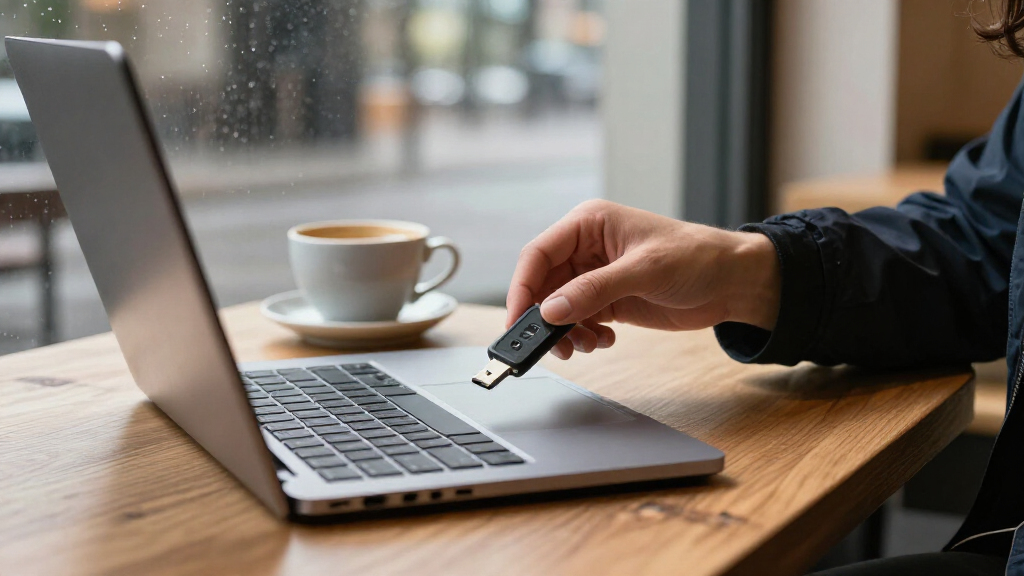
Encrypted USB security keys protect portable files with hardware-based encryption and access controls, but the right choice depends on how you connect, authenticate, and recover access to your data. My best overall pick is the Kingston IronKey Keypad 200, which pairs keypad access with several capacity options. The Apricorn Aegis Secure Key 3 NXC stands out for buyers seeking a USB-C model, while the Kingston IronKey Locker+ 50 G2 offers a simpler, capacity-rich alternative. The main tradeoffs are keypad convenience versus host-dependent access, capacity versus portability, and ease of use versus added security controls. Read on for the full breakdown and guidance on matching a drive to your devices and risk level.

Get privacy and security gear delivered free with Prime
- Fast, free delivery on millions of items
- Prime Video, Amazon Music and more included
- Member-only deals all year
Key Takeaways
- The Keypad 200 is the most flexible family in this lineup: it appears in four capacities, letting buyers choose storage size without switching to a different authentication style.
- The Aegis 3 NXC is the clearest USB-C-specific pick: its connector focus may suit newer devices better than the listed models without USB-C in their names.
- Locker+ 50 G2 has the broadest capacity spread: its 32GB, 64GB, 128GB, and 256GB versions make it easier to match storage needs, though capacity alone does not determine security.
- Several entries are capacity variants, not wholly different designs: buyers should compare authentication and connectivity first, then select the capacity that fits their files.
- The lineup includes both keypad-oriented and simpler encrypted-drive options: the right tradeoff depends on whether independent PIN entry, fewer setup steps, or device compatibility matters most.
| Kingston IronKey Keypad 200 16GB Encrypted USB Flash Drive |  | Best for PIN-Based Physical Access Control | Storage capacity: 16 GB | Encryption: XTS-AES 256-bit hardware encryption | Authentication: Alphanumeric keypad; Admin and User PIN options | VIEW LATEST PRICE | See Our Full Breakdown |
| Kingston IronKey Locker+ 50 G2 256GB Encrypted USB Drive |  | Best for High-Capacity Password-Protected Storage | Storage capacity: 256 GB | Encryption: 256-bit XTS-AES hardware encryption | Certification: FIPS 197 | VIEW LATEST PRICE | See Our Full Breakdown |
| Apricorn Aegis Secure Key 3 NXC 128GB Hardware-Encrypted USB-C Flash Drive |  | Best Validated USB-C Pick | Storage capacity: 128 GB | Encryption: 256-bit AES-XTS hardware encryption | Security validation: FIPS 140-2 Level 3 | VIEW LATEST PRICE | See Our Full Breakdown |
| Kingston IronKey Locker+ 50 G2 128GB Encrypted USB Drive |  | Best Balanced Capacity for Password-Based Security | Storage capacity: 128 GB | Encryption: XTS-AES 256-bit hardware encryption | Certification: FIPS 197 | VIEW LATEST PRICE | See Our Full Breakdown |
| Apricorn Aegis Secure Key 3NX 16GB Hardware-Encrypted USB Flash Drive |  | Best for Software-Free Keypad Access | Storage capacity: 16 GB | Encryption: 256-bit AES-XTS hardware encryption | Authentication: Onboard keypad PIN | VIEW LATEST PRICE | See Our Full Breakdown |
| Kingston IronKey Keypad 200 128GB Encrypted USB Flash Drive |  | Best for PIN-Based, Device-Independent Access | Storage capacity: 128 GB | Encryption: XTS-AES 256-bit hardware encryption | Access: Alphanumeric keypad; Admin and User PINs | VIEW LATEST PRICE | See Our Full Breakdown |
| Kingston IronKey Locker+ 50 G2 64GB Encrypted USB Drive |  | Best for Shared Password-Based Access | Storage capacity: 64 GB | Encryption: 256-bit XTS-AES hardware encryption | Certification: FIPS 197 | VIEW LATEST PRICE | See Our Full Breakdown |
| Kingston IronKey Vault Privacy 50 16GB Encrypted USB Flash Drive |  | Best for Small, Read-Mostly Secure Files | Storage capacity: 16 GB | Encryption: Hardware-based AES-256 in XTS mode | Certification: FIPS 197 | VIEW LATEST PRICE | See Our Full Breakdown |
| Kingston IronKey Locker+ 50 G2 32GB Encrypted USB Drive | 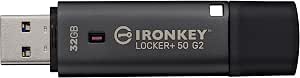 | Best for Compact Certified Storage | Storage capacity: 32 GB | Encryption: XTS-AES 256-bit hardware encryption | Certification: FIPS 197 | VIEW LATEST PRICE | See Our Full Breakdown |
| 32GB Encrypted USB 3.0 Flash Drive with 256-Bit Hardware Encryption |  | Best for Driver-Free, Multi-System Use | Storage capacity: 32 GB | Encryption: 256-bit AES XTS hardware encryption | Interface: USB 3.0 | VIEW LATEST PRICE | See Our Full Breakdown |
| Apricorn Aegis Secure Key 3NX 8GB Encrypted USB 3.0 Flash Drive |  | Best for Compact, High-Assurance Documents | Storage capacity: 8 GB | Encryption: Hardware-based 256-bit AES-XTS | Security validation: FIPS 140-2 Level 3 | VIEW LATEST PRICE | See Our Full Breakdown |
| Kingston IronKey Keypad 200 32GB Encrypted USB Flash Drive |  | Best for Faster, Flexible Everyday Transfers | Storage capacity: 32 GB | Encryption: XTS-AES 256-bit hardware encryption | Security certification: FIPS 140-3 Level 3 pending | VIEW LATEST PRICE | See Our Full Breakdown |
| Apricorn Aegis Secure Key 3 NX 64GB USB 3.0 Flash Drive | | Best for Validated 64GB Protection | Storage capacity: 64 GB | Encryption: Hardware-based 256-bit AES-XTS | Security standard: FIPS 140-2 Level 3 | VIEW LATEST PRICE | See Our Full Breakdown |
| Kingston IronKey Keypad 200 64GB Encrypted USB Drive |  | Best for High-Capacity, Feature-Rich Keypad Security | Storage capacity: 64 GB | Encryption: XTS-AES 256-bit hardware encryption | Certification: FIPS 140-3 Level 3 pending | VIEW LATEST PRICE | See Our Full Breakdown |
| encrypted USB security key | Storage capacity | Encryption | Certification | Warranty |
|---|---|---|---|---|
| Kingston IronKey Keypad 200 16 | 16 GB | XTS-AES 256-bit hardware encryption | FIPS 140-3 Level 3 pending | — |
| Kingston IronKey Locker+ 50 G2 | 256 GB | 256-bit XTS-AES hardware encryption | FIPS 197 | 5 years |
| Apricorn Aegis Secure Key 3 NX | 128 GB | 256-bit AES-XTS hardware encryption | — | 3 years |
| Kingston IronKey Locker+ 50 G2 | 128 GB | XTS-AES 256-bit hardware encryption | FIPS 197 | 5 years |
| Apricorn Aegis Secure Key 3NX | 16 GB | 256-bit AES-XTS hardware encryption | — | 3 years |
| Kingston IronKey Keypad 200 12 | 128 GB | XTS-AES 256-bit hardware encryption | FIPS 140-3 Level 3 (Pending) | — |
| Kingston IronKey Locker+ 50 G2 | 64 GB | 256-bit XTS-AES hardware encryption | FIPS 197 | 5 years |
| Kingston IronKey Vault Privacy | 16 GB | Hardware-based AES-256 in XTS mode | FIPS 197 | — |
| Kingston IronKey Locker+ 50 G2 | 32 GB | XTS-AES 256-bit hardware encryption | FIPS 197 | 5 years |
| 32GB Encrypted USB 3.0 Flash D | 32 GB | 256-bit AES XTS hardware encryption | — | — |
| Apricorn Aegis Secure Key 3NX | 8 GB | Hardware-based 256-bit AES-XTS | — | 3 years |
| Kingston IronKey Keypad 200 32 | 32 GB | XTS-AES 256-bit hardware encryption | — | — |
| Apricorn Aegis Secure Key 3 NX | 64 GB | Hardware-based 256-bit AES-XTS | — | — |
| Kingston IronKey Keypad 200 64 | 64 GB | XTS-AES 256-bit hardware encryption | FIPS 140-3 Level 3 pending | 3 years |
More Details on Our Top Picks
Kingston IronKey Keypad 200 16GB Encrypted USB Flash Drive
I’d choose the IronKey Keypad 200 when I want to enter a PIN on the drive itself rather than rely on password software or a computer interface. Its XTS-AES 256-bit hardware encryption, brute-force defenses, and BadUSB protection make it a more security-focused pick than the password-based IronKey Locker+ 50 G2. The keypad also supports separate Admin and User PINs, which can help when one person manages access for another.
The tradeoff is its 16GB capacity and the extra step of keypad entry each time I use it. Its FIPS 140-3 Level 3 certification is listed as pending, so buyers who require a completed certification should look at validated alternatives such as the Apricorn Aegis Secure Key 3 NXC. I’d rank it for physical PIN control, not capacity or certification status.
Pros:- 256-bit XTS-AES hardware encryption
- On-device keypad with separate Admin and User PIN options
- Brute-force attack and BadUSB protection
- Tamper-evident construction and fingerprint-resistant keypad coating
Cons:- FIPS 140-3 Level 3 certification is pending
- PIN entry adds a step whenever the drive is accessed
- 16GB capacity is limiting for large archives or media files
Best for: People carrying sensitive documents who want PIN entry directly on a USB drive and can work within 16GB.
Not ideal for: Buyers who need large file capacity, prefer password entry on a computer, or require completed FIPS 140-3 Level 3 certification.
- Storage capacity:16 GB
- Encryption:XTS-AES 256-bit hardware encryption
- Authentication:Alphanumeric keypad; Admin and User PIN options
- Interface and connector:USB 3.2 Gen 1; USB Type-A
- Certification:FIPS 140-3 Level 3 pending
- Read and write speeds:145 MB/s read; 115 MB/s write
- Compatibility:Windows, macOS, Linux, Chrome OS, Android, and systems supporting USB mass storage
- Model:IKKP200-16GB
Our verdict“I’d pick it for compact, PIN-controlled storage with layered protections, provided 16GB is enough and pending certification fits your requirements.”
Kingston IronKey Locker+ 50 G2 256GB Encrypted USB Drive
For buyers who need encrypted storage for a substantial file library, I’d favor the 256GB IronKey Locker+ 50 G2 over the 128GB version of the same drive. Both offer FIPS 197-certified, 256-bit XTS-AES hardware encryption and separate administrator and user passwords; the capacity increase is the deciding difference here. Complex-password and passphrase modes also let me choose between stricter password rules and a more memorable phrase.
This is a password-based drive, not a keypad model like the IronKey Keypad 200, so access depends on entering credentials through a connected device. Its USB Type-A connector can also call for an adapter on newer USB-C-only laptops and phones. Read speeds reach 145 MB/s, while writes top out at 115 MB/s, making it a practical capacity-first choice rather than the fastest option in this group.
Pros:- 256GB capacity suits larger encrypted file collections
- FIPS 197-certified 256-bit XTS-AES hardware encryption
- Separate administrator and user passwords
- Complex-password and passphrase modes provide credential choices
Cons:- USB Type-A may require an adapter with newer devices
- Write speed is rated up to 115 MB/s
- Password entry is less self-contained than the Keypad 200’s onboard keypad
Best for: Professionals and small teams storing large working sets who want certified hardware encryption and separate administrator and user passwords.
Not ideal for: People with USB-C-only devices, or buyers who need keypad authentication or faster-than-listed write speeds.
- Storage capacity:256 GB
- Encryption:256-bit XTS-AES hardware encryption
- Certification:FIPS 197
- Password options:Administrator and user passwords; complex or passphrase modes
- Interface and connector:USB 3.2 Gen 1; USB Type-A
- Read and write speeds:Up to 145 MB/s read; up to 115 MB/s write
- Dimensions and weight:0.73 × 0.37 × 0.37 in; 22.68 g
- Warranty:5 years
Our verdict“I’d choose this version over the 128GB Locker+ 50 G2 when capacity matters more than USB-C convenience or keypad-based access.”
Apricorn Aegis Secure Key 3 NXC 128GB Hardware-Encrypted USB-C Flash Drive
The Aegis Secure Key 3 NXC stands apart for pairing USB-C connectivity with FIPS 140-2 Level 3 validation and 128GB of hardware-encrypted storage. Its software-free operation is useful for people moving files among compatible computers, tablets, and phones without installing an authentication utility. Compared with the USB Type-A IronKey Locker+ 50 G2, this Apricorn model better fits newer USB-C devices and carries a higher stated read speed of 171 MB/s.
The tradeoff is that its compatibility depends on having a suitable USB-C port or supported USB OTG connection; it is not the universal fit for older Type-A setups. Its separate administrator and user modes offer access choices, but the supplied details do not describe an onboard keypad, unlike the Apricorn Aegis Secure Key 3NX. I’d pick this for validated, software-free USB-C use, not keypad-first authentication.
Pros:- FIPS 140-2 Level 3 validated
- 256-bit AES-XTS hardware encryption
- USB-C connection with software-free operation
- Separate administrator and user modes
Cons:- Requires USB-C or a supported USB OTG connection
- No onboard keypad is specified in the product details
- Three-year warranty is shorter than the Locker+ 50 G2’s stated five-year warranty
Best for: Mobile professionals and organizations needing validated encrypted storage that connects directly to compatible USB-C computers, tablets, or phones.
Not ideal for: People whose devices only have USB Type-A ports or who specifically want onboard keypad PIN authentication.
- Storage capacity:128 GB
- Encryption:256-bit AES-XTS hardware encryption
- Security validation:FIPS 140-2 Level 3
- Interface:USB 3.2 Type-C
- Authentication and access:Software-free; separate administrator and user modes
- Read and write speeds:171 MB/s read; 625 MB/s write
- Compatibility:Computers, tablets, and smartphones with USB Type-C or supported USB OTG
- Warranty:3 years
Our verdict“I’d select it for validated, software-free encrypted storage on USB-C devices, but not for Type-A-only hardware or keypad PIN entry.”
Kingston IronKey Locker+ 50 G2 128GB Encrypted USB Drive
The 128GB IronKey Locker+ 50 G2 suits buyers who want more room than a small document drive without stepping up to the 256GB version. It shares the larger model’s FIPS 197 certification, XTS-AES 256-bit hardware encryption, and separate administrator and user password options. I’d choose it over the 256GB Locker+ 50 G2 when the extra space is unnecessary, while its password and passphrase modes make it more flexible than a drive restricted to one credential style.
It uses USB Type-A, which may be inconvenient for newer laptops and mobile devices without an adapter. Unlike the IronKey Keypad 200, authentication is password-based rather than entered on a physical keypad. Its 115 MB/s rated write speed is also a ceiling to keep in mind for frequent large transfers. This is a straightforward capacity-and-certification balance, not a keypad or USB-C specialist.
Pros:- 128GB capacity offers room for sizable work files
- FIPS 197-certified XTS-AES 256-bit hardware encryption
- Separate administrator and user password options
- Complex-password and passphrase modes
Cons:- USB Type-A may need an adapter on newer devices
- Write speed is rated up to 115 MB/s
- Half the capacity of the 256GB Locker+ 50 G2
Best for: Laptop users and office teams who need certified encrypted storage for substantial files and prefer password or passphrase access.
Not ideal for: USB-C-only device owners, buyers who want PIN entry on the drive, or anyone needing the 256GB model’s larger capacity.
- Storage capacity:128 GB
- Encryption:XTS-AES 256-bit hardware encryption
- Certification:FIPS 197
- Password options:Administrator and user passwords; complex or passphrase modes
- Interface and connector:USB 3.2 Gen 1; USB Type-A
- Read and write speeds:Up to 145 MB/s read; up to 115 MB/s write
- Dimensions and weight:0.73 × 0.37 × 0.37 in; 22.68 g
- Warranty:5 years
Our verdict“I’d pick this model for certified, password-protected storage when 128GB is enough and USB Type-A fits your devices.”
Apricorn Aegis Secure Key 3NX 16GB Hardware-Encrypted USB Flash Drive
The Aegis Secure Key 3NX is for buyers who want an onboard PIN keypad and software-free access in a compact 16GB drive. Its 256-bit AES-XTS hardware encryption, physical tamper protection, and locked-down firmware give it a clear security-focused role. Compared with the Kingston IronKey Keypad 200, it shares the direct keypad approach, while the Keypad 200 lists newer USB 3.2 Gen 1 connectivity and specific brute-force and BadUSB protections.
The 3NX instead offers broad stated compatibility across Windows, iOS, Linux, Android, and Chrome, but its USB 3.0 interface and listed read and write figures of 77,000 and 72,000 bytes per second point to modest transfer performance. Its FIPS 140-2 Level 3 validation is pending, not complete. I’d choose it for keypad-based, software-free access rather than speed or a completed validation claim.
Pros:- 256-bit AES-XTS hardware encryption with onboard PIN authentication
- Software-free operation
- Tamper-resistant epoxy protection and locked-down firmware
- Stated compatibility with Windows, iOS, Linux, Android, and Chrome
Cons:- Listed transfer speeds are modest
- USB 3.0 is older than the USB 3.2 Gen 1 interface on the Keypad 200
- FIPS 140-2 Level 3 validation is pending
Best for: People carrying small amounts of sensitive data across mixed operating systems who want PIN entry on the drive and no software dependency.
Not ideal for: Users transferring large files often, buyers needing more than 16GB, or organizations requiring completed FIPS 140-2 Level 3 validation.
- Storage capacity:16 GB
- Encryption:256-bit AES-XTS hardware encryption
- Authentication:Onboard keypad PIN
- Interface and connector:USB 3.0; USB Type-A
- Read and write speeds:77,000 bytes per second read; 72,000 bytes per second write
- Compatibility:Windows, iOS, Linux, Android, and Chrome
- FIPS validation:FIPS 140-2 Level 3 validation pending
- Warranty:3 years
Our verdict“I’d choose the 3NX for software-free keypad protection across varied systems, but not for fast transfers or completed FIPS validation.”
Kingston IronKey Keypad 200 128GB Encrypted USB Flash Drive
The IronKey Keypad 200 suits buyers who want to unlock an encrypted drive without typing a password on the connected computer. Its built-in alphanumeric keypad handles PIN entry directly, while XTS-AES 256-bit hardware encryption, brute-force protection, and BadUSB protection add layers aimed at guarding stored data and the connection. Separate Admin and User PINs also allow different access roles. Compared with the IronKey Locker+ 50 G2 64GB, this model puts the keypad at the center of the security experience rather than relying on password entry through a host device. The tradeoff is that PIN entry adds a step every time, and its FIPS 140-3 Level 3 certification is pending, not confirmed. Its 128GB capacity is useful for larger sets of files, but buyers who prefer password-based access may find the Locker+ simpler.
Pros:- Hardware-based XTS-AES 256-bit encryption protects stored data.
- Built-in keypad accepts alphanumeric PINs without host-computer password entry.
- Separate Admin and User PINs support different access roles.
- Brute-force and BadUSB protection add safeguards beyond basic password access.
Cons:- FIPS 140-3 Level 3 certification is listed as pending.
- PIN entry on the keypad adds a step each time the drive is accessed.
- USB Type-A may require an adapter on devices with only USB-C ports.
Best for: People carrying sensitive files between shared or untrusted computers who want to enter access credentials on the drive itself.
Not ideal for: Buyers who want confirmed FIPS 140-3 Level 3 certification or prefer unlocking a drive without using a physical keypad.
- Storage capacity:128 GB
- Encryption:XTS-AES 256-bit hardware encryption
- Access:Alphanumeric keypad; Admin and User PINs
- Interface:USB 3.2 Gen 1
- Connector:USB Type-A
- Read speed:145 MB/s
- Write speed:115 MB/s
- Certification:FIPS 140-3 Level 3 (Pending)
Our verdict“Choose the Keypad 200 if you want 128GB of encrypted storage with on-device PIN entry and can accept pending certification.”
Kingston IronKey Locker+ 50 G2 64GB Encrypted USB Drive
The IronKey Locker+ 50 G2 64GB is a straightforward choice for teams or individuals who want encrypted storage with distinct administrator and user passwords. Its FIPS 197 certification and 256-bit XTS-AES hardware encryption provide a clear security basis, while complex-password and passphrase modes let buyers choose between stricter credentials and easier-to-recall phrases. Compared with the keypad-equipped IronKey Keypad 200 128GB, this model depends on password access rather than a built-in keypad, so it lacks that extra separation from the host computer. In return, its security setup is less centered on entering a PIN directly on the device. The 64GB capacity is a useful middle ground, though the 32GB Locker+ 50 G2 is a better fit for smaller file sets. USB Type-A also limits convenience on newer devices without that port.
Pros:- FIPS 197-certified 256-bit XTS-AES hardware encryption.
- Separate administrator and user password options.
- Complex-password and passphrase modes offer different credential styles.
- USB 3.2 Gen 1 supports read speeds up to 145 MB/s.
Cons:- USB Type-A can require an adapter for newer USB-C-only computers.
- 64GB may be limiting for large media libraries or full-device backups.
- Password entry is not handled by a built-in keypad as it is on the IronKey Keypad 200.
Best for: Small teams and individual users who need FIPS 197-certified encrypted storage with separate administrator and user passwords.
Not ideal for: People who need keypad-based entry away from the host computer, more than 64GB of storage, or a native USB-C connector.
- Storage capacity:64 GB
- Encryption:256-bit XTS-AES hardware encryption
- Certification:FIPS 197
- Password options:Administrator and user passwords; complex-password and passphrase modes
- Interface:USB 3.2 Gen 1
- Connector:USB Type-A
- Read/write speeds:Up to 145 MB/s read; up to 115 MB/s write
- Warranty:5 years
Our verdict“Pick this Locker+ model for password-based, certified encryption and separate user roles in a 64GB drive.”
Kingston IronKey Vault Privacy 50 16GB Encrypted USB Flash Drive
The IronKey Vault Privacy 50 16GB is a compact-capacity option for documents, credentials, and other files that do not need much room. Its FIPS 197-certified AES-256 encryption in XTS mode is paired with digitally signed firmware, brute-force protection, and BadUSB safeguards. Two read-only settings also help when the goal is to share files without inviting changes or accidental deletion. Compared with the IronKey Locker+ 50 G2 64GB, this drive offers less storage but adds configurable write protection and lists faster read and write figures. That makes it more appealing for controlled, read-focused handoffs than for keeping a broad file archive. The main compromise is obvious: 16GB fills quickly, and its USB Type-A connector may need an adapter on newer laptops and tablets.
Pros:- FIPS 197-certified hardware AES-256 encryption in XTS mode.
- Digitally signed firmware and protection against brute-force and BadUSB attacks.
- Dual read-only settings help prevent unwanted file changes.
- Listed speeds reach 250 MB/s read and 180 MB/s write.
Cons:- 16GB capacity is restrictive for large folders, media, or backups.
- USB Type-A may need an adapter for USB-C-only devices.
- The listed password modes require users to choose and manage credentials.
Best for: Professionals sharing a small set of sensitive documents who want certified encryption and read-only controls.
Not ideal for: People storing large archives, frequent backups, or files that need substantial room to grow.
- Storage capacity:16 GB
- Encryption:Hardware-based AES-256 in XTS mode
- Certification:FIPS 197
- Interface:USB 3.2 Gen 1
- Connector:USB Type-A
- Read/write speeds:250 MB/s read; 180 MB/s write
- Password options:Complex and passphrase modes
- Write protection:Dual read-only settings
- Firmware:Digitally signed
Our verdict“Choose the Vault Privacy 50 when read-only controls and certified encryption matter more than storage capacity.”
Kingston IronKey Locker+ 50 G2 32GB Encrypted USB Drive
For buyers who need protected files without carrying a larger drive, the IronKey Locker+ 50 G2 32GB offers a restrained capacity and FIPS 197-certified XTS-AES 256-bit hardware encryption. Admin and user password modes provide separate access roles, while the stated USB 3.2 Gen 1 read speed of up to 145 MB/s suits routine document transfers. Compared with the IronKey Locker+ 50 G2 64GB, this version is the more compact-capacity choice, not a different security platform; the larger model makes more sense if the file collection is likely to grow. The 32GB size helps keep the drive focused on essential documents, but it can become a bottleneck for media or frequent backups. Unlike the Vault Privacy 50 16GB, the supplied details do not list read-only controls or its higher transfer figures.
Pros:- FIPS 197-certified XTS-AES 256-bit hardware encryption.
- Admin and user modes support separate access roles.
- Compact 32GB capacity suits a limited set of sensitive files.
- USB 3.2 Gen 1 read speeds are listed up to 145 MB/s.
Cons:- 32GB may not hold large backups or media collections.
- Password management adds a credential step for users.
- The provided product details do not specify password modes or write-protect settings.
Best for: People carrying a focused set of confidential work documents who want certified hardware encryption in a small-capacity drive.
Not ideal for: Users backing up large folders or media, or anyone who needs keypad entry or documented read-only settings.
- Storage capacity:32 GB
- Encryption:XTS-AES 256-bit hardware encryption
- Certification:FIPS 197
- Interface:USB 3.2 Gen 1
- Read speed:Up to 145 MB/s
- Write speed:Up to 115 MB/s
- Weight:22.68 g
- Warranty:5 years
Our verdict“Choose the 32GB Locker+ 50 G2 for a compact, certified drive dedicated to a modest set of sensitive files.”
32GB Encrypted USB 3.0 Flash Drive with 256-Bit Hardware Encryption
This 32GB drive stands out for buyers who need encrypted storage across Windows, macOS, Linux, or embedded systems without installing software or drivers. It uses 256-bit AES XTS hardware encryption and has a zinc-alloy shell, with listed maximum speeds of 480 MB/s read and 150 MB/s write. Compared with the IronKey Locker+ 50 G2 32GB, its appeal is the stated driver-free compatibility and higher claimed read speed, while the Kingston model offers FIPS 197 certification and admin/user access modes. This product’s details do not identify a certification or explain how password setup and management work, so buyers with formal compliance requirements may prefer the Locker+. A particularly sharp tradeoff is the 10-attempt limit: entering the wrong password ten times resets the drive and erases its data. That may deter repeated guessing, but makes forgotten credentials risky.
Pros:- 256-bit AES XTS hardware encryption with password protection.
- Works with Windows, macOS, Linux, and embedded systems without software or drivers.
- Zinc-alloy shell is specified as the enclosure material.
- Listed maximum speeds reach 480 MB/s read and 150 MB/s write.
Cons:- Ten incorrect password attempts trigger a reset that erases stored data.
- The supplied details do not specify how initial setup or password management works.
- No security certification is listed in the product information.
Best for: Technical users moving encrypted files among Windows, macOS, Linux, and embedded systems without installing drivers.
Not ideal for: People who need a listed security certification, clear password-management details, or protection against accidental data loss after forgotten credentials.
- Storage capacity:32 GB
- Encryption:256-bit AES XTS hardware encryption
- Interface:USB 3.0
- Password protection:Yes
- Maximum read/write speeds:Up to 480 MB/s read; up to 150 MB/s write
- Supported systems:Windows, macOS, Linux, embedded systems
- Software or drivers:Not required
- Incorrect password limit:10 attempts; drive resets and erases data
- Material:Zinc alloy
Our verdict“Pick this drive for driver-free use across varied systems only if you can manage the password carefully and accept the erase-on-reset policy.”
Apricorn Aegis Secure Key 3NX 8GB Encrypted USB 3.0 Flash Drive
I’d choose this 8GB Aegis when the priority is protecting a small set of sensitive files rather than carrying a full working archive. Its hardware-based 256-bit AES-XTS encryption, keypad PIN access, and FIPS 140-2 Level 3 validation make its security credentials more established than the Kingston IronKey Keypad 200 models, whose FIPS 140-3 Level 3 certification is listed as pending. Administrator and user modes, read-only access, and recovery PINs add useful control for managed or shared use. The tradeoff is capacity: the 32GB Keypad 200 holds four times as much, and the 64GB Aegis gives more room while retaining the same validated security standard. On-device PIN entry avoids relying on host software, but adds a step each time the drive is unlocked.
Pros:- Hardware-based 256-bit AES-XTS encryption with keypad PIN authentication
- FIPS 140-2 Level 3 validated
- Administrator and user modes, read-only modes, and recovery PINs
- Works across Windows, iOS, Linux, Android, and Chrome systems
Cons:- 8GB capacity limits it to a small document set
- PIN must be entered on the device for access
Best for: People carrying a small collection of confidential documents who need FIPS 140-2 Level 3 validation and broad system compatibility.
Not ideal for: Users storing large files or frequent backups; 8GB fills quickly, and the physical keypad makes access slower than a drive without PIN entry.
- Storage capacity:8 GB
- Encryption:Hardware-based 256-bit AES-XTS
- Security validation:FIPS 140-2 Level 3
- Interface and connector:USB 3.0, USB Type-A
- Authentication:Onboard keypad PIN
- Read/write speeds:77 MB/s read; 72 MB/s write
- Compatible systems:Windows, iOS, Linux, Android, and Chrome
- Warranty:3 years
Our verdict“Pick this Aegis for a small, sensitive document set when validated FIPS 140-2 Level 3 protection matters more than storage space.”
Kingston IronKey Keypad 200 32GB Encrypted USB Flash Drive
The 32GB IronKey Keypad 200 is a balanced pick for people who want keypad-controlled hardware encryption without jumping to a larger-capacity drive. Its 145 MB/s read and 115 MB/s write speeds are higher than the listed speeds of both Aegis Secure Key 3NX models here, which can make routine file transfers less of a bottleneck. The alphanumeric keypad accepts separate administrator and user PINs, while brute-force protection and digitally signed firmware address risks beyond lost-device access. Compared with the 8GB Aegis, it offers four times the capacity; compared with the 64GB Aegis, it gives up storage and FIPS 140-2 Level 3 validation. Its own FIPS 140-3 Level 3 status is pending, so buyers with a firm certification requirement should favor the validated Aegis instead.
Pros:- XTS-AES 256-bit hardware encryption
- Alphanumeric keypad supports administrator and user PINs
- Brute-force attack protection and digitally signed firmware for BadUSB protection
- Listed transfer speeds are higher than those of the Aegis 3NX options in this group
Cons:- FIPS 140-3 Level 3 certification is pending
- Physical keypad PIN entry is required to access the drive
- 32GB offers less room than the 64GB models in this group
Best for: Mobile professionals who need a moderate amount of encrypted storage, faster listed transfer speeds, and PIN-based access across several operating systems.
Not ideal for: Organizations that require an already validated FIPS 140-3 Level 3 device or buyers who need more than 32GB for large archives.
- Storage capacity:32 GB
- Encryption:XTS-AES 256-bit hardware encryption
- Security certification:FIPS 140-3 Level 3 pending
- Interface and connector:USB 3.2 Gen 1, USB Type-A
- Authentication:Alphanumeric keypad with administrator and user PINs
- Read/write speeds:145 MB/s read; 115 MB/s write
- Compatible systems:Windows, macOS, Linux, Chrome OS, Android, and systems supporting USB mass storage
- Weight:25 g
Our verdict“Choose the 32GB Keypad 200 for faster listed transfers and useful firmware protections, provided pending certification and limited capacity fit your needs.”
Apricorn Aegis Secure Key 3 NX 64GB USB 3.0 Flash Drive
Among these four, the 64GB Aegis is the clearest fit for buyers who need substantial encrypted storage and want a listed, validated FIPS level rather than a certification still pending. It pairs 256-bit AES-XTS hardware encryption with keypad PIN access and hardened epoxy protection, without requiring software installation on the host. That makes it more suitable for moving data among Windows, Mac, Linux, and Android systems than a setup that depends on a particular app. The Kingston IronKey Keypad 200 64GB offers faster listed transfer rates and BadUSB protection, but its FIPS 140-3 Level 3 status is pending; the Aegis is the stronger choice when FIPS 140-2 Level 3 validation is the deciding factor. Its listed 64 MB/s read and 51.2 MB/s write speeds are modest by comparison, and the physical PIN routine adds friction.
Pros:- 64GB capacity paired with hardware-based 256-bit AES-XTS encryption
- FIPS 140-2 Level 3 validated
- Does not require software installation for access
- Hardened epoxy provides physical tamper protection
Cons:- Listed read and write speeds are moderate compared with the Kingston IronKey Keypad 200 64GB
- PIN entry on the onboard keypad adds an access step
- USB 3.0 interface is older than the Kingston model’s USB 3.2 Gen 1
Best for: Compliance-minded teams and individuals who need 64GB of encrypted storage, cross-platform access, and FIPS 140-2 Level 3 validation.
Not ideal for: Users who prioritize faster transfers or want to avoid keypad unlocking; the Kingston IronKey Keypad 200 64GB lists higher read and write speeds.
- Storage capacity:64 GB
- Encryption:Hardware-based 256-bit AES-XTS
- Security standard:FIPS 140-2 Level 3
- Interface:USB 3.0
- Authentication:Onboard keypad PIN
- Read/write speeds:64 MB/s read; 51.2 MB/s write
- Compatible systems:Windows, Mac, Linux, and Android
- Weight and warranty:22.68 g; 3 years
Our verdict“Choose the 64GB Aegis when validated FIPS 140-2 Level 3 protection and software-free cross-platform use outweigh transfer speed.”
Kingston IronKey Keypad 200 64GB Encrypted USB Drive
This 64GB Keypad 200 combines the larger capacity of the Aegis 3 NX 64GB with the Keypad 200 line’s faster listed transfers and additional firmware defenses. I’d favor it for users who move sizable files often and want 145 MB/s read and 115 MB/s write speeds, brute-force attack protection, and BadUSB protection from digitally signed firmware. The alphanumeric keypad supports separate administrator and user PINs, and its fingerprint-concealing coating helps obscure keypad use. Compared with the Apricorn Aegis 64GB, it offers stronger listed speed figures and these named firmware protections, but it does not match the Aegis’s already validated FIPS 140-2 Level 3 status: FIPS 140-3 Level 3 certification is pending. Both require keypad entry, so neither suits buyers seeking frictionless plug-in access.
Pros:- 64GB capacity with XTS-AES 256-bit hardware encryption
- Listed read and write speeds exceed those of the Aegis Secure Key 3 NX 64GB
- Brute-force attack and BadUSB protections
- Separate administrator and user PINs with a fingerprint-concealing keypad coating
Cons:- FIPS 140-3 Level 3 certification is pending
- Physical keypad PIN entry is required for access
- USB Type-A connector may not suit devices that only have USB-C ports
Best for: People transferring larger files who want 64GB of hardware-encrypted storage, keypad PIN controls, and added brute-force and BadUSB protections.
Not ideal for: Buyers whose procurement rules require completed FIPS validation; the Apricorn Aegis Secure Key 3 NX 64GB lists FIPS 140-2 Level 3 validation.
- Storage capacity:64 GB
- Encryption:XTS-AES 256-bit hardware encryption
- Certification:FIPS 140-3 Level 3 pending
- Interface and connector:USB 3.2 Gen 1, USB Type-A
- Authentication:Alphanumeric keypad with administrator and user PINs
- Read/write speeds:145 MB/s read; 115 MB/s write
- Compatible systems:Windows, macOS, Linux, Chrome OS, Android, and systems supporting USB mass storage
- Warranty:3 years
Our verdict“Pick the 64GB Keypad 200 for faster listed transfers and added attack protections, unless completed FIPS validation is your priority.”
How We Picked
I ranked these encrypted USB security keys by the factors that change day-to-day security and usability: how access is controlled, how well the connector fits common devices, the available capacity choices, and how clearly the product’s intended role comes through. A keypad can be useful when buyers want to enter a PIN on the drive itself, while a USB-C model may reduce adapter dependence for newer hardware. Capacity matters too, but a larger drive is not automatically safer or easier to manage.
The ranking favors products with a distinct practical advantage for a defined buyer, rather than treating every capacity variant as a separate technological leap. I placed the Keypad 200 first for its keypad-centered approach and range of capacities, followed by options that address USB-C use, broader storage needs, or simpler selection. Models with overlapping roles rank lower when the lineup offers a clearer match elsewhere. The supplied product names do not establish every certification, compatibility detail, or recovery feature, so buyers should confirm those points with the manufacturer before purchase.
| encrypted USB security key | Interface and connector | Certification | Interface |
|---|---|---|---|
| Kingston IronKey Keypad 200 16 | USB 3.2 Gen 1; USB Type-A | FIPS 140-3 Level 3 pending | — |
| Kingston IronKey Locker+ 50 G2 | USB 3.2 Gen 1; USB Type-A | FIPS 197 | — |
| Apricorn Aegis Secure Key 3 NX | — | — | USB 3.2 Type-C |
| Kingston IronKey Locker+ 50 G2 | USB 3.2 Gen 1; USB Type-A | FIPS 197 | — |
| Apricorn Aegis Secure Key 3NX | USB 3.0; USB Type-A | — | — |
| Kingston IronKey Keypad 200 12 | — | FIPS 140-3 Level 3 (Pending) | USB 3.2 Gen 1 |
| Kingston IronKey Locker+ 50 G2 | — | FIPS 197 | USB 3.2 Gen 1 |
| Kingston IronKey Vault Privacy | — | FIPS 197 | USB 3.2 Gen 1 |
| Kingston IronKey Locker+ 50 G2 | — | FIPS 197 | USB 3.2 Gen 1 |
| 32GB Encrypted USB 3.0 Flash D | — | — | USB 3.0 |
| Apricorn Aegis Secure Key 3NX | USB 3.0, USB Type-A | — | — |
| Kingston IronKey Keypad 200 32 | USB 3.2 Gen 1, USB Type-A | — | — |
| Apricorn Aegis Secure Key 3 NX | — | — | USB 3.0 |
| Kingston IronKey Keypad 200 64 | USB 3.2 Gen 1, USB Type-A | FIPS 140-3 Level 3 pending | — |
Factors to Consider When Choosing Encrypted USB Security Keys
Choosing among encrypted drives is less about finding the biggest capacity and more about deciding how you will access, carry, and recover your files. These broader checks can prevent a secure drive from becoming inconvenient—or unusable—after purchase.
Match the connector to the devices you actually use
Start with the ports on the computers and tablets where you will open the drive, not the ports on the device you are buying today. A USB-C-focused drive such as the listed Aegis Secure Key 3 NXC may fit newer equipment directly, while other models may call for an adapter depending on their connector. Adapters can add bulk and may be easy to leave behind, so account for where the drive will live. Check whether your work or managed computer allows removable storage at all; a matching port does not guarantee access. If the drive must move between older and newer systems, verify connector type and operating-system support before choosing capacity. Avoid assuming that a USB version or connector name guarantees a particular transfer speed in every setup.
Choose an authentication style you can use reliably
Authentication affects how often a security feature becomes a practical obstacle. A keypad lets you enter a PIN on the drive, which can be useful when you do not want access to depend on software installed on the host computer. A simpler setup may feel more familiar, but buyers should check how unlock steps work on their devices and whether administrator rights are needed. Think about who will use the drive: a personal backup has different needs from a shared team device. Do not choose a method solely because it sounds more secure; a forgotten PIN or unclear unlock process can lock you out of important files. Read the manufacturer’s recovery and reset policy before storing the only copy of anything.
Buy capacity for the files you will carry, not every file you own
The lineup ranges from compact 8GB and 16GB options to drives as large as 256GB, so there is room to match the device to a specific workload. Small capacities can make sense for documents and limited transfers, while larger options suit bulkier archives or frequent file movement. A larger drive can also encourage carrying more sensitive material than necessary, increasing the consequences of loss. Estimate the size of your working set and leave room for growth rather than moving an entire archive onto a portable device by default. Capacity variants within one product family may share the same basic approach, so do not treat more gigabytes as a security upgrade. Keep a separate protected backup for important files.
Check recovery, PIN rules, and management needs before deployment
Security features are only useful if the drive fits your recovery plan. Before buying, confirm what happens after repeated incorrect PIN entries, whether there is an administrator option, and what steps are available if the primary user forgets credentials. Those details matter especially for business use, where one person’s absence should not leave a team unable to reach essential files. For a personal drive, store recovery information separately from the device and avoid keeping it in the same bag. If you need to issue drives to multiple people, check whether the model supports the management process your organization uses. Product names alone do not answer these questions, so consult the current manufacturer documentation.
Separate encryption claims from the whole security picture
Hardware encryption can protect data stored on a lost drive, but it does not solve every risk. It cannot prevent an authorized user from copying files to an unprotected location, nor does it replace endpoint security, access policies, or backups. Verify the exact encryption and certification claims for the specific model and capacity you plan to buy rather than relying on a family name or a generic phrase such as “256-bit.” Also check how the drive behaves when connected to a device you do not control. If your files are highly sensitive, use a broader data-handling plan that covers who can access them and where copies are stored. A security key is one layer, not a complete data-protection system.
Frequently Asked Questions
Is a keypad drive a better choice than a simpler encrypted USB drive?
A keypad model can be a strong fit when you want to enter a PIN on the drive rather than rely on a host-computer unlock process. That can make it appealing for use across different computers, though actual compatibility still depends on the device and product requirements. A simpler drive may be easier to set up for routine personal use, but buyers should confirm what software or permissions it needs. The better choice depends on your devices, how often you share the drive, and whether you can reliably manage the PIN. Compare the unlock and recovery instructions before deciding.
Should I choose USB-C or buy an adapter for a different connector?
Choose USB-C when your regular devices have USB-C ports and you want to avoid carrying an adapter. An adapter can be a reasonable option for occasional use, but it adds another item that can be lost and may be restricted on managed computers. Check whether the drive and adapter combination is supported by each device you plan to use. If you move files between older and newer systems, compare all their ports before purchase. Do not assume that connector fit alone confirms operating-system compatibility.
How much storage should I get for sensitive files?
Base capacity on the files you need to carry and the space they occupy, then leave room for expected growth. The 8GB and 16GB options may suit a focused set of documents, while larger capacities can help with extensive archives or bulky media. More storage is not automatically a safer choice: a drive holding more sensitive data can create a larger loss if misplaced. Keep a protected backup elsewhere rather than using a portable drive as the only copy. If you are unsure, check the size of your current working files before selecting a capacity.
Can I use one of these drives as my only backup?
No portable drive should be the sole copy of important data. Encryption can help protect files on a lost device, but it does not protect against damage, accidental deletion, or a forgotten credential. Keep another backup in a separate location and test that you can restore files from it. For sensitive information, make sure the backup receives suitable protection too. Treat the encrypted USB drive as a secure portable copy, not a complete backup plan.
What should I verify before buying an encrypted USB drive for work?
Check whether your organization permits removable storage and whether its computers allow the drive’s unlock process. Confirm the exact model’s encryption claims, certifications, operating-system support, and connector requirements using current manufacturer documentation. Ask how lost PINs, user changes, and recovery are handled, especially if files must remain accessible when an employee is unavailable. For multiple users, review whether the drive fits your organization’s administration and data-retention policies. A feature that suits one person may not meet a company’s deployment requirements.
Conclusion
For a versatile all-around choice, I would start with the Kingston IronKey Keypad 200, particularly if keypad access and a choice of capacities suit your routine. For the best value-oriented fit, consider the Kingston IronKey Locker+ 50 G2 in the capacity that matches your files; its multiple size options make it easier to avoid paying for storage you will not use. The Apricorn Aegis Secure Key 3 NXC is my premium-style pick for buyers who specifically want a USB-C-focused option, while the Locker+ 50 G2 is the more approachable starting point for someone who wants an encrypted drive without making keypad entry the deciding feature. For compact, limited file sets, compare the 8GB and 16GB options; for larger archives, look to the 128GB or 256GB models. Before choosing any of them, verify connector compatibility, recovery steps, and the exact security claims for the model you plan to buy.


