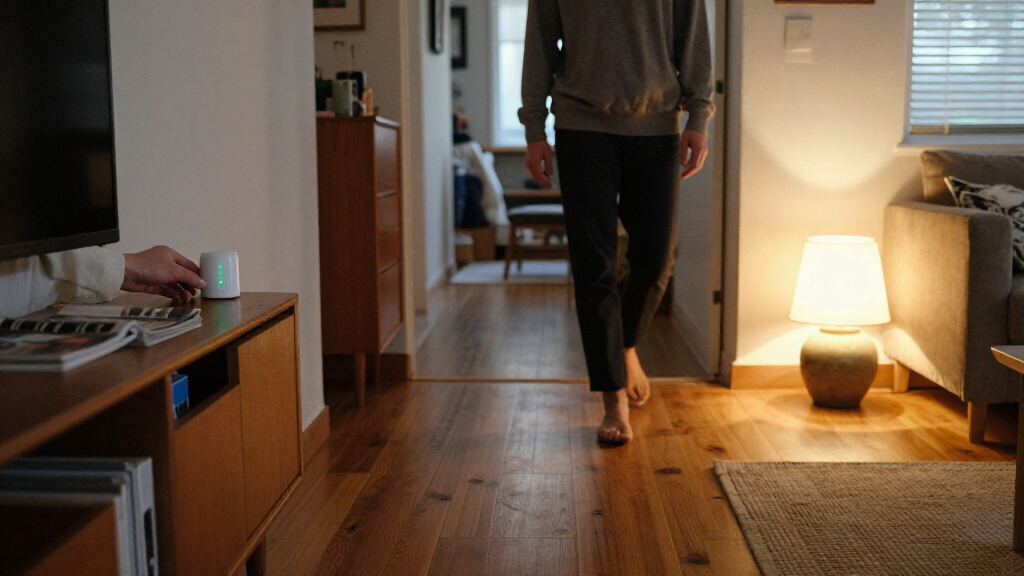

The Aqara Presence Sensor FP2 is my best overall pick for home presence sensing because its mmWave radar and multi-zone features suit room-level automations. For a wireless setup, the Aqara FP300 stands out as a 5-in-1 option, while the Meross MS605 pairs battery power with Matter over Thread and an IP67 rating. The main tradeoffs are wired versus battery power, direct Wi-Fi versus hub-based protocols, and basic occupancy detection versus zone-aware sensing. Home Assistant users also have several specialist choices, including Akamatis and Array models, while Zigbee options may fit existing hubs better. Read on for the full breakdown and help matching a sensor to your rooms, devices, and setup.

Get privacy and security gear delivered free with Prime
- Fast, free delivery on millions of items
- Prime Video, Amazon Music and more included
- Member-only deals all year
Key Takeaways
- The FP2 leads for room-level control: its multi-zone approach is a better fit for automations tied to specific areas than a sensor used only to switch a whole room on or off.
- Wireless does not mean the same thing across this list: the FP300 and Meross MS605 offer battery-powered approaches, while many mmWave models need USB or wired power.
- Protocol compatibility should shape the shortlist: Matter over Thread, Zigbee, Wi-Fi, and Home Assistant-focused devices can each require different hubs, controllers, or setup work.
- Radar frequency alone does not settle the choice: the lineup includes 24GHz, 60GHz, and other radar descriptions, but ecosystem fit, placement, and room needs matter just as much.
- Specialist Home Assistant models trade simplicity for control: Akamatis and Array choices can appeal to hands-on users, while people seeking simpler setup may prefer ecosystem-oriented options.
| GoveeLife Human Presence Sensor, mmWave Radar & PIR Wired Motion Sensor |  | Best for Govee-Centered Homes | Power: Corded electric | Maximum range: 26 feet | Detection: mmWave radar and PIR | VIEW LATEST PRICE | See Our Full Breakdown |
| Meross MS605 Presence Sensor, IP67 Battery-Powered, Matter over Thread |  | Best for Weather-Exposed Locations | Power: Battery powered; one included CR123A | Maximum range: 6 meters | Detection: mmWave radar, PIR, and light sensing | VIEW LATEST PRICE | See Our Full Breakdown |
| Aqara Presence Sensor FP2 mmWave Radar Wired Smart Motion Sensor |  | Best for Room-Zone Automation | Power: 5V, 1A DC adapter required; not included | Maximum range: 8 meters | Coverage: Up to 40 m² (430 sq. ft.) | VIEW LATEST PRICE | See Our Full Breakdown |
| Akamatis Human Presence Sensor v1.3L with Light Sensor, mmWave Smart Motion Sensor, 2.4 GHz Wi-Fi, Adjustable Sensitivity – Requires Home Assistant (White, 1 Pack) |  | Best for Home Assistant DIY Setups | Power: Corded USB-A | Maximum range: 20 feet | Detection: mmWave radar for moving and stationary presence | VIEW LATEST PRICE | See Our Full Breakdown |
| Aqara Presence Sensor FP300 Wireless 5-in-1 Motion Sensor with mmWave |  | Best Wireless Multi-Sensor | Power: Two included CR2450 batteries | Maximum range: 6 meters (20 feet) | Detection: 60GHz mmWave radar and PIR | VIEW LATEST PRICE | See Our Full Breakdown |
| Array Sensor by Martin Jerry | mmWave Radar Presence Sensor Home Assistant |  | Best Overall for Customizable Large Space Coverage | Range: 19 feet | Mounting Type: Wall mount | Power Source: Corded electric | VIEW LATEST PRICE | See Our Full Breakdown |
| AKAMATIS Human Presence Sensor v2.2 for Home Assistant, mmWave Radar Smart Motion Sensor |  | Best for Beginners and Easy Home Automation | Range: 20 feet | Power: USB-C | Technology: mmWave radar | VIEW LATEST PRICE | See Our Full Breakdown |
| Lafaer LWR02 5-in-1 Presence Sensor with PIR, mmWave Radar, and Matter over Thread |  | Best for Multi-Function Sensing and Battery Efficiency | Range: 4 meters | Motion Range: 8 meters | Sensors: Presence, motion, temperature, humidity, light | VIEW LATEST PRICE | See Our Full Breakdown |
| SONOFF SNZB-06P24 Zigbee Presence Sensor – 24 GHz mmWave Radar & Light Sensor |  | Best for Zigbee Ecosystem Integration | Range: 4 meters | Detection Zones: Up to 7 | Frequency: 24 GHz | VIEW LATEST PRICE | See Our Full Breakdown |
| THIRDREALITY Smart Presence Sensor R3, 60GHz mmWave Radar |  | Best for Zigbee Homes That Need Always-On Detection | Radar frequency: 60 GHz | Maximum range: 6 meters | Power: USB-C, 5V/1A | VIEW LATEST PRICE | See Our Full Breakdown |
| Aqara Presence Sensor FP400, Multi-Zone Spatial Automation, Thread & Zigbee |  | Best for Multi-Zone Room Automation | Radar frequency: 60 GHz | Maximum stated detection reach: Up to 10 meters, depending on mounting position | Field of view: 120° | VIEW LATEST PRICE | See Our Full Breakdown |
| ThirdReality Presence Sensor R2, 24GHz mmWave Radar |  | Best Battery-Powered Zigbee Pick | Radar frequency: 24 GHz | Maximum range: 5 meters | Power: Three AA batteries, included | VIEW LATEST PRICE | See Our Full Breakdown |
| Akamatis Human Presence & Light Sensor Litos v3 |  | Best for Home Assistant and ESPHome Users | Radar frequency: 24 GHz | Radar module: HLK-LD2401 | Maximum range: 20 feet (approximately 6 meters) indoors | VIEW LATEST PRICE | See Our Full Breakdown |
| presence sensors for home | Power | Maximum range | Connectivity |
|---|---|---|---|
| GoveeLife Human Presence Senso | Corded electric | 26 feet | — |
| Meross MS605 Presence Sensor | Battery powered; one included CR123A | 6 meters | Matter over Thread |
| Aqara Presence Sensor FP2 mmWa | 5V, 1A DC adapter required; not included | 8 meters | 2.4GHz Wi-Fi |
| Akamatis Human Presence Sensor | Corded USB-A | 20 feet | 2.4GHz Wi-Fi |
| Aqara Presence Sensor FP300 Wi | Two included CR2450 batteries | 6 meters (20 feet) | Matter over Thread and Zigbee |
| Array Sensor by Martin Jerry | | — | — | Wi-Fi, MQTT |
| AKAMATIS Human Presence Sensor | USB-C | — | — |
| Lafaer LWR02 5-in-1 Presence S | 2 AAA batteries | — | Matter over Thread |
| SONOFF SNZB-06P24 Zigbee Prese | Zigbee hub required | — | — |
| THIRDREALITY Smart Presence Se | USB-C, 5V/1A | 6 meters | — |
| Aqara Presence Sensor FP400 | USB Type-C | — | Thread and Zigbee |
| ThirdReality Presence Sensor R | Three AA batteries, included | 5 meters | — |
| Akamatis Human Presence & Ligh | — | 20 feet (approximately 6 meters) indoors | 2.4GHz Wi-Fi |
More Details on Our Top Picks
GoveeLife Human Presence Sensor, mmWave Radar & PIR Wired Motion Sensor
I’d shortlist the GoveeLife when you want stationary-presence detection and already use GoveeLife devices or Alexa and Google Assistant. Its combination of mmWave radar and PIR is intended to distinguish people from other movement, while adjustable detection modes and automation by presence duration or distance give more control than a basic motion sensor. The stated 26-foot range also exceeds the Meross MS605 and Aqara FP300’s 6-meter coverage, which may suit a larger room.
The tradeoff is a fixed-power installation: this sensor needs continuous power, so it’s less convenient to relocate than the battery-powered FP300. It requires 2.4GHz Wi-Fi and does not support Home Assistant, making it a poor match for users who prioritize that platform. I’d choose it for flexible Govee-oriented automations, not for a wire-free or Home Assistant-first setup.
Pros:- Combines mmWave radar and PIR to detect both movement and stationary presence.
- Up to 26 feet of stated detection range suits larger indoor areas.
- Automation can respond to presence duration and distance.
- Works with Alexa, Google Assistant, and IFTTT.
Cons:- Requires continuous wired power, limiting placement and portability.
- Needs 2.4GHz Wi-Fi and does not support Home Assistant.
- The broad range may require careful positioning to avoid detecting activity outside the intended area.
Best for: Households using GoveeLife devices with Alexa or Google Assistant that want configurable presence automations in a larger indoor room.
Not ideal for: Home Assistant users and anyone who needs a battery-powered sensor or a placement without access to continuous power.
- Power:Corded electric
- Maximum range:26 feet
- Detection:mmWave radar and PIR
- Wi-Fi:2.4GHz
- Mounting:Wall or ceiling
- Compatible platforms:Alexa, Google Assistant, IFTTT
- Dimensions:1.49 × 1.65 × 2.53 inches
Our verdict“Choose the GoveeLife if you want long-range, configurable presence detection in a Govee, Alexa, or Google smart home and can provide continuous power.”
Meross MS605 Presence Sensor, IP67 Battery-Powered, Matter over Thread
The Meross MS605 is the most compelling pick here for buyers who need a weather-resistant, wire-free sensor. Its IP67 rating and battery power make it better suited to an exposed terrace or walkway than the indoor-focused, corded GoveeLife or Aqara FP2. Matter over Thread also gives it broader platform reach, including Home Assistant, without tying the choice to one brand’s ecosystem. The combination of mmWave, PIR, and light sensing is designed to keep lights on when someone is still, rather than relying on motion alone.
Its main compromise is coverage: the listed 6-meter range is shorter than the GoveeLife’s 26 feet and Aqara FP2’s 8 meters. Remote access also depends on a Matter-compatible hub, so the battery-powered format doesn’t mean a hub-free setup. I’d favor it for a smaller outdoor or transitional area; for detailed room zoning, the FP2 is a stronger fit.
Pros:- IP67 rating supports use in locations exposed to water and dust.
- Matter over Thread supports several major smart-home platforms.
- Battery-powered design avoids a nearby outlet.
- Combines mmWave, PIR, and light detection for presence and lighting automations.
Cons:- Maximum stated range is 6 meters, less than the GoveeLife’s 26 feet.
- Remote access requires a Matter-compatible hub.
- The supplied information notes firmware may need updating for stable direct Alexa control.
Best for: Smart-home owners who need a battery-powered presence sensor for a small outdoor or damp area and already have a Matter-compatible hub.
Not ideal for: People monitoring a large room or seeking a hub-free remote setup, because its stated range is limited and remote access needs compatible Matter equipment.
- Power:Battery powered; one included CR123A
- Maximum range:6 meters
- Detection:mmWave radar, PIR, and light sensing
- Connectivity:Matter over Thread
- Water resistance:IP67
- Mounting:Wall mount; 90° foldable and 360° rotatable stand
- Dimensions:1.38 × 1.91 × 3.03 inches
Our verdict“Pick the MS605 for a compact, weather-resistant location where battery operation and Matter support matter more than long-range coverage.”
Aqara Presence Sensor FP2 mmWave Radar Wired Smart Motion Sensor
I’d put the Aqara FP2 at the top of the list for buyers who want a room to behave like several separate automation zones. Its up to 30 customizable zones and ability to detect multiple people make it more spatially detailed than the GoveeLife, whose strengths are range and configurable presence rules rather than zone mapping. The FP2 also adds a light sensor and, when ceiling-mounted, fall detection—useful extras for automations that respond to room conditions or occupancy patterns. It supports HomeKit, Alexa, Google Home, and Home Assistant over 2.4GHz Wi-Fi.
That detail comes with setup constraints: the FP2 needs continuous 5V power, and the adapter is not included. Its listed 8-meter range is also less than the GoveeLife’s 26 feet. I’d choose it for a carefully mapped living room or office, but not for a battery-powered installation or a buyer who wants the simplest placement.
Pros:- Supports up to 30 customizable detection zones.
- Can detect up to five people simultaneously.
- Adds a light sensor and ceiling-mounted fall-detection mode.
- Works with HomeKit, Alexa, Google Home, and Home Assistant without an Aqara hub.
Cons:- Requires continuous 5V, 1A power; the adapter is not included.
- 2.4GHz Wi-Fi connection may be limiting in rooms far from the router.
- Its 8-meter stated range is shorter than the GoveeLife’s 26 feet.
Best for: Smart-home enthusiasts who want room-level zones, multi-person detection, and detailed automations in a powered indoor space.
Not ideal for: Renters or anyone needing easy relocation without a nearby outlet, since it needs a separate 5V, 1A power adapter.
- Power:5V, 1A DC adapter required; not included
- Maximum range:8 meters
- Coverage:Up to 40 m² (430 sq. ft.)
- Zones:Up to 30 customizable zones
- People detection:Up to five people simultaneously
- Connectivity:2.4GHz Wi-Fi
- Compatible platforms:HomeKit, Alexa, Google Home, Home Assistant
- Ingress protection:IPX5
Our verdict“Choose the FP2 when precise zone-based automations matter more than battery convenience or maximum range.”
Akamatis Human Presence Sensor v1.3L with Light Sensor, mmWave Smart Motion Sensor, 2.4 GHz Wi-Fi, Adjustable Sensitivity – Requires Home Assistant (White, 1 Pack)
The Akamatis v1.3L is a focused option for Home Assistant users who want a compact, USB-powered mmWave sensor without buying into a broad consumer platform. Its pre-flashed ESPHome firmware makes it a more direct fit for an existing Home Assistant setup than the GoveeLife, which explicitly does not support Home Assistant. The external Wi-Fi antenna and stated 20-foot indoor range are useful when placement or coverage matters, while adjustable sensitivity gives DIY users room to tune detection.
This is a narrower recommendation than the Aqara FP2: the FP2 supports multiple major platforms and up to 30 zones, while the Akamatis listing centers on Home Assistant and does not specify comparable zone or multi-person features. It also needs USB power and 2.4GHz Wi-Fi. I’d pick it for a Home Assistant installation where straightforward ESPHome integration is the priority, and skip it if you want app-led setup across ecosystems.
Pros:- Pre-flashed ESPHome firmware supports Home Assistant integration.
- Stated 20-foot indoor range can cover a substantial room.
- Adjustable sensitivity allows detection tuning.
- Compact wall-mount form and USB power simplify fixed indoor placement.
Cons:- Requires a running Home Assistant instance and is not presented as a multi-platform option.
- Needs continuous USB power, limiting placement.
- The supplied details do not specify zone mapping or multi-person detection.
Best for: Home Assistant users who are comfortable with ESPHome and want a compact, powered mmWave sensor for indoor automations.
Not ideal for: Shoppers seeking a standalone sensor for Alexa, HomeKit, or Google Home, or anyone who needs battery operation or verified multi-zone detection.
- Power:Corded USB-A
- Maximum range:20 feet
- Detection:mmWave radar for moving and stationary presence
- Connectivity:2.4GHz Wi-Fi
- Firmware:Pre-flashed ESPHome
- Compatible platform:Home Assistant
- Mounting:Wall mount
- Dimensions:1.6 × 1.6 × 0.95 inches
Our verdict“Choose the Akamatis v1.3L if you already run Home Assistant and want a compact ESPHome sensor rather than a broad, app-centered ecosystem device.”
Aqara Presence Sensor FP300 Wireless 5-in-1 Motion Sensor with mmWave
The Aqara FP300 is the most versatile choice here for buyers who want wire-free presence sensing plus room-condition data. Its 60GHz mmWave radar and PIR are paired with light, temperature, and humidity sensors, so a single battery-powered device can inform both occupancy and climate automations. Unlike the powered Aqara FP2, it can be moved without routing a cable; unlike the Meross MS605, it adds temperature and humidity readings. Matter over Thread and Zigbee offer flexibility, with stated battery life of up to three years in Zigbee mode or two years in Thread mode.
The tradeoff is ecosystem setup: third-party Matter use requires a Thread border router and Matter controller, while Aqara use needs a compatible hub. Its 6-meter range is modest compared with the GoveeLife’s 26 feet, and its feature set depends on choosing the right network mode and hub. I’d pick it for flexible, multi-sensor room automations, not maximum coverage or a hub-free install.
Pros:- Combines mmWave, PIR, light, temperature, and humidity sensing in one device.
- Battery-powered mounting allows flexible placement without wiring.
- Supports Matter over Thread and Zigbee.
- Stated battery life reaches up to three years in Zigbee mode.
Cons:- Third-party Matter setups need a Thread border router and Matter controller; Aqara setups need a compatible hub.
- Maximum stated range is 6 meters, well below the GoveeLife’s 26 feet.
- Stated battery life varies by connection mode and is shorter in Thread mode.
Best for: Aqara or Matter smart-home owners who want a relocatable presence sensor that also measures light, temperature, and humidity.
Not ideal for: People without a compatible hub or Thread border router, and anyone who needs coverage beyond its stated 6-meter range.
- Power:Two included CR2450 batteries
- Maximum range:6 meters (20 feet)
- Detection:60GHz mmWave radar and PIR
- Additional sensors:Light, temperature, and humidity
- Connectivity:Matter over Thread and Zigbee
- Stated battery life:Up to 3 years in Zigbee mode; up to 2 years in Thread mode
- Field of view:120°
- Dimensions:1.65 × 1.65 × 1.97 inches
Our verdict“Choose the FP300 if you want a relocatable sensor that combines presence with environmental readings and have the required hub or Thread equipment.”
Array Sensor by Martin Jerry | mmWave Radar Presence Sensor Home Assistant
This sensor stands out for its ability to cover extensive areas with a unique array feature that consolidates data from one master and up to eight secondary sensors. Unlike the AKAMATIS v2.2, which relies on a single sensor unit, the Array Sensor offers highly customizable radar settings that can be finely tuned to reduce false triggers and optimize coverage in large or complex spaces. Its local data storage enhances privacy, and auto-discovery simplifies setup in Home Assistant. The main tradeoff involves its complexity; the extensive configuration options may overwhelm beginners. Compared with simpler sensors like the SONOFF SNZB-06P24, this model demands more initial setup but delivers more precise, large-scale detection.
Pros:- Supports large-area coverage with multiple array sensors
- Highly customizable radar parameters for reduced false alarms
- Stores data locally, ensuring privacy and security
Cons:- Requires a platform like Home Assistant and MQTT knowledge
- Setup complexity may be daunting for beginners
Best for: Homeowners with large or irregularly shaped rooms needing extensive, customizable coverage and local data control.
Not ideal for: Users seeking a plug-and-play, simple sensor solution without the need for extensive configuration or platform setup.
- Range:19 feet
- Mounting Type:Wall mount
- Power Source:Corded electric
- Temperature Range:32°F to 122°F
- Connectivity:Wi-Fi, MQTT
- Coverage:Large area with array sensors
Our verdict“This pick suits tech-savvy users who want precise, large-scale presence detection with maximum customization.”
AKAMATIS Human Presence Sensor v2.2 for Home Assistant, mmWave Radar Smart Motion Sensor
This sensor makes a compelling case for users already invested in Home Assistant who prefer a straightforward, pre-configured device. Its plug-and-play design with pre-flashed ESPHome firmware allows quick setup without complex flashing procedures, unlike the Array Sensor which requires deeper technical knowledge. It detects both moving and stationary objects up to 20 feet with millimeter-wave radar, offering more precision than PIR sensors. However, its detection range is limited to indoor spaces within 20 feet, making it less ideal for large homes. Compared to the SONOFF SNZB-06P24, which is Zigbee-based, this model provides a more direct Wi-Fi connection, simplifying integration for Home Assistant users.
Pros:- Pre-flashed with ESPHome for easy integration
- Detects both motion and stationary presence with high accuracy
- No batteries required — powered via USB-C
Cons:- Limited to indoor use within 20 feet range
- Requires existing Home Assistant setup
Best for: Home automation enthusiasts who want an easy-to-install radar sensor compatible with Home Assistant and minimal setup fuss.
Not ideal for: Users unfamiliar with Home Assistant or those needing outdoor or long-range detection.
- Range:20 feet
- Power:USB-C
- Technology:mmWave radar
- Compatibility:Home Assistant
- Size:1.74″ D x 1.74″ W x 2.32″ H
Our verdict“Ideal for users seeking a hassle-free, high-precision presence sensor within a home automation platform they already use.”
Lafaer LWR02 5-in-1 Presence Sensor with PIR, mmWave Radar, and Matter over Thread
The Lafaer LWR02 distinguishes itself by combining five sensing functions—presence, motion, temperature, humidity, and ambient light—in a single device, providing comprehensive environmental awareness. Its dual radar and PIR sensing enable detection even when a person remains still, unlike simple PIR sensors. Its two AAA batteries last up to two years, making it ideal for areas where wiring is impractical. While its versatility is a plus, it relies on a Thread border router for connectivity, which adds an extra layer for smart home integration. Compared to the Zigbee-based SONOFF SNZB-06P24, the LWR02 offers broader sensing capabilities but demands compatibility with Thread-enabled platforms.
Pros:- Five sensing functions in one device
- Long battery life of up to two years
- Detects stationary people and environmental data
Cons:- Requires a Thread border router for operation
- Battery replacement needed periodically
Best for: Smart home users who want a multi-sensor device with long battery life and environmental monitoring features.
Not ideal for: Homeowners without a Thread network or those who prefer plug-in sensors without battery concerns.
- Range:4 meters
- Motion Range:8 meters
- Sensors:Presence, motion, temperature, humidity, light
- Power:2 AAA batteries
- Connectivity:Matter over Thread
Our verdict“This sensor suits those seeking an all-in-one environmental monitor with extended battery life for smart home automation.”
SONOFF SNZB-06P24 Zigbee Presence Sensor – 24 GHz mmWave Radar & Light Sensor
The SONOFF SNZB-06P24 delivers accurate detection of subtle human movements using 24 GHz mmWave radar combined with ambient light sensing, making it ideal for energy-efficient lighting automation. Its ability to detect both motion and stillness sets it apart from PIR-only sensors, and its up to seven configurable zones allow precise coverage within a 4-meter range. However, its dependence on a Zigbee hub introduces additional hardware needs, and its 4-meter detection range may be limiting for larger spaces. Compared to the Array Sensor, it offers easier setup within Zigbee ecosystems but less extensive coverage flexibility. Its self-learning calibration reduces false triggers, which is crucial for busy environments.
Pros:- Accurate detection of subtle movements and stillness
- Configurable zones for tailored coverage
- Integrates seamlessly with Zigbee platforms
Cons:- Requires a Zigbee hub, adding hardware complexity
- Limited detection range of 4 meters
Best for: Zigbee users wanting a reliable, zone-configurable presence sensor with ambient light sensing for smart lighting automation.
Not ideal for: Users without a Zigbee hub or those requiring outdoor or long-range detection beyond 4 meters.
- Range:4 meters
- Detection Zones:Up to 7
- Frequency:24 GHz
- Power:Zigbee hub required
- Light Sensor:Yes
Our verdict“Perfect for Zigbee users seeking precise motion detection and multi-zone control for indoor lighting automation.”
THIRDREALITY Smart Presence Sensor R3, 60GHz mmWave Radar
The THIRDREALITY R3 is a strong fit for quiet rooms where ordinary motion sensing can leave the lights off while someone is sitting still. Its 60GHz radar detects subtle movement, and USB-C power supports continuous operation without battery changes. Compared with the battery-powered ThirdReality R2, the R3 trades flexible placement for a powered setup, while adding a longer stated range and an RGB status light. Its Zigbee repeater function can also help a compatible mesh, and the built-in lux and TVOC readings offer extra automation inputs where the platform exposes them.
The tradeoff is that it needs a nearby USB power source and a compatible Zigbee hub; it is not a standalone Wi-Fi sensor. Its 6-meter maximum range also makes it less suited to large open areas than the Aqara FP400, whose multi-zone tracking targets broader, more detailed room control. Choose the R3 for simple room occupancy, not spatial mapping.
Pros:- 60GHz mmWave radar can detect subtle movement when a person is sitting still.
- USB-C power supports continuous operation without battery replacement.
- Zigbee repeater functionality may strengthen a compatible mesh.
- RGB status light plus lux and TVOC sensing add useful automation signals where supported.
Cons:- Requires a nearby USB power connection, limiting placement flexibility.
- Zigbee hub and platform compatibility are required for smart-home use.
- The 6-meter stated range is less suited to large spaces than the Aqara FP400’s coverage.
Best for: Zigbee smart-home owners who want continuous presence detection in a bedroom, bathroom, or office and can place the sensor near USB power.
Not ideal for: Renters or anyone needing battery-powered placement, and users who want multi-zone tracking or a sensor that works without a Zigbee hub.
- Radar frequency:60 GHz
- Maximum range:6 meters
- Power:USB-C, 5V/1A
- Wireless protocol:Zigbee 3.0
- Additional sensing:Ambient light (lux) and TVOC air quality
- Compatible platforms:Home Assistant (ZHA and Z2M), SmartThings, Homey, and compatible Echo Zigbee hubs
- Dimensions:1.42 × 2.64 × 2.76 inches
- Mounting:Casual placement
Our verdict“Choose the R3 for always-on Zigbee presence sensing with useful status and environmental signals in a modest-sized room.”
Aqara Presence Sensor FP400, Multi-Zone Spatial Automation, Thread & Zigbee
The Aqara FP400 is the most spatially ambitious pick here: it divides a room into custom zones and can track up to 10 people, enabling separate automations for areas such as a desk, sofa, or kitchen island. Its 60GHz radar, adjustable sensitivity, and AI-assisted background learning are aimed at distinguishing useful occupancy from environmental noise. That makes it a better choice than the ThirdReality R3 when one sensor needs to drive several room-specific actions; the R3 is simpler and adds TVOC sensing, but does not offer the FP400’s zone and headcount features.
That flexibility comes with a more demanding setup. Aqara specifies recent app and hub requirements, and several older Aqara hubs are explicitly unsupported. Thread use also depends on a Thread Border Router, while coverage varies with mounting position. Buyers who only need a room to stay lit while occupied may find the R3 or ThirdReality R2 easier to fit into a simpler setup.
Pros:- Custom zones let one sensor trigger different actions in separate parts of a room.
- Tracks headcount for up to 10 people, supporting occupancy-aware automations.
- 60GHz radar with adjustable sensitivity and AI background learning targets fewer unwanted triggers.
- Flexible magnetic mounting supports side, corner, or ceiling placement.
Cons:- Aqara configuration requires a recent app and a supported hub; several older Aqara hubs are not compatible.
- Thread-based Matter features require a Thread Border Router and platform support.
- Zone setup and tuning are more involved than the simpler room-level approach of the ThirdReality R3.
Best for: Smart-home enthusiasts with a supported Aqara hub or Thread setup who want separate occupancy automations for multiple zones in a large or shared room.
Not ideal for: Owners of unsupported Aqara hubs, beginners seeking a simple room-level sensor, or households that do not need zone and headcount features.
- Radar frequency:60 GHz
- Maximum stated detection reach:Up to 10 meters, depending on mounting position
- Field of view:120°
- Occupant tracking:Headcount tracking for up to 10 people
- Zones:Up to 8 custom zones for supported Matter platform syncing
- Connectivity:Thread and Zigbee
- Power:USB Type-C
- Mounting:Magnetic base; side, corner, or ceiling mounting
- Operating temperature:14°F to 122°F
Our verdict“Pick the FP400 when you want detailed, multi-zone occupancy control and already have compatible Aqara or Thread infrastructure.”
ThirdReality Presence Sensor R2, 24GHz mmWave Radar
The ThirdReality R2 is the practical choice when a room needs presence sensing but there is no convenient outlet. Its three AA batteries allow placement away from USB power, and its 24GHz radar is described as detecting through non-metallic materials. Five sensitivity levels give owners some control over how readily it responds, a useful adjustment in rooms where repetitive motion can cause unwanted triggers. Compared with the powered ThirdReality R3, the R2 is easier to position but has a shorter 5-meter stated range and lacks the R3’s RGB indicator, lux sensor, and TVOC monitoring.
This is a Zigbee sensor, not a hub-free device, so buyers need a compatible coordinator or hub before it can join a smart-home setup. Its range also makes it a better fit for a bedroom or office than a broad open-plan area; the Aqara FP400 is better suited to large rooms and zone-specific automations. Fans or other repetitive movement may still cause false triggers, despite sensitivity adjustment.
Pros:- Three AA batteries allow placement without a USB cable or nearby outlet.
- 24GHz mmWave radar detects presence, including through non-metallic materials as described.
- Five sensitivity levels provide a way to tune detection for the room.
- Zigbee 3.0 supports a range of compatible hubs and smart-home platforms.
Cons:- Requires a compatible Zigbee hub or coordinator.
- The 5-meter stated range is limited for large or open-plan rooms.
- Strong repetitive movement, such as a fan, may still trigger detection.
Best for: Zigbee users who need to place a presence sensor on a shelf or in a room without a nearby power outlet.
Not ideal for: People who want broad room coverage, no-hub setup, or the added environmental sensing and visual status features of the powered ThirdReality R3.
- Radar frequency:24 GHz
- Maximum range:5 meters
- Power:Three AA batteries, included
- Wireless protocol:Zigbee 3.0
- Sensitivity:Five adjustable levels
- Compatible devices:Home Assistant, SmartThings, Echo devices with built-in Zigbee hubs, Aeotec, and Hubitat
- Dimensions:1.18 × 2.56 × 2.56 inches
- Weight:4.8 ounces
Our verdict“Choose the R2 for flexible, battery-powered Zigbee presence sensing in a smaller room where outlet access is limited.”
Akamatis Human Presence & Light Sensor Litos v3
The Akamatis Litos v3 is a focused pick for people already running Home Assistant who want presence and ambient-light readings from one compact device. Its 24GHz LD2401 radar detects motion and stationary presence at a stated indoor range of up to 6 meters, while the VEML7700 light sensor can help automations decide whether a room needs illumination. It arrives with ESPHome firmware pre-flashed, avoiding manual firmware installation. Compared with the ThirdReality R2, Litos v3 does not need a Zigbee hub, but it is tied to Home Assistant rather than offering the R2’s listed compatibility with multiple hub ecosystems.
The main compromise is platform dependence: this is not a general-purpose Matter or Zigbee sensor, and the listing recommends basic Home Assistant familiarity. It also relies on 2.4GHz Wi-Fi, so network coverage and a working Home Assistant installation matter. For multi-zone coverage, the Aqara FP400 has substantially broader spatial features; Litos v3 is the more targeted choice for local presence-and-light automations.
Pros:- Pre-flashed ESPHome firmware avoids manual firmware installation.
- Combines mmWave presence detection with a VEML7700 ambient-light sensor.
- Stated detection range reaches up to 6 meters indoors.
- External antenna is intended to improve Wi-Fi range and stability.
Cons:- Works exclusively with Home Assistant, which must already be installed.
- Uses 2.4GHz Wi-Fi rather than the Zigbee or Thread connectivity offered by other picks.
- Does not provide the Aqara FP400’s multi-zone and headcount features.
Best for: Home Assistant users who want a compact ESPHome sensor that combines room occupancy with ambient-light data for local automations.
Not ideal for: People without Home Assistant, users seeking a hub-neutral Thread or Zigbee device, or anyone needing multi-zone occupant tracking.
- Radar frequency:24 GHz
- Radar module:HLK-LD2401
- Maximum range:20 feet (approximately 6 meters) indoors
- Connectivity:2.4GHz Wi-Fi
- Platform:Home Assistant only
- Firmware:ESPHome, pre-flashed
- Ambient-light sensor:VEML7700
- Controller:Seeed XIAO ESP32-C3 with external antenna
Our verdict“Choose Litos v3 if you already use Home Assistant and want a compact local sensor that pairs presence detection with light readings.”
How We Picked
I compared the 14 sensors by the parts that most affect daily home use: presence detection approach, power requirements, connectivity, ecosystem support, and useful extras. A sensor that can detect someone sitting still may solve a different problem from one chosen for broad motion detection, and a battery model can be easier to place than a continuously powered unit. I also looked at whether the product is aimed at Matter over Thread, Zigbee, Wi-Fi, or Home Assistant setups, since a sensor that does not fit a buyer’s existing system can add setup work or require extra equipment.
The ranking favors useful capability with a clear path to integration, rather than treating every added sensor mode or radar specification as an automatic advantage. The FP2 ranks first for its multi-zone focus; wireless and cross-platform options follow where they make placement or system matching easier. More specialized Home Assistant models rank lower for general buyers because they call for more technical involvement, even when their adjustability may appeal to experienced users. I treat the product’s stated features as selection criteria, not as a substitute for checking current compatibility with a specific hub or controller.
Factors to Consider When Choosing Best Presence Sensors For Home
Before choosing a model, decide what your automation needs to know: that someone is in a room, that they are in a particular zone, or that the room is empty. Then match that need to your power access and smart-home system. These choices often matter more than radar frequency or a long feature list.
Choose Between Room Occupancy and Zone-Level Sensing
A whole-room occupancy signal is enough for many jobs, such as keeping lights on while someone is present. Zone-aware sensing is useful when an automation should respond differently to a desk, bed, doorway, or seating area. More detailed detection can also mean more configuration and a greater need to place and tune the sensor carefully. Start by writing down the action you want an automation to take, then ask whether it needs to know where a person is. Avoid paying for spatial features if a simple occupied-or-empty state will do. Conversely, a basic sensor may frustrate you if several areas in one room need distinct rules.
Match the Protocol to Your Existing Smart-Home System
Check the full path from sensor to automation: a product may use Thread, Zigbee, or Wi-Fi, but your controller still needs to support that connection and expose the sensor data you need. Matter over Thread is not the same as a Zigbee device, and a Zigbee sensor may still depend on a compatible hub. Home Assistant-focused products can offer more tuning options, but they may ask you to configure integrations or manage settings yourself. Make a list of your hub, border router, and preferred app before buying. Do not rely on a broad compatibility label alone; confirm support for the exact sensor functions you plan to use. A slightly less feature-rich model that fits your system can be the smoother choice.
Plan Power and Placement Before Choosing a Form Factor
Battery power can make it easier to place a sensor where it has a useful view of the room, while wired or USB-powered units avoid routine battery changes. Those benefits trade off against one another: a convenient mount may be far from an outlet, and a powered sensor can be awkward to position if the cable is visible. Consider whether the sensor will sit on a shelf, mount on a wall, or cover a room from a corner. Check the product’s power details and mounting options rather than assuming every model includes the same accessories. A poor location can leave blind spots or detect movement beyond the intended area. Plan the cable route or battery access before you settle on a spot.
Treat Radar Specs as One Clue, Not a Performance Guarantee
This lineup includes different radar frequencies and sensor combinations, but a frequency number does not tell you by itself how well a device will behave in your room. Detection depends on placement, room layout, sensitivity settings, and what the automation treats as presence. PIR or light sensing can complement radar, yet extra sensing methods do not automatically make a device more accurate for every use. Think about the difficult case you are trying to handle, such as someone sitting still or a space that should not trigger from an adjoining area. Look for controls that let you tune sensitivity or zones when those distinctions matter. Leave time to adjust settings after installation rather than expecting factory defaults to suit every room.
Check Environmental Needs and Maintenance
A sensor intended for a bathroom, covered outdoor area, or other damp location needs suitable environmental protection; do not infer water resistance from its general-purpose design. The Meross MS605’s stated IP67 rating makes environmental protection a relevant point in its comparison, but buyers should still follow the manufacturer’s placement guidance. Battery devices bring a maintenance task that powered sensors avoid, while powered models require a dependable outlet or cable route. Also check whether the sensor’s status lights, alerts, or settings can be controlled if it will sit in a bedroom or another quiet space. Think about who will maintain the device and whether its location makes access easy. These practical details can determine whether a technically compatible sensor remains convenient over time.
Pay for Features That Change the Automation You Can Build
Multi-zone sensing, adjustable sensitivity, a light sensor, or a repeater function can add value when a planned automation uses that capability. If you only want a light to respond to room occupancy, those extras may add setup decisions without improving the result. On the other hand, a more flexible device can make sense when you already run a system that can use its additional data. Compare the complete setup, including any required hub, controller, or power supply, rather than judging the sensor alone. Beginners often benefit more from a well-supported ecosystem than from the largest feature list. Experienced users may prefer a specialist model when the extra tuning options solve a specific problem.
Frequently Asked Questions
Can a presence sensor keep lights on when someone is sitting still?
That is one reason to look at mmWave presence models rather than relying only on conventional motion detection. The lineup includes mmWave options such as the Aqara FP2, FP300, and several SONOFF and ThirdReality sensors, but the result still depends on placement and sensitivity settings. A sensor may need tuning to distinguish a seated person from activity outside the room. If your main problem is lights switching off while someone is reading or working, prioritize a model and setup that can report continued presence. Test the automation’s hold and vacancy timing as well as the sensor itself.
Do I need a hub or border router for these sensors?
It depends on the connection method and the smart-home system you already use. Several listed models are Zigbee devices that call for a compatible bridge or hub, while Matter over Thread models need a controller and Thread network that can communicate with them. Wi-Fi and Home Assistant-oriented products follow different setup paths, and compatibility can vary by platform and feature. Before buying, check both the protocol and the exact controller requirements in the product documentation. A sensor that appears compatible with an ecosystem may not expose every function through every integration.
Should I choose a battery-powered or USB-powered presence sensor?
Choose battery power when flexible placement matters more than avoiding battery maintenance. A USB-powered model can suit a permanent location near an outlet and may remove the need to monitor battery life, but the cable can limit placement or affect appearance. The Meross MS605 and ThirdReality R2 are battery-powered options in this roundup, while several other listed sensors use USB or wired power. Think through the actual mounting location before deciding: a sensor placed well will usually serve an automation better than one with a preferred power type but a poor view. Check battery access and power requirements before installation.
Is Matter over Thread a better choice than Zigbee for a home sensor?
Neither protocol is automatically better; the right fit depends on the equipment and automations already in your home. Matter over Thread can suit a household with a compatible Thread network and controller, while Zigbee can be a practical match for an established Zigbee hub. Switching protocols just to buy a sensor can add setup work, and a protocol label does not promise identical features across apps. Compare the specific functions you need, such as presence state or light readings, with what your controller supports. If you are starting from scratch, choose the ecosystem you expect to use for other devices too.
When is a multi-zone sensor worth choosing over a basic presence sensor?
Multi-zone sensing makes sense when one room needs different actions in different areas, such as treating a desk and a doorway separately. The Aqara FP2 is the clearest room-zone-focused pick in this roundup, while a basic occupancy sensor may be enough for a single light or fan rule. Zone setup takes more planning, and the benefit depends on whether your smart-home platform can use those zones. Sketch the areas you want to distinguish and the automations they would trigger before choosing. If every zone would lead to the same action, a simpler sensor can be easier to manage.
Conclusion
For most buyers seeking a capable room-level system, I recommend the Aqara FP2 as best overall, particularly when multi-zone automations matter. The Meross MS605 is my best value-style pick for flexible placement if battery power, Matter over Thread, and its stated IP67 protection fit your setup; confirm controller compatibility first. For buyers wanting a feature-rich wireless alternative, the Aqara FP300 is my premium-leaning choice, while the SONOFF SNZB-06P is a straightforward beginner option for households that already have a compatible Zigbee bridge. Home Assistant users who want more adjustment and are comfortable with a hands-on setup should compare the Akamatis and Array models. Choose by the automation you need, then verify power, hub support, and placement before committing.
Halloween Picks
halloween
As an affiliate, we earn on qualifying purchases.