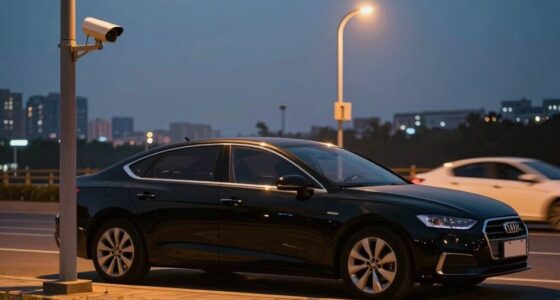
Front cameras are perfect if you want to document road trips, monitor traffic ahead, or improve safety during highway driving. Rear cameras help with parking, reversing, and avoiding obstacles behind you. Interior cameras track passenger activity, driver alertness, and boost security inside the vehicle. Knowing when and where to use each camera type can enhance safety, security, and driving experience. Keep exploring to find out how to optimize your camera setup for your needs.
Key Takeaways
- Front cameras are ideal for incident documentation, navigation assistance, and capturing road conditions ahead.
- Rear cameras primarily assist with parking, reversing, and detecting obstacles behind the vehicle.
- Interior cameras monitor passenger activity, driver alertness, and enhance security inside the vehicle.
- Placement influences footage quality, coverage, and the specific safety or security function of each camera type.
- Combining all three camera types offers comprehensive coverage for safety, security, and dispute prevention.
What Are Front, Rear, and Interior Vehicle Cameras?
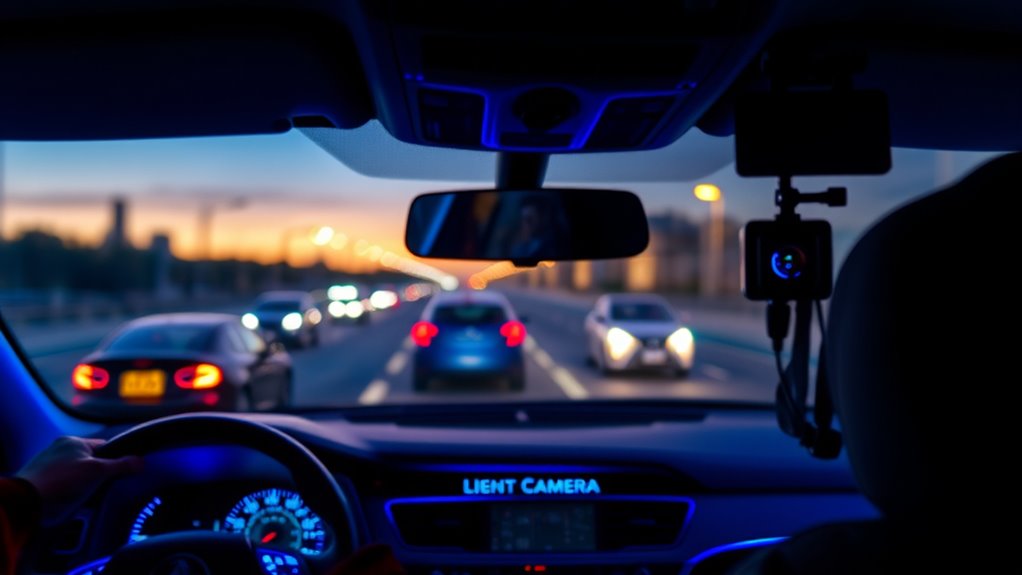
Front, rear, and interior vehicle cameras are essential tools that help drivers see more of their surroundings. They provide valuable footage, like dashcam footage, which can be critical in accidents or disputes. The quality of this footage depends heavily on camera resolution, with higher resolutions capturing clearer images, details, and license plates. Front cameras are typically mounted on the windshield, offering a wide view of the road ahead. Rear cameras, often positioned near the back window or bumper, assist with parking and reversing. Interior cameras monitor passenger activity or serve as security measures. Each camera type plays a key role in enhancing safety, recording incidents, and providing peace of mind while driving. Understanding their functions helps you choose the right setup for your needs, especially considering the importance of camera resolution in capturing sharp, detailed footage. Additionally, advancements in camera technology continue to improve image clarity and reliability in various driving conditions, including filtration and pump protection to ensure consistent operation of recording devices. Incorporating features like low-light performance can further enhance footage quality during nighttime or low-visibility conditions. Moreover, selecting cameras with energy-efficient design can help reduce power consumption and extend device lifespan during extended use.
Which Camera Type Is Best for Your Driving Style?

Choosing the right type of vehicle camera depends on your driving habits and priorities. If you prioritize driver privacy, interior cameras might be your best choice, capturing only necessary angles without invading privacy. Rear cameras suit those who want to monitor parking or backing up hazards, especially if you frequently park in tight spaces. Front cameras are ideal for long-distance driving or highway trips, providing clear footage of road conditions and incidents ahead. Consider ease of camera maintenance too—some cameras require regular cleaning or updates to ensure peak performance. Your driving style influences which camera fits best, but always balance safety benefits with respecting driver privacy. Additionally, understanding auditory processing can help you select cameras with features that minimize distraction and enhance situational awareness, ultimately improving safety and security without unnecessary intrusion or upkeep burdens. Moreover, choosing cameras with effective cleaning methods can reduce maintenance effort and ensure consistent performance over time. Incorporating user-friendly interfaces also plays a crucial role in making camera operation seamless and reducing driver distraction. Staying informed about performance cookies can help you choose systems that optimize the camera’s functionality and user experience. To further enhance your vehicle’s safety, exploring adaptive technology can help tailor camera features to your specific driving environment and needs.
When Should You Use a Front Camera for Safety?

Using a front camera enhances safety when you’re dealing with complex traffic situations or unfamiliar roads. It provides clear evidence in case of accidents, helping prevent insurance disputes and supporting your case. Additionally, it allows you to monitor your driving behavior, encouraging safer habits on the road. A front camera can also serve as a valuable tool for driver awareness, helping you stay focused and alert during drives.]
Road Incident Evidence
Have you ever wondered when a front camera can be most helpful as evidence during a road incident? The answer is often when you need clear documentation of what happened ahead. Dashcam technology captures essential details like license plates, road signs, and driver behavior, making it invaluable during disputes. A front camera equipped with night vision ensures you record incidents even in low-light conditions, providing reliable evidence after dark. This can be critical if another driver claims you caused the collision or if you’re involved in a hit-and-run. Having footage from your front camera allows you to present an objective account of the incident, helping authorities determine fault and protecting you from false claims. In these situations, a front camera becomes your first line of evidence. Whole‑house water filtration systems can help ensure your vehicle and personal environment are free from pollutants that might impair your judgment or health during stressful situations, especially since connected home fitness devices can monitor your overall well-being in real time.
Preventing Insurance Disputes
To prevent insurance disputes, you should activate your front camera whenever you notice potential hazards or risky driving situations. Proper dash cam placement ensures your camera captures the road ahead clearly, providing valuable evidence. Adjust camera angle options to maximize coverage of the traffic scene and minimize blind spots. When you encounter a near-miss, accident, or aggressive driver, recording with your front camera can support your version of events and protect you from false claims. Use these strategies:
- Position the dash cam to capture lane markings and traffic signals
- Adjust camera angle options for ideal road visibility
- Keep the camera powered and recording during critical driving moments
- Understanding heat distribution in your vehicle’s electrical system can help ensure your dash cam remains functional during long drives. Additionally, proper maintenance of the camera and its connections can prevent issues like blind spots or power failures. Regularly inspecting your system can also help identify potential power supply problems before they affect recording quality. Incorporating smart vehicle integrations can further enhance your dash cam’s capabilities through real-time alerts and remote monitoring. Ensuring your vehicle’s electrical system is well-maintained also helps prevent system failures that could compromise your footage.
Activating your front camera at the right times creates a reliable record, helping to resolve insurance disputes quickly and fairly.
Monitoring Driving Behavior
Ever wonder when activating your front camera can enhance safety? Using it to monitor your driving behavior helps catch driver distraction before it causes trouble. If you notice you’re drifting or missing traffic signals, the camera provides real-time feedback, encouraging safer driving habits. Additionally, reviewing footage can reveal early signs of vehicle maintenance issues, like uneven tire wear or brake problems, which might affect driving safety. A front camera also discourages risky behaviors by making you more aware of your actions behind the wheel. By consistently monitoring your driving, you reduce the risk of accidents and improve overall safety. It’s a proactive way to stay alert, minimize driver distraction, and ensure your vehicle remains in top condition.
How Rear Cameras Help With Parking and Reversing?

Rear cameras give you better visibility when reversing, so you can see obstacles you might miss otherwise. They help you judge distances more accurately, making parking safer and easier. With a rear camera, you gain precise guidance to park perfectly every time. Additionally, many modern cameras feature high-resolution imaging to further improve clarity during low-light conditions. Proper installation and understanding of safe installation practices ensure your camera functions reliably and enhances your overall safety. Using simple technology explanations can also help you troubleshoot common issues and maximize your camera’s effectiveness. Incorporating ventilation considerations into the setup can prevent overheating and ensure consistent performance. Understanding field-of-view and imaging‑scale concepts from deep-sky imaging can help you optimize camera placement and angle for better coverage and accuracy.
Enhanced Visibility During Reversing
When reversing your vehicle, rear cameras considerably enhance visibility and safety. They give you a clear view of obstacles behind you, reducing blind spots and preventing accidents. This increased awareness improves parking safety, especially in tight spots. Additionally, many rear cameras feature night vision, allowing you to see clearly in low-light conditions and avoid hazards after dark. This capability guarantees safer reversing at night or in poorly lit areas. To maximize benefits, look for cameras with these features:
- Wide-angle view for better coverage
- Real-time video feed for instant feedback
- Night vision for improved visibility in darkness
Using a rear camera helps you reverse confidently, avoid collisions, and park safely in various environments.
Precise Parking Assistance
Rear cameras substantially enhance your ability to park precisely by providing real-time, clear visuals of your vehicle’s rear surroundings. This helps you judge distances accurately, making reversing safer and more efficient. With a rear camera, you can easily spot obstacles, pedestrians, or other vehicles that might be out of your line of sight, reducing the risk of accidents. However, it’s important to stay alert and avoid driver distraction by relying solely on the camera; always check your mirrors and surroundings. Regular camera maintenance is essential to keep the visuals sharp and clear, preventing dirt or damage from impairing your view. Properly functioning rear cameras make parking smoother and safer, giving you better control in tight spots.
Why Interior Cameras Boost Security and Driver Monitoring?

Interior cameras substantially enhance vehicle security and driver monitoring by providing real-time visual insight into what happens inside the car. They help you detect suspicious activity, monitor driver alertness, and ensure passenger safety. Adding an interior camera can:
- Improve dashboard aesthetics by integrating seamlessly with your vehicle’s interior
- Offer peace of mind without significant camera installation costs
- Enable quick review of incidents or disputes, saving time and effort
With interior cameras, you gain a clear view of driver behavior and passenger interactions, which helps prevent theft and misconduct. They’re a valuable addition that boosts overall security while maintaining a sleek look. Plus, they’re cost-effective and easy to install, making them a practical choice for extensive vehicle protection.
How to Choose the Right Camera Setup for Your Vehicle and Lifestyle?
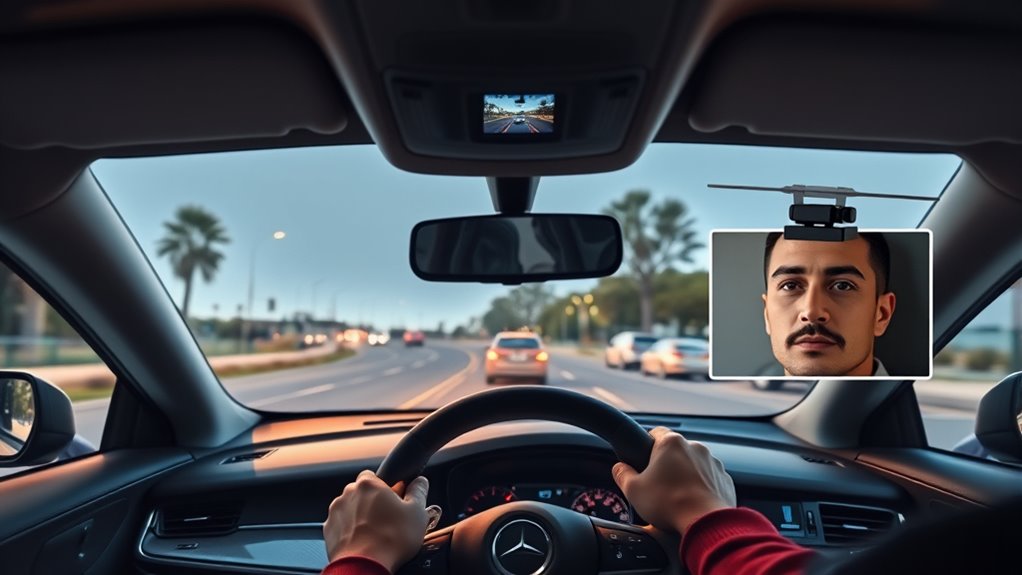
Choosing the right camera setup depends on your vehicle, driving habits, and security priorities. Start by considering vehicle camera placement—decide whether front, rear, interior, or a combination best suits your needs. If you frequently back into busy areas, a rear camera is essential. For enhanced driver monitoring, interior cameras are beneficial, especially for fleet or rideshare vehicles. Think about camera system customization—select features like night vision, wide-angle lenses, or cloud storage based on your environment. Your lifestyle influences these choices; for example, daily commuters may prioritize front and interior cameras, while long-haul drivers might opt for exhaustive coverage. By evaluating your specific needs, you can tailor a vehicle camera setup that offers optimal security and convenience.
Key Factors When Installing Multiple Vehicle Cameras?

Installing multiple vehicle cameras requires careful planning to guarantee they work together effectively and don’t interfere with each other’s performance. You should focus on sensor placement to ensure each camera captures the desired area without blind spots or overlap. Proper sensor placement minimizes interference and maximizes coverage. Additionally, consider power supply options to ensure all cameras receive consistent and reliable power, avoiding disruptions. You might choose dedicated power sources or harness the vehicle’s existing electrical system. Keep these key factors in mind:
- Sensor placement to optimize coverage and prevent blind spots
- Power supply options that ensure consistent operation
- Avoiding interference between cameras to maintain clear footage
Frequently Asked Questions
How Do Camera Angles Affect Visibility and Safety?
Camera angle adjustments directly impact your visibility and safety. By enhancing angles, you ensure clear sightlines of potential hazards, pedestrians, or other vehicles. Properly adjusted camera angles allow you to see more of your surroundings, reducing blind spots. This enhances your reaction time and overall safety. Regularly check and tweak your camera angles to maintain ideal visibility, especially in changing conditions or when installing new equipment, for better safety during every drive.
Can Interior Cameras Record Audio for Security Purposes?
Yes, interior cameras can record audio for security purposes, but you should be aware of privacy concerns. Many models include microphone features to capture interior audio, which can help deter theft or vandalism. However, it is crucial to inform users about audio recording policies, as recording audio inside a vehicle raises privacy issues. Always check local laws and regulations to ensure you’re compliant when recording interior audio with your security camera.
What Are the Legal Considerations for Interior Vehicle Cameras?
You need to take into account privacy concerns and legal compliance when installing interior vehicle cameras. Laws vary by location, so you should make certain you’re not recording audio or video where it’s prohibited or without consent. Familiarize yourself with local regulations regarding surveillance and privacy rights. By doing so, you protect yourself from legal issues and respect others’ privacy, making sure your camera use aligns with applicable laws.
How Do Weather Conditions Impact Camera Performance?
Weather conditions can substantially impact your camera’s performance by affecting lens clarity and durability. Rain, snow, fog, and dust can obscure the lens, reducing image quality and making footage harder to interpret. Make sure your camera is equipped with weatherproof housing that protects against moisture and debris. Regularly clean the lens and verify seals to maintain clarity and functionality, especially during harsh weather, so your footage remains clear and reliable.
Are There Wireless Options for Multiple Camera Setups?
Yes, you can get wireless options for multiple camera setups. They use wireless connectivity to transmit footage, eliminating the need for cables. This makes installation easier and more flexible. Many models also feature camera synchronization, ensuring all cameras work seamlessly together. This setup is perfect for monitoring different angles or areas without clutter, giving you a thorough view while maintaining a clean, organized system.
Conclusion
Choosing the right combination of front, rear, and interior cameras depends on your driving habits and safety priorities. For example, if you often park in tight spaces, a rear camera can be a game-changer. Or, if you want extra security, interior cameras help monitor activity inside your vehicle. Assess your needs, consider your lifestyle, and select a setup that keeps you confident and protected on the road. Your ideal camera system is just a decision away.