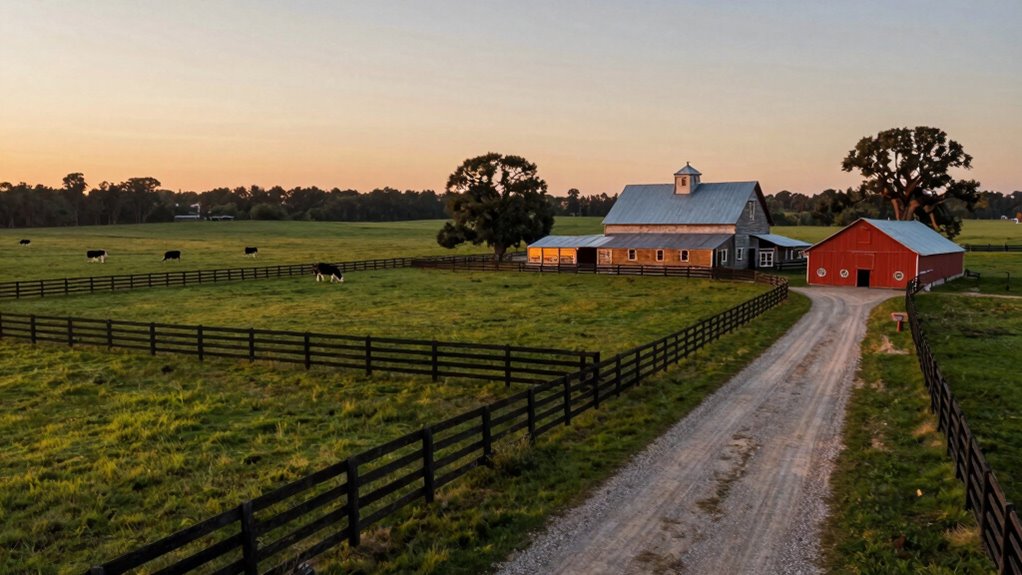
To secure your rural property with longer law enforcement response times, you should focus on proactive measures. Install sturdy fencing, lighting, and security cameras to deter intruders. Use technology like drone surveillance and remote monitoring to keep an eye on your land. Create clear security routines and emergency plans for quick action. Staying informed about local crime trends helps you anticipate threats. Keep exploring strategies to make your property safer even when help takes longer to arrive.
Key Takeaways
- Install perimeter lighting, security cameras, and motion sensors to monitor activity and deter intruders in the absence of immediate law enforcement response.
- Strengthen physical barriers like fencing and secured gates to prevent unauthorized access during extended response times.
- Develop a comprehensive emergency plan with community alerts, contact lists, and signaling methods to facilitate quick action.
- Utilize remote monitoring technology such as drones and security systems for real-time property oversight when law enforcement is delayed.
- Foster neighborhood watch programs and regular communication with local authorities to enhance coordinated security efforts.
Understanding the Unique Challenges of Rural Property Security

Rural properties face distinct security challenges that set them apart from urban settings. With vast rural land, it’s harder to monitor activity and respond quickly to threats. Farming security becomes a priority, but the remote location means law enforcement response times are often longer. Limited lighting and fewer neighbors can make it easier for intruders to operate unnoticed. You might also face challenges like unmarked entrances or hidden access points, making surveillance more complex. Protecting equipment, livestock, and crops requires specialized planning. You need to be proactive in securing fences, gates, and storage areas. Additionally, leveraging innovative cloud solutions can enhance remote monitoring and alert systems, providing faster response capabilities despite longer response times. Employing advanced security technology can further improve your ability to detect and deter threats before they escalate. Implementing remote surveillance options allows for continuous monitoring of large areas, even when immediate law enforcement assistance is delayed. Employing security patrols or mobile surveillance units can also help cover large areas more effectively, especially when response times are longer. Understanding these unique hurdles helps you develop effective strategies tailored to rural land, ensuring you’re better prepared to prevent thefts and trespassing even when help takes longer to arrive. Integrating real-time data can be crucial for early threat detection and swift action.
Assessing Your Rural Property’s Vulnerabilities and Risks

Start by identifying your property’s vulnerabilities, such as weak entry points or isolated structures, that could be exploited. Next, evaluate local crime risks to understand what threats are most common in your area. Finally, consider emergency response times to make certain help can reach you quickly when needed. Incorporating advanced security technologies, such as nanotechnology-based sensors, can further enhance your rural property’s protection and provide early threat detection. Additionally, understanding response time factors can help you develop more effective security strategies tailored to your property’s unique circumstances. Recognizing security planning principles ensures your safety measures are comprehensive and adaptable to changing conditions. Being aware of response time delays is crucial, as longer delays often require more proactive measures to mitigate risks effectively.
Identifying Property Vulnerabilities
To effectively protect your property, you need to identify its vulnerabilities and assess associated risks. Start by inspecting your property fencing; weak or damaged fencing can invite intruders or wildlife. Wildlife deterrents, such as noise devices or barriers, may be necessary if animals threaten or damage structures. Consider entry points like gates and access roads—are they secure? Look for open areas or blind spots that could be exploited. Use this table to visualize vulnerabilities:
| Vulnerability | Potential Risk |
|---|---|
| Damaged property fencing | Unauthorized access, theft |
| Inadequate wildlife deterrents | Wildlife damage, nuisance issues |
| Unsecured entry points | Break-ins or trespassing |
| Blind spots or open areas | Concealed intrusion or theft |
Identifying these areas helps prioritize security improvements. Additionally, integrating Free Floating security features can help monitor large rural properties more effectively.
Evaluating Local Crime Risks
Evaluating the local crime risks around your property is essential for developing an effective security plan. Understanding the specific threats helps you prioritize safety measures. Start by researching crime statistics in your area, noting patterns or frequent incidents. Consider how difficult terrain might hinder patrols or surveillance, making it easier for intruders. Wildlife hazards, like aggressive animals, can also pose risks, especially if they’re attracted to your property’s resources. Additionally, assess whether remote access points or unlit areas create vulnerabilities. You might also want to evaluate your security system options to determine the most effective deterrents and responses. For example, integrating surveillance technology such as cameras can help compensate for longer response times. It’s also beneficial to stay informed about local crime trends through community meetings or online sources. Regularly updating your knowledge about intruder tactics can further improve your security measures. Ultimately, talk to neighbors or local authorities to gather firsthand insights. By pinpointing these risks, you can tailor your security strategies, making your rural property safer despite longer response times.
Assessing Emergency Response Times
Understanding your emergency response times is crucial because rural areas often face longer delays from first responders. To evaluate your property’s vulnerabilities, consider rural property access—are there narrow roads or unmarked paths that could slow down emergency vehicles? Knowing these factors helps you identify potential gaps in response. Additionally, wildlife intrusion can pose risks, especially if animals trigger alarms or damage property while help is delayed. Map out access points and appraise how quickly responders can reach different areas of your land. If response times are lengthy, you’ll need to implement proactive security measures, like installing surveillance systems or securing wildlife entry points. Regularly appraising these factors ensures you’re better prepared to protect your property when minutes matter most. Incorporating water-based solutions, such as barriers or deterrents, can also be effective in managing wildlife intrusion and enhancing security in remote areas. Moreover, understanding response time impacts can help you prioritize security upgrades that are most effective given your specific circumstances. Additionally, considering reliable communication systems can improve coordination and alert response teams more efficiently during emergencies.
Implementing Physical Security Measures for Remote Homes

Securing remote homes requires careful planning and the right physical security measures to deter intruders and protect your property. Start with sturdy rural fencing to create a clear boundary and prevent easy access. Incorporate wildlife deterrents to keep animals away from your home and reduce damage. Consider installing secure locks on doors and windows, and add lighting around the perimeter for visibility. Regularly maintain fences and check for weak spots. Using hands-on troubleshooting guides can help identify vulnerabilities in your security setup before issues arise. Additionally, selecting durable, high-quality fencing materials enhances overall security and longevity. Understanding power needs is crucial when choosing the right security equipment, ensuring your systems operate reliably during emergencies. Properly evaluating your security vulnerabilities can help you address potential issues proactively. Conducting thorough site assessments helps identify specific risks and tailor security measures accordingly. Here are four essential steps:
Secure your remote home with fencing, wildlife deterrents, sturdy locks, and perimeter lighting.
- Install robust rural fencing to mark boundaries and deter trespassers
- Use wildlife deterrents to prevent animal-related issues
- Secure all entry points with high-quality locks
- Add motion-activated lighting for increased visibility at night
Leveraging Technology to Enhance Rural Security
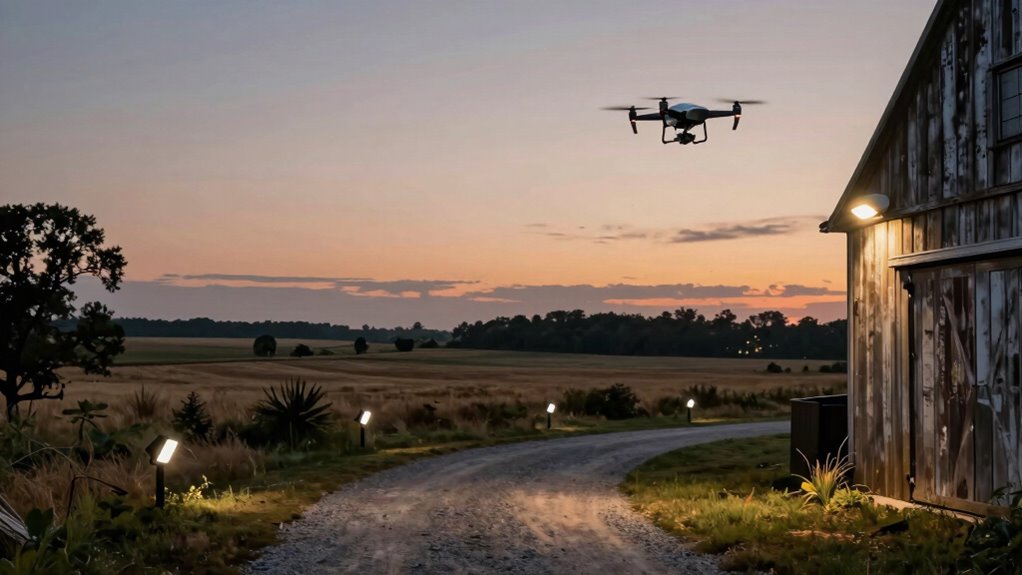
Leveraging technology is essential for enhancing security in rural properties, where response times can be longer and traditional measures may not be enough. Drone surveillance offers real-time aerial views, helping you quickly identify unusual activity or intruders before they reach your home. Remote monitoring systems enable you to keep an eye on your property 24/7 via cameras and sensors, even from miles away. These tools provide instant alerts to your smartphone if suspicious activity is detected, allowing you to act swiftly or notify authorities. Incorporating evidence‑informed guidance ensures you choose the most effective security measures for your rural property. Additionally, understanding how these devices work and their limitations can help prevent false alarms and ensure reliable protection. Smart home automation and local security protocols can further enhance the overall safety of your property. By embracing these technological solutions, you gain greater control and peace of mind, knowing your rural property is protected more effectively.
Creating a Security-Focused Property Layout and Landscape

To improve your rural property’s security, focus on strategic lighting placement that eliminates dark spots and deters intruders. Use natural surveillance techniques by designing your landscape to keep key areas visible and accessible. These approaches work together to create a layout that enhances safety and reduces vulnerabilities.
Strategic Lighting Placement
Strategic lighting placement is essential for creating a security-focused property layout and landscape, as it deters potential intruders and enhances visibility around your home. Proper lighting placement guarantees that dark corners and entry points are well-lit, reducing hiding spots. When planning your landscape, consider strategic illumination to highlight pathways, fences, and entrances. This not only increases safety but also makes it easier for neighbors or security responders to spot suspicious activity.
Here are some tips:
- Install motion-activated lights near entry points.
- Use elevated lighting to illuminate pathways thoroughly.
- Aim lights away from windows to prevent intruders from seeing inside.
- Regularly check and maintain your lighting to ensure consistent coverage.
Natural Surveillance Techniques
Creating a security-focused property layout relies heavily on natural surveillance, which involves designing your landscape so that potential intruders are easily seen. By strategically placing shrubs, trees, and fences, you improve visual monitoring around your property, reducing hiding spots and blind areas. Keep sightlines clear from your home to entry points, driveways, and perimeter fences. Trim overgrown vegetation that could provide cover, and position windows and decks to overlook entry points and pathways. Incorporate open spaces that encourage natural surveillance, making it easier for you and neighbors to observe activity. These measures create a safer environment by increasing visibility and deterring intruders, especially when response times are longer. Effective natural surveillance enhances overall security without relying solely on technology.
Developing a Community Watch and Local Support Network

Building a strong community watch and support network starts with neighbors actively communicating and working together. Your involvement fosters trust and quick information sharing, essential when response times are longer. To get started:
- Organize regular neighborhood meetings to discuss safety concerns and updates.
- Create a communication plan, like a group chat or phone tree, to alert residents promptly.
- Encourage community involvement by assigning watch duties and reporting suspicious activity.
- Share security tips and resources to empower everyone and strengthen neighborhood communication.
Preparing Emergency Response Plans for Longer Response Times
To prepare for longer emergency response times, you need to assess common risks specific to your area and plan accordingly. Establish clear communication strategies so you can stay connected with neighbors and emergency services when it matters most. Make sure you have a list of emergency contacts ready and accessible at all times.
Assess Potential Risks
Because emergency response times tend to be longer in rural areas, it’s essential to identify potential risks that could escalate before help arrives. You should evaluate potential hazards and examine environmental risks that could threaten your property or safety. Start by inspecting the area for natural dangers, such as flooding or falling branches. Consider security vulnerabilities, like unlocked doors or weak fences. Think about fire hazards, including dry brush or overloaded electrical systems. Lastly, analyze access routes to guarantee emergency services can reach you quickly if needed. By systematically assessing these risks, you can develop targeted strategies to mitigate dangers and prepare for delays. Being proactive in identifying hazards ensures you’re better equipped to handle emergencies until professional help arrives.
Develop Communication Strategies
After identifying potential risks on your property, establishing clear communication strategies becomes essential, especially given the longer response times in rural areas. Rural communication methods should be reliable and straightforward, ensuring you can quickly relay critical information during an emergency. Use multiple channels, such as radios, cell phones, or satellite devices, to avoid communication gaps. Incorporate emergency signaling techniques, like visual signals or alarms, to alert others if verbal communication is compromised. Make sure everyone on your property understands these signals and procedures. Regularly test your communication tools to confirm they’re working properly. Having a well-planned communication strategy minimizes delays, helps coordinate safety efforts, and ensures timely response, reducing potential risks during emergencies in remote areas.
Establish Emergency Contacts
Have you established a thorough list of emergency contacts tailored to your rural property? Creating extensive contact lists is essential when response times are longer. Ensure your contact list includes key individuals and agencies, such as local law enforcement, fire department, medical providers, and nearby neighbors. Keep these contacts easily accessible, both digitally and physically. Regularly update your emergency contacts to reflect changes in phone numbers or personnel. Consider including trusted friends or family members who can assist during emergencies. Having reliable contact information ensures quick communication when every second counts. By establishing clear emergency contacts, you’re better prepared to respond effectively and reduce risks during prolonged response times. Your contact lists are a critical part of your overall emergency response plan.
Choosing the Right Security Devices and Systems

Choosing the right security devices and systems is crucial for protecting your rural property effectively. Start by evaluating your specific needs, such as the size of your land and common vulnerabilities. Surveillance systems are essential; cameras with remote access let you monitor your property anytime, even from afar. Opt for security devices like motion-activated lights, alarms, and sturdy locks to deter intruders. Consider integrating a combination of wired and wireless systems for reliability and flexibility. Ensure your equipment is weatherproof and designed for rural environments. Properly chosen security devices provide an added layer of protection, especially when response times are longer. Regularly review your setup to guarantee it remains effective and up-to-date with new technology. The right combination of surveillance systems and security devices is key to safeguarding your rural property.
Maintaining Ongoing Security Practices in Rural Areas
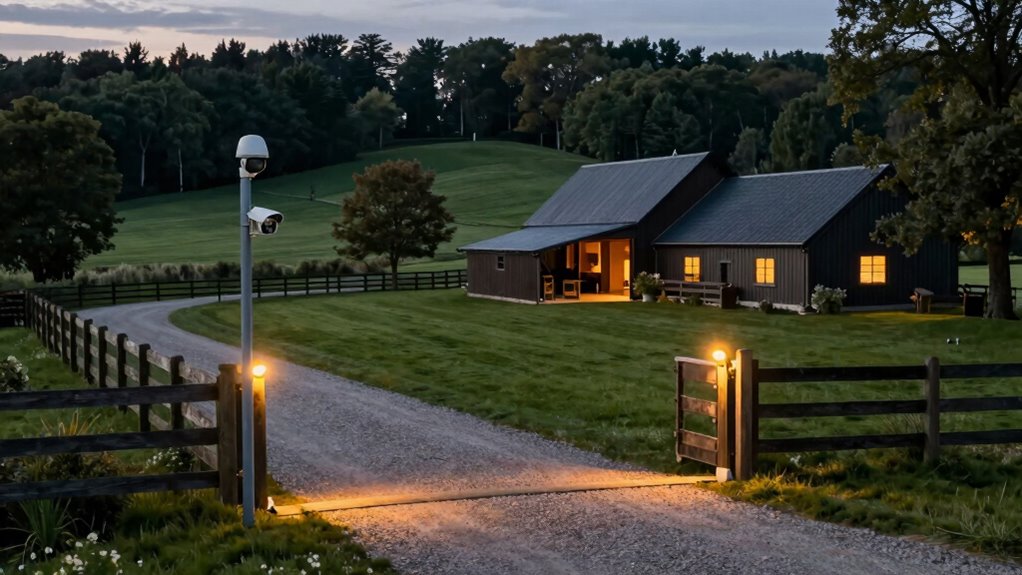
Once you’ve installed the right security devices and systems, maintaining their effectiveness requires consistent effort. Regular rural property maintenance keeps security measures in top shape and prevents wildlife intrusion. Here’s how you can stay on top of it:
- Schedule routine inspections of fences, gates, and cameras to spot and repair damage promptly.
- Trim trees and bushes near security equipment to prevent wildlife from sneaking in or damaging devices.
- Clear debris and overgrowth that could hide intruders or wildlife attempting to breach your property.
- Update and test your alarm systems periodically to ensure they’re functioning correctly.
Staying proactive helps you catch issues early, reduces response times, and keeps your rural property secure despite longer emergency reactions.
How to Stay Informed About Local Crime Trends and Alerts

Staying informed about local crime trends and alerts is essential for maintaining your rural property’s security. Regularly check local crime reports online or through community websites to identify patterns or recent incidents in your area. Sign up for neighborhood alerts via email or mobile apps to receive timely updates on suspicious activity or emergencies. Engage with your local law enforcement agencies, attending community meetings or requesting direct notifications. Joining neighborhood watch groups can also provide firsthand insights and support. Staying alert to these reports and alerts helps you anticipate potential threats and adjust your security measures accordingly. Being proactive ensures you’re better prepared, especially when response times are longer in rural areas. Staying connected with your community is key to safeguarding your property effectively.
Frequently Asked Questions
How Can I Deter Wildlife From Damaging My Property?
To deter wildlife from damaging your property, start by installing effective wildlife deterrents like motion-activated lights and noise devices. Strengthen your property fencing, making sure it’s tall and buried underground to prevent animals from digging under. Keep your yard clean, remove food sources, and regularly inspect for vulnerabilities. These steps will help protect your property even when response times are longer, giving you peace of mind.
What Insurance Options Are Best for Rural Property Security?
You should explore insurance coverage tailored for rural properties, focusing on policy options that protect against wildlife damage, theft, and natural disasters. Look for policies that offer extensive coverage, including liability and property loss. It’s wise to compare providers, ask about add-ons, and make certain response times are considered. This way, you’ll secure the best protection suited for your rural property’s unique risks, giving you peace of mind.
How Do I Train Family or Staff for Emergency Situations?
Think of it like prepping for a battle; you need to be ready. You should run regular family fire drills and practice staff emergency protocols so everyone knows their role. Clearly explain procedures, use simple language, and simulate real scenarios. Encourage questions and feedback to make certain of understanding. Repetition builds confidence, so keep practicing until responses become instinctual. This way, your family and staff stay prepared, even when help takes longer to arrive.
Are There Legal Restrictions on Installing Security Measures in Rural Areas?
You should know that legal restrictions on property modifications vary by location, so check local laws before installing security measures. Some rural areas have restrictions on certain security devices or structures, like surveillance cameras or fencing. To stay compliant, contact your local authorities or a legal expert. This way, you guarantee your security upgrades are lawful, helping you protect your property without risking legal issues or fines.
How Can I Ensure Remote Monitoring Systems Are Reliable?
Think of your remote monitoring system like a vigilant guardian. To guarantee it’s reliable, regularly check remote sensor accuracy and perform system maintenance, like tuning a musical instrument. Keep firmware updated, test alarms frequently, and verify camera feeds. This proactive approach helps catch issues early, so your system stays sharp and dependable, even when response times are longer. Stay vigilant, and your remote monitoring will serve you well.
Conclusion
Remember, rural properties face unique security challenges, with response times often exceeding 30 minutes. By implementing physical barriers, leveraging technology, and staying informed about local crime trends, you can markedly reduce risks. Did you know that rural burglaries have increased by 15% in recent years? Staying proactive and prepared keeps your home safe even when help takes longer to arrive. Take action today to protect your property and peace of mind.