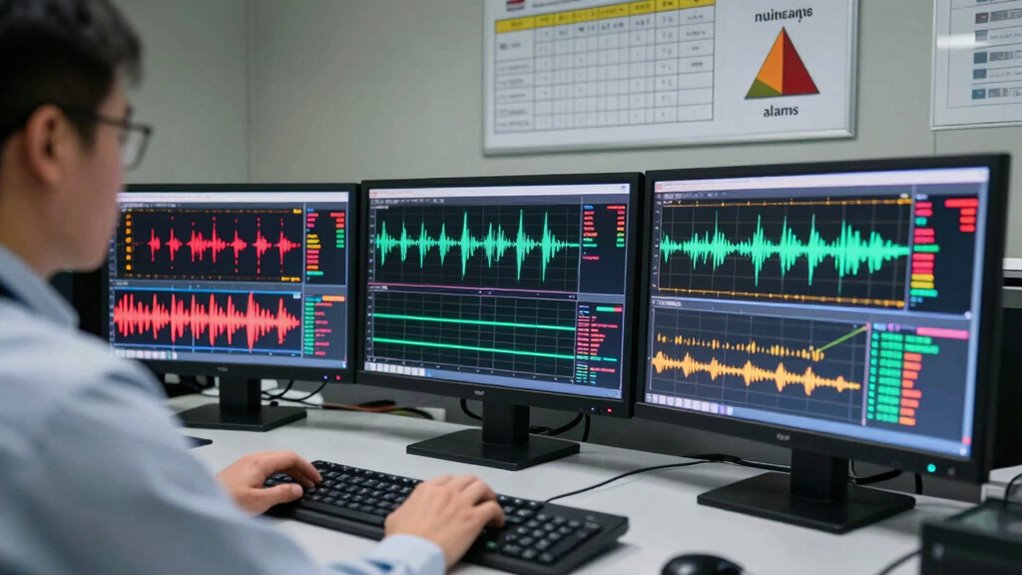

To separate nuisance events from real alarms, start by calibrating your sensors regularly to account for changing environmental conditions, ensuring they detect genuine threats accurately. Use data filtering techniques to analyze incoming data and identify patterns typical of false triggers, like shadows or small animals. Implement advanced filtering methods, such as machine learning, to adapt and improve accuracy over time. If you keep refining these strategies, you’ll better distinguish true threats from nuisances and enhance your security system’s effectiveness.

Get privacy and security gear delivered free with Prime
- Fast, free delivery on millions of items
- Prime Video, Amazon Music and more included
- Member-only deals all year
Key Takeaways
- Implement adaptive data filtering techniques to distinguish between minor disturbances and genuine threats.
- Regularly calibrate sensors to account for environmental changes affecting alarm accuracy.
- Set specific thresholds for movement detection to ignore small, non-threatening motions.
- Use machine learning algorithms to analyze patterns and differentiate nuisance events from real alarms.
- Incorporate contextual analysis, such as time of day or known activity, to reduce false triggers.

In many security systems, distinguishing between real alarm events and nuisance triggers can be challenging, but doing so is vital for effective response and resource management. When your system triggers an alarm, it’s crucial to determine whether it’s a genuine threat or just a false alarm caused by environmental factors or minor disturbances. One of the key steps to achieving this is proper sensor calibration. By regularly calibrating your sensors, you ensure they accurately detect genuine threats without overreacting to harmless movements or changes in conditions. Calibration involves adjusting sensitivity settings so sensors respond appropriately—neither too sensitive, which can cause false alarms, nor too insensitive, which might miss real threats. Proper sensor calibration becomes especially important in environments with fluctuating conditions, such as changing light levels or temperature variations, which can otherwise trigger nuisance alerts.
Alongside calibration, data filtering plays a vital role in separating nuisance events from actual alarms. Data filtering involves analyzing the incoming data from sensors to identify patterns and exclude irrelevant signals. For example, if your motion detector frequently picks up minor shadows or small animals, filtering algorithms can help ignore these triggers, reducing false alarms. Effective data filtering relies on setting specific thresholds and rules—such as ignoring short, inconsequential movements or filtering out signals that don’t match the profile of a real intrusion. Advanced systems might incorporate machine learning algorithms that adapt over time, improving their ability to distinguish between nuisance triggers and genuine security breaches.
Combining sensor calibration with data filtering creates a more intelligent security setup, significantly reducing false alarms and ensuring you respond only to real threats. Regularly reviewing and adjusting calibration settings helps keep sensors aligned with environmental changes, maintaining their accuracy. Meanwhile, implementing sophisticated data filtering techniques ensures that your system’s alerts are relevant and timely. This approach prevents you from wasting valuable resources responding to minor disturbances and helps you focus on genuine security risks. Remember, the goal isn’t just to detect alarms but to optimize your system so it provides reliable, actionable alerts. Incorporate routine calibration checks and leverage data filtering tools to fine-tune your security system’s sensitivity and accuracy.
Products Worth Considering

LEVOIT Vital 100S-P Smart Air Purifier with Washable Pre-Filter

Levoit Core 600S-P Smart Air Purifier for Large Rooms

Sonos Era 100 SL Compact Microphone-Free Speaker, Black
As an affiliate, we earn on qualifying purchases.
Frequently Asked Questions
How Can I Prevent Nuisance Alarms From Happening Frequently?
To prevent frequent nuisance alarms, you should adjust your sensor sensitivity settings to reduce false triggers. Regularly clean sensors to eliminate dust or debris that can cause false alarms. Consider repositioning sensors away from sources of movement or heat. Implementing these changes helps filter out false triggers, minimizing unnecessary alarms. By fine-tuning sensitivity and maintaining sensors, you guarantee your alarm system detects genuine threats without frequent, unwarranted alerts.
What Tools Are Best for Analyzing Alarm Data?
Think of your alarm data as a starry night sky—tools like advanced data visualization software help you spot the brightest stars amid the noise. Using sensors with adjustable sensitivity allows you to fine-tune alerts, reducing false alarms. These tools enable you to analyze patterns effectively, making it easier to distinguish genuine threats from nuisance events. They’re essential for turning complex data into clear, actionable insights.
How Do Weather Conditions Influence Nuisance Alarm Rates?
Weather impact greatly influences nuisance alarm rates because environmental factors like wind, rain, or snow can trigger false alarms. You should monitor weather conditions to identify patterns where alarms coincide with specific weather events. Adjust sensitivity settings during adverse weather, or implement filtering techniques to reduce false positives caused by environmental factors. This proactive approach helps you distinguish genuine threats from nuisance alarms driven by weather impact.
Can Machine Learning Improve Alarm Accuracy?
Machine learning is like a sharp eye that can spot true alarms from false positives. It definitely improves alarm accuracy by analyzing patterns and filtering out noise. With data filtering techniques, machine learning models learn to distinguish between nuisance events and genuine threats. This reduces unnecessary alerts, making systems more reliable. So, yes, implementing machine learning enhances your alarm system’s precision, ensuring you respond only to real and critical incidents.
How Often Should Alarm Systems Be Calibrated?
You should calibrate your alarm system regularly, ideally every six months, to guarantee peak performance. During system calibration techniques, focus on alarm sensor maintenance to prevent false alarms and improve accuracy. Regular calibration helps you identify sensor drift or malfunctions early, maintaining reliability. By staying proactive with calibration, you minimize nuisance events and ensure your alarm system detects genuine threats effectively, keeping your property safe and secure.
Conclusion
By effectively distinguishing nuisance events from genuine alarm patterns, you can markedly improve your system’s accuracy and response time. Did you know that nearly 60% of alarms in some systems are false triggers? Implementing smart filtering techniques not only reduces false alarms but also guarantees you’re alerted only when it truly matters. Stay vigilant, fine-tune your detection methods, and keep your environment secure without the nuisance of unnecessary alerts.