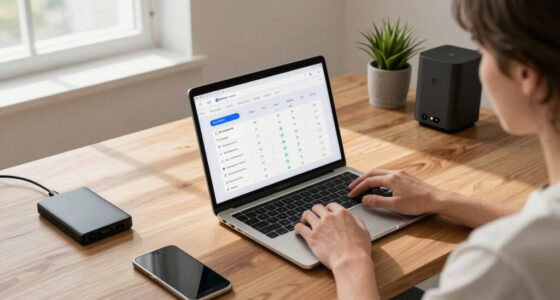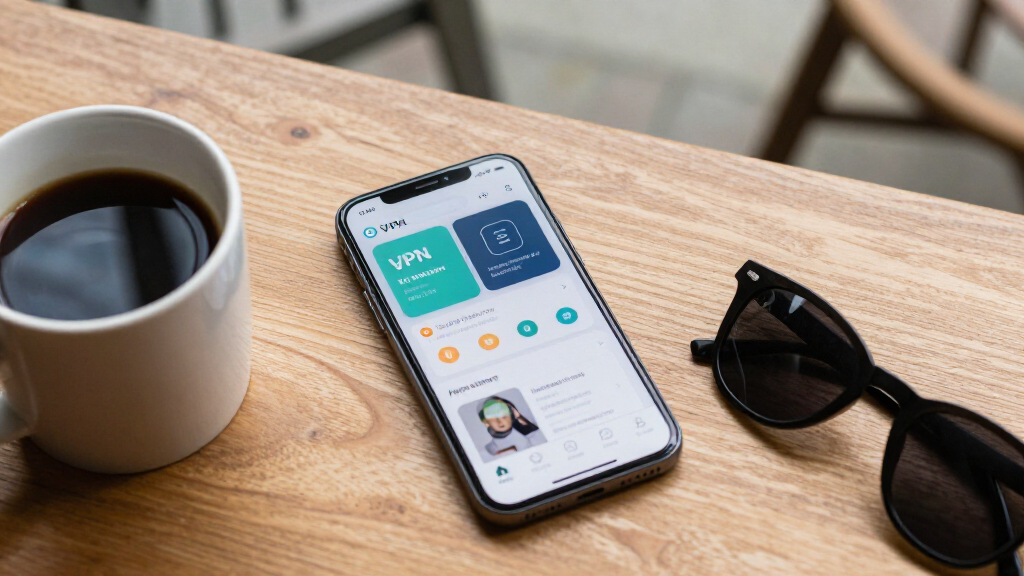

This guide walks through the process of establishing a personal Virtual Private Network (VPN) to secure your internet connection and protect your privacy. It is suitable for users with basic technical skills who want to improve online security and bypass restrictions. Completing this task involves choosing a VPN provider or setting up your own server, configuring the VPN client, and confirming the connection works correctly.

Get privacy and security gear delivered free with Prime
- Fast, free delivery on millions of items
- Prime Video, Amazon Music and more included
- Member-only deals all year
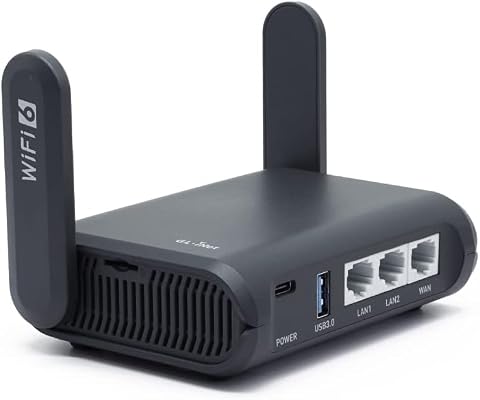
GL.iNet GL-AXT1800 Slate AX Pocket-Sized Wi-Fi 6 Travel Router with VPN
- ✔ Wi-Fi Standard: Wi-Fi 6
- ✔ Dual-Band Speed: 1800 Mbps (600 Mbps 2.4GHz, 1200 Mbps 5GHz)
- ✔ Device Connection Capacity: Up to 120 devices

GL.iNet GL-MT5000 Brume 3 Wired VPN Security Gateway
- ✔ VPN Speed: up to 1100 Mbps
- ✔ Ports: Three 2.5G ports
- ✔ Multi-WAN: Supported

GL.iNet GL-A1300 Pocket VPN Travel Router
- ✔ Wireless Speed: 400Mbps (2.4G) + 867Mbps (5G)
- ✔ CPU: IPQ4018 @717MHz
- ✔ Dimensions: 118 x 84 x 33 mm
Difficulty: Intermediate | Time: 30-60 minutes
What You’ll Need
Tools & Materials:
- Computer or device with internet access
- Smartphone or tablet (optional)
- Reliable internet connection
- Optional: Dedicated server or cloud hosting account if self-hosting
Knowledge:
- Basic understanding of internet privacy and network concepts
- Familiarity with installing software
- Ability to follow technical instructions
If you opt for a commercial VPN service, you will need to create an account. For self-hosted VPNs, you should have server access and some familiarity with server management or command-line interfaces.
GL.iNet GL-AXT1800 Slate AX Pocket-Sized Wi-Fi 6 Travel Router with VPN
<p>The <strong>GL.iNet GL-AXT1800 Slate AX</strong> distinguishes itself as a highly portable Wi-Fi 6 router that combines impressive dual-band speeds up to 1800 Mbps with robust VPN support. Its support for <em>OpenVPN</em> and <em>WireGuard</em> makes it flexible for security-conscious travelers, while its support for MU-MIMO and OFDMA ensures reliable connections for multiple devices. Compared with wired options, this device offers unmatched mobility, but it requires initial setup and configuration, which might be a hurdle for less tech-savvy users. Its reliance on public Wi-Fi hotspots also means potential disconnections or security concerns without proper configuration.</p>
Pros:
- Compact and portable design suitable for travel
- Supports fast Wi-Fi 6 with multiple device connections
- Pre-installed VPN options for secure browsing
- Customizable with OpenWrt OS
Cons:
- Requires initial setup for VPN and toggle functions
- Public Wi-Fi hotspots may disconnect after time limits
- Some features depend on user configuration
Best for: Travelers needing secure, fast Wi-Fi in a compact package
Not ideal for: Users requiring wired network security or minimal setup effort
Bottom line: A versatile travel router that offers robust VPN support and high-speed Wi-Fi in a portable form factor, though setup complexity can be a barrier.
“A versatile travel router that offers robust VPN support and high-speed Wi-Fi in a portable form factor, though setup complexity can be a barrier.”
GL.iNet GL-MT5000 Brume 3 Wired VPN Security Gateway
<p>The <strong>GL.iNet GL-MT5000 Brume 3</strong> is designed for users prioritizing <em>high-speed wired VPN</em> connections. Its hardware-accelerated <em>WireGuard</em> and <em>OpenVPN-DCO</em> support deliver up to 1100 Mbps VPN throughput, making it ideal for remote work, secure home networks, or small office setups. The inclusion of three 2.5G ports and multi-WAN support allows for multi-gigabit, fail-safe connectivity, but it notably lacks built-in Wi-Fi, which limits its role to a wired security device. Its complex setup process may challenge users unfamiliar with network configurations, and it’s not suited for portable, wireless use.</p>
Pros:
- High VPN throughput with hardware acceleration
- Supports multi-gigabit wired connections and multi-WAN
- Advanced security features including VPN obfuscation and DPI
- Expandable via USB storage and plugins with OpenWrt
Cons:
- No built-in Wi-Fi connectivity
- Complex setup requiring technical knowledge
- Limited to wired connections
Best for: Security-conscious users needing high-speed wired VPN in a fixed location
Not ideal for: Travelers or those seeking portable wireless solutions
Bottom line: A premium wired VPN gateway for high-speed, secure network environments, but unsuitable for wireless or portable use.
“A premium wired VPN gateway for high-speed, secure network environments, but unsuitable for wireless or portable use.”
GL.iNet GL-A1300 Pocket VPN Travel Router
<p>The <strong>GL.iNet GL-A1300</strong> is tailored for users who want secure internet access while on the move. Its dual-band Wi-Fi provides speeds up to 400 Mbps on 2.4G and 867 Mbps on 5G, making it suitable for streaming, browsing, and light work. The open-source OpenWrt firmware offers extensive customization, and built-in VPN client and server support enable secure connections anywhere. Its lightweight, pocket-sized design makes it an excellent travel companion, but the default toggle switch often requires manual configuration through the admin panel, and VPN speeds may vary depending on your service provider. It’s less suitable for heavy-duty network setups or users seeking simplified, plug-and-play security.</p>
Pros:
- Supports dual-band Wi-Fi with high speeds
- Open-source firmware allows deep customization
- Built-in VPN client and server support
- Portable and lightweight design
Cons:
- Default toggle switch requires configuration
- VPN speeds depend on service provider
- Limited detailed user interface information
Best for: Travelers needing portable, secure Wi-Fi with VPN and customization options
Not ideal for: Power users seeking high VPN throughput or wired-only setups
Bottom line: A reliable, portable Wi-Fi router for travel and security, with customization options but some setup effort needed for optimal VPN use.
“A reliable, portable Wi-Fi router for travel and security, with customization options but some setup effort needed for optimal VPN use.”
As an Amazon Associate we earn from qualifying purchases.
Before You Start
Decide whether to use an existing commercial VPN provider or set up your own server. Commercial services are easier but involve ongoing costs and trust considerations. Self-hosted VPNs offer more control but require technical skills and maintenance. Ensure your device meets the minimum requirements for VPN software or server hosting. Back up important data before making network configuration changes to prevent data loss or connectivity issues.
Step-by-Step Instructions
Step 1: Choose a VPN method
Select between a commercial VPN service or setting up a personal VPN server. Research providers for privacy policies, speed, and server locations if choosing a commercial option. For self-hosting, decide whether to use software like OpenVPN, WireGuard, or built-in OS features.
Tip:If privacy is a priority, review the VPN provider’s logging policies carefully. For self-hosted options, ensure your server’s operating system is up to date.
Check: You have made an informed choice and understand the differences between commercial and self-hosted options.
Step 2: Sign up for a VPN service or prepare your server
If choosing a commercial VPN, create an account on the provider’s website, select a plan, and complete payment. If self-hosting, set up your server with the chosen VPN software or configure your existing server according to its documentation.
Tip:For commercial VPNs, look for trial periods or money-back guarantees to test service quality before committing.
Check: You have an active account with a VPN provider or a configured server ready for VPN software installation.
Step 3: Download and install VPN client software
Download the VPN client app compatible with your device from the provider’s website or app store. Install the software following the on-screen prompts. For self-hosted, download the VPN client software such as OpenVPN or WireGuard client from their official sources.
Tip:Use official sources to prevent malware risks. Keep the client software updated for security.
Check: The VPN client is installed and appears in your system or device’s application list.
Step 4: Configure VPN connection settings
Open the VPN client software and input the server address, login credentials, and protocol settings as provided by your VPN provider or server configuration. For commercial services, this information is usually auto-filled or provided in your account dashboard. For self-hosted, import configuration files or manually enter server details.
Tip:Double-check the server address and login credentials for typos. Use the recommended protocol (such as WireGuard or OpenVPN) for best security and speed.
Check: The VPN client shows a connected status, and the server details are correctly entered.
Step 5: Connect to the VPN
Click the connect button within your VPN client. Wait for the connection to establish, indicated by a status change or green checkmark. Verify the connection is active by checking the client’s status display.
Tip:If connection fails, verify server address, credentials, and internet connection. Restart the client if necessary.
Check: The VPN client displays a connected status, and your IP address has changed to the VPN server’s IP.
Step 6: Verify your VPN connection
Open a web browser and visit a site like whatismyip.com or iplocation.net to confirm your IP address matches the VPN server location. Test browsing to ensure internet access is working through the VPN.
Tip:If your IP address hasn’t changed, recheck the connection status or restart the VPN client. Ensure no firewall or antivirus software blocks VPN traffic.
Check: The displayed IP address matches your VPN server’s location, confirming the VPN is active and routing traffic properly.
Common Mistakes to Avoid
- Not verifying the VPN connection after setup. — Always check your IP address and connectivity to confirm the VPN is active and routing traffic correctly.
- Using default or weak login credentials. — Create strong, unique passwords for your VPN account and server login to prevent unauthorized access.
- Ignoring software updates. — Regularly update your VPN client and server software to patch security vulnerabilities.
- Misconfiguring server settings. — Follow official documentation carefully when configuring self-hosted VPNs, and verify configuration files before connecting.
Troubleshooting
Problem: Unable to connect to the VPN server.
Solution: Check your internet connection, verify server address and login credentials, and restart the VPN client. Review logs for errors.
Problem: IP address has not changed after connection.
Solution: Ensure the VPN connection is active, and try disconnecting and reconnecting. Confirm no firewall blocks VPN traffic.
Problem: VPN connection drops frequently.
Solution: Check for network stability issues, update VPN client software, and consider changing servers or protocols.
What Success Looks Like
The VPN connection is active, indicated by a connected status in the client, and your IP address shows the VPN server’s location. Internet browsing functions normally with added privacy protection.
Next Steps
Maintain your VPN setup by updating software regularly. Explore additional features like split tunneling or automatic connection scripts. Use your VPN routinely to enhance online privacy and security. For self-hosted setups, review server logs periodically and update security configurations as needed.
Frequently Asked Questions
Can I use a free VPN service for personal use?
Free VPNs may offer limited bandwidth and slower speeds, and often log user activity. For better privacy and performance, a reputable paid VPN service is recommended.
Is it safe to set up my own VPN server?
Yes, if you follow security best practices, keep software updated, and properly configure your server. It provides more control but requires technical knowledge and maintenance.
Will using a VPN slow down my internet connection?
Some slowdown is common due to encryption and server distance. Choosing a nearby server and a high-quality VPN provider can minimize speed loss.
Can I connect multiple devices to a single VPN?
Yes, most VPN providers support multiple simultaneous connections. For self-hosted VPNs, configure client devices accordingly and check server capacity.
Do I need to install VPN software on each device?
Yes, each device requires compatible VPN client software or built-in VPN support for connection. Some providers offer device-specific apps.
Fall Picks
fall essentials
As an affiliate, we earn on qualifying purchases.