
If you have pets, adjusting your device’s sensitivity settings is more important than you might think. High sensitivity can cause unintended taps, false alarms, or sudden notifications that startle and stress your pets. Proper calibration helps keep your devices calm and quiet, reducing unnecessary anxiety. By fine-tuning these settings, you create a safer, more peaceful environment for your furry friends. Keep going to discover simple ways to make your devices more pet-friendly and reduce stress.
Key Takeaways
- Proper sensitivity settings prevent false device triggers caused by pet movements or paw taps.
- Adjusting sensitivity reduces unintentional alarms, minimizing pet stress and anxiety.
- Calibrating touchscreen responsiveness ensures devices respond only to deliberate interactions.
- Lower sensitivity levels help avoid accidental notifications or alerts that disturb pets.
- Regularly testing and fine-tuning sensitivity maintains a pet-friendly environment and device accuracy.
pet-friendly smartphone sensitivity settings
As an affiliate, we earn on qualifying purchases.
As an affiliate, we earn on qualifying purchases.
Why Device Sounds and Lights Can Stress Your Pets
Devices that produce unexpected sounds or flashing lights can easily stress your pets because they often perceive these stimuli as threats or intrusions. Sudden pet noise from alarms, notifications, or device flickering can startle your pet, triggering anxiety or fear. These abrupt changes in their environment may cause them to hide or become agitated. Many pets are sensitive to visual and auditory disturbances, especially if they’re not used to such stimuli. The flickering lights might seem like movement or danger, while loud noises can be overwhelming. Recognizing sensory sensitivities is crucial, as many animals are more perceptive of environmental changes than we realize. It’s important to recognize that what seems trivial to you can be quite disturbing for your pet. Minimizing or controlling these sudden stimuli helps create a calmer environment for your furry friend. Additionally, understanding how contrast ratio affects visual stimuli can help reduce flickering that might unsettle your pet further. Being aware of lighting consistency can also significantly impact your pet’s comfort and reduce stress caused by environmental unpredictability. Moreover, adjusting environmental unpredictability by keeping a consistent setup can further help ease your pet’s stress levels. Maintaining a predictable environment fosters a sense of security and reduces the likelihood of stress-related behaviors.
adjustable touchscreen responsiveness for pets
As an affiliate, we earn on qualifying purchases.
As an affiliate, we earn on qualifying purchases.
How Volume and Notifications Affect Your Pet’s Calm
When the volume of sounds and notifications is too high, your pet can quickly become overwhelmed or stressed. Loud pet noise from devices or alerts can startle your furry friend, making them anxious and uneasy. Additionally, sudden or frequent notifications can disrupt their sense of calm, especially if paired with bright device lighting that catches their eye. These stimuli can lead to restlessness, hiding, or destructive behaviors. Keeping volume levels low and managing notification frequency helps maintain a soothing environment. Dimming device lighting when not in use also minimizes visual distractions. Understanding sensory sensitivities and how different stimuli affect your pet can further help you create a more calming environment. Recognizing environmental stimuli that impact your pet’s stress levels allows you to better tailor their surroundings for comfort. Controlling both sound and visual stimuli can also prevent overstimulation, which is crucial for pets with heightened sensory processing issues. Being aware of environmental triggers allows pet owners to design a more comfortable living space. By controlling both sound and visual stimuli, you help your pet stay calm and comfortable, reducing stress and promoting a peaceful coexistence.
low volume notification devices for pets
As an affiliate, we earn on qualifying purchases.
As an affiliate, we earn on qualifying purchases.
How Bright Screens Can Stress Out Your Pets
Bright screens with flickering lights can upset your pets and make them feel anxious. When screens are too intense, they might trigger stress or discomfort. Adjusting brightness levels helps keep your pets calm and comfortable around your devices. Being mindful of light intensity can prevent unnecessary stress for your furry friends. Additionally, understanding screen flicker rates can further reduce visual discomfort and support your pet’s well-being. Recognizing visual stimuli that cause distress can help you create a more calming environment for your pets. Paying attention to light modulation can also make a significant difference in reducing visual overstimulation, especially since certain dog breeds like Golden Retrievers are more sensitive to environmental changes.
Flickering Lights Distress Pets
Flickering lights from screens can easily upset your pets, causing stress and discomfort. These rapid flashes, often unnoticed, can trigger pet stress by overstimulating their sensitive eyes. To understand this better, consider the table below:
| Screen Type | Flickering Effect | Pet Reaction |
|---|---|---|
| Fluorescent | High flicker rate | Anxiety, avoidance |
| LED | Occasional flicker | Restlessness |
| Old monitors | Constant flickering | Stress, agitation |
| Smartphones | Rapid flashes | Startle response |
| TVs | Flickering scenes | Confusion, unease |
Reducing flickering lights through proper settings helps decrease pet stress. Keeping screens stable prevents unnecessary distress and keeps your furry friends calm. Adjusting display settings can significantly lessen flicker effects and promote a calmer environment for your pets.
Brightness Triggers Anxiety
Excessively bright screens can overwhelm your pets’ sensitive eyes, leading to heightened stress and anxiety. When screen sensitivity isn’t managed properly, your pets may become agitated or frightened by the glare. To prevent this, focus on effective brightness management. Consider these steps:
- Adjust screen brightness to a softer level, reducing harsh light.
- Use automatic brightness settings to adapt to your environment.
- Install screen filters to minimize glare.
- Limit screen exposure during peak brightness hours.
- Regularly check and adjust device settings to prevent prolonged exposure to high brightness levels, especially if your devices are connected to air purifiers that help improve indoor air quality and create a calmer environment. Understanding screen sensitivity and how it affects your pets can further enhance their comfort and safety in your space. Additionally, optimizing ambient lighting can significantly reduce stress for your pets by creating a more soothing environment. Incorporating appropriate lighting conditions can further decrease visual overstimulation and promote relaxation.
flicker-free lighting devices for pets
As an affiliate, we earn on qualifying purchases.
As an affiliate, we earn on qualifying purchases.
Does Touchscreen Responsiveness Cause Pet Anxiety?
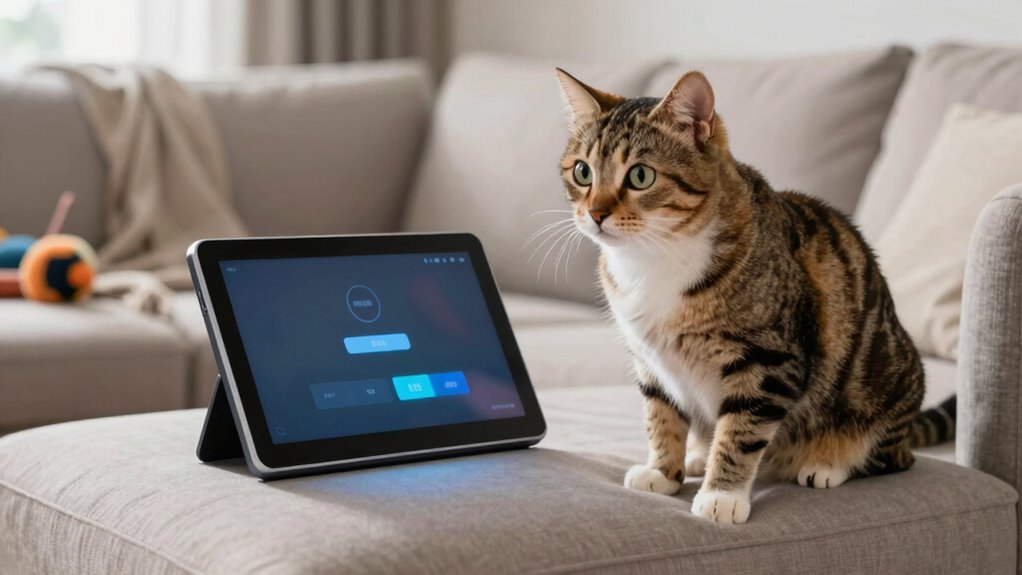
Have you ever wondered if a touchscreen’s responsiveness might stress out your pet? When touchscreen sensitivity is too high, your pet might get easily distracted or frustrated by unintentional taps. This can lead to pet distraction, which may cause discomfort or anxiety if your device reacts unpredictably. Adjusting sensitivity settings can reduce accidental triggers and help your pet feel more comfortable. Properly managing touchscreen sensitivity can also support a calmer environment for your pet. Here’s a quick look at how sensitivity impacts pet reactions:
| Sensitivity Level | Pet Distraction | Anxiety Risk |
|---|---|---|
| Low | Minimal | Very low |
| Moderate | Some | Moderate |
| High | High | High |
Choosing the right setting keeps your pet calmer and prevents unnecessary stress caused by inconsistent responses. Additionally, considering touchscreen calibration and their impact on setup can also influence how your environment is arranged to minimize pet disturbance.
Simple Tips to Make Your Devices Pet-Friendly
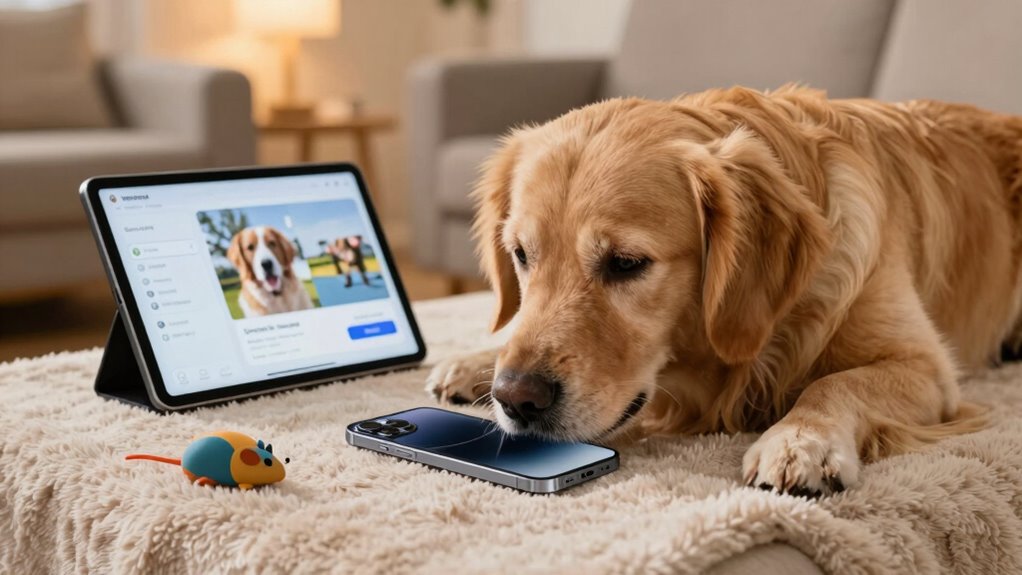
To make your devices more pet-friendly, start by adjusting sensitivity settings so your pet’s movements don’t trigger unwanted responses. Using pet-friendly accessories, like protective covers or mats, can also prevent damage and distractions. Remember to keep devices out of your pet’s reach to avoid accidents and keep them safe. Additionally, being aware of sound sensitivities can help in choosing quieter devices or settings to prevent startling your pets.
Adjust Sensitivity Settings
Adjusting your device’s sensitivity settings is one of the simplest ways to prevent your pets from triggering unwanted actions or alarms. Start by calibrating the screen properly to avoid false touches caused by paw movements. Next, tweak the notification timing so alerts don’t go off unexpectedly when your pet is nearby. You can also lower the sensitivity level to reduce accidental triggers, especially for motion sensors. Finally, test your adjustments regularly to find the right balance between responsiveness and pet-friendliness. Remember, fine-tuning these settings ensures your device responds only to intentional interactions, avoiding unnecessary disturbances. Proper calibration and sensitivity management make your devices more reliable, giving you peace of mind knowing your pets won’t cause false alarms or disruptions.
Use Pet-Friendly Accessories
Wondering how to make your devices safer for curious pets? Using pet-friendly accessories can help. Choose a pet collar with a breakaway design to prevent choking if your pet gets caught on cords or accessories. When grooming tools are involved, opt for cordless or low-noise options to reduce stress and avoid accidental damage. These accessories are designed with pet safety in mind, minimizing the risk of injury or mishaps. Keep cords and small parts attached to grooming tools or accessories out of your pet’s reach, and select items made from non-toxic, pet-safe materials. By using pet-friendly accessories, you create a safer environment for your curious companion while protecting your devices from potential damage. It’s a simple step with big safety benefits.
Keep Devices Out of Reach
Keeping devices out of your pet’s reach is essential for their safety. Pets can accidentally damage gadgets or swallow small parts, risking injury, especially with outdoor device placement. To keep your pets safe:
- Store chargers, batteries, and small devices in locked cabinets or high shelves.
- Avoid leaving pet toys near electronic devices to prevent confusion or damage.
- Use outdoor device placement strategies, like elevated or enclosed areas, to prevent pets from accessing outdoor tech.
- Regularly check cords and wires for chew marks to prevent pet toy safety issues and electrical hazards.
Signs That Your Devices Are Disturbing Your Pets
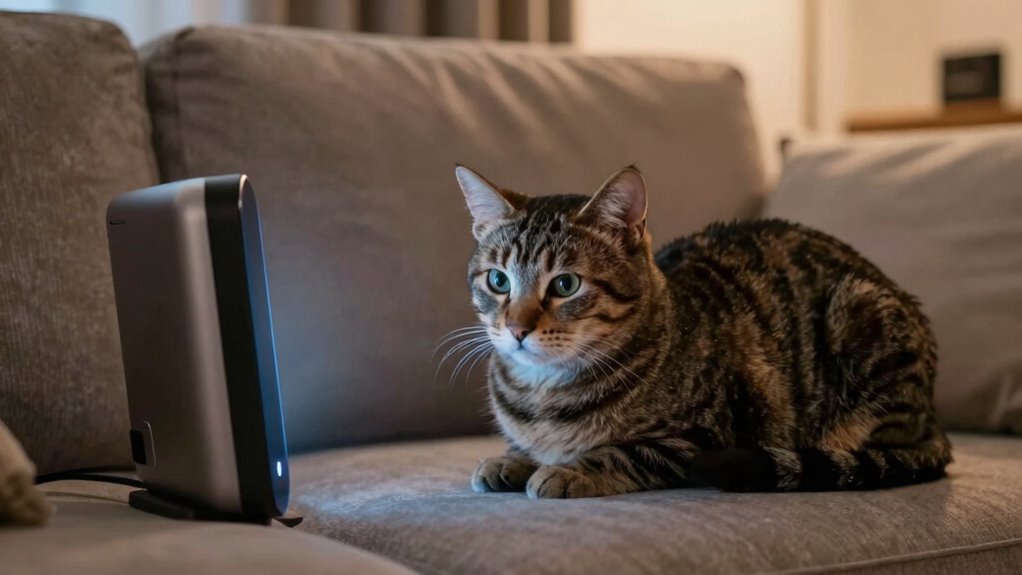
Pets often show signs that their devices’ noise or light levels are bothering them, even if they can’t tell you directly. You might notice your pet becoming more anxious, hiding, or avoiding areas where your devices are active. Excessive pet noise, like loud notifications or alarms, can startle them or cause stress. Similarly, high screen brightness can irritate their sensitive eyes or disrupt their sleep patterns. If your pet seems restless, agitated, or distracted when devices are in use, these are clear signs they’re disturbed. Pay close attention to their behavior, especially during long screen times or when noise levels are high. Recognizing these signs helps you adjust your device settings to create a more pet-friendly environment.
Best Settings to Keep Noise and Light Disruption Low
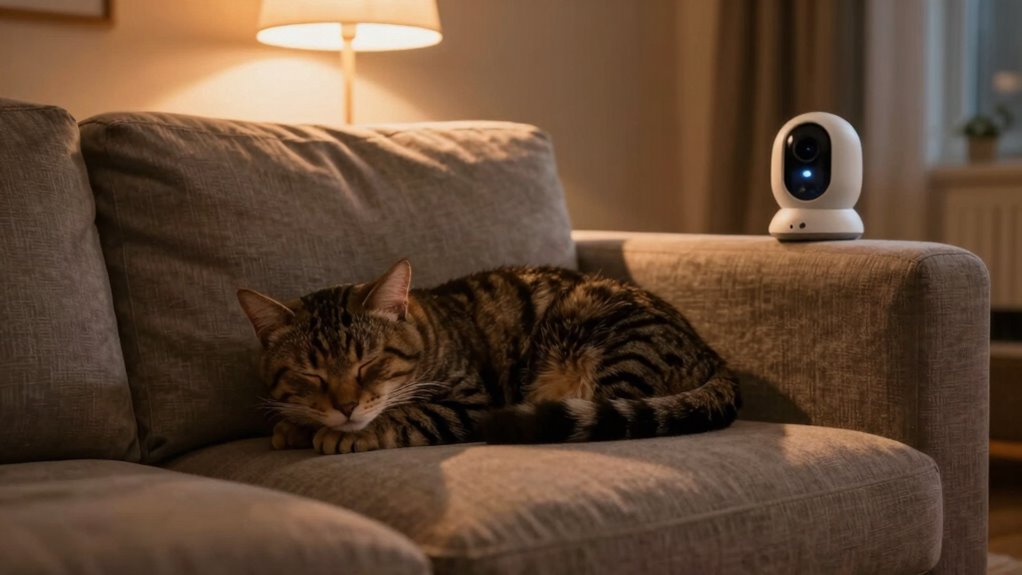
Adjusting your device settings can substantially reduce noise and light disturbances for your pets. To keep disruptions low, focus on minimizing screen glare and optimizing device placement. Here are four tips:
Adjust device settings to minimize pet stress: lower brightness, reduce glare, position devices thoughtfully, and keep noise levels quiet.
- Dim your screen brightness to lessen glare, which can bother sensitive pets.
- Use anti-glare screen protectors or filters to diffuse harsh reflections.
- Position devices at eye level or away from pet resting areas to prevent direct light exposure.
- Keep noise levels down by activating silent or vibrate modes during quiet times.
Create a Pet-Friendly Digital Environment at Home
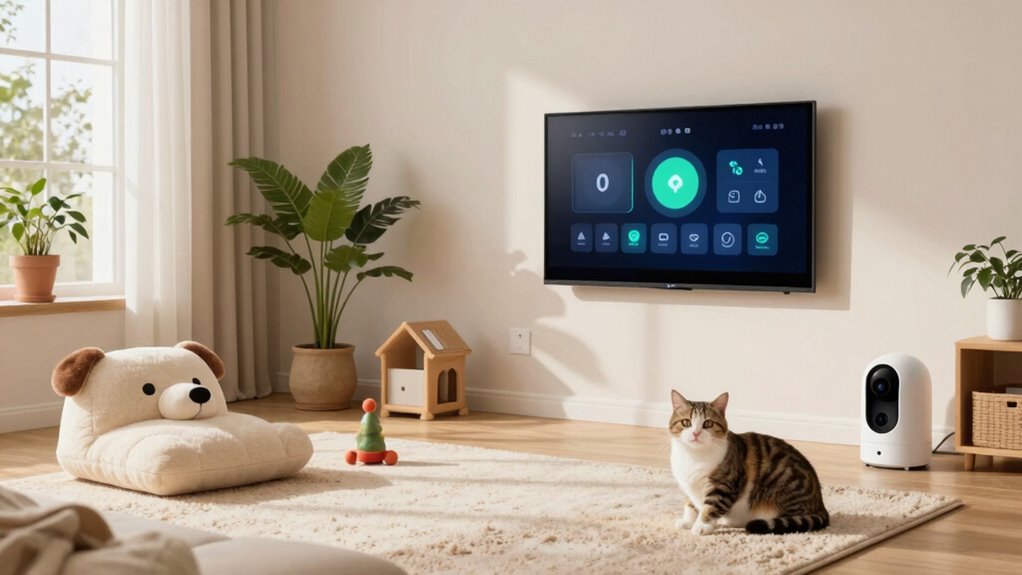
Creating a pet-friendly digital environment involves thoughtful setup and mindful device use to guarantee your pets remain comfortable and stress-free. Start by choosing devices with pet safe screens to prevent accidental harm and reduce glare that can disturb their rest. Establish quiet device zones in areas where your pets spend most of their time, such as their resting spots or play areas. Keep screens at a comfortable height and avoid placing screens near their favorite sleeping spots to minimize exposure to bright lights and sounds. Limit notifications and sounds during quiet hours to prevent sudden disturbances. By creating designated calm zones and choosing pet-safe screens, you help your pets feel secure and relaxed, making your home a more harmonious space for both your digital life and your furry friends.
Common Mistakes Pet Owners Make With Device Settings
One common mistake pet owners make is leaving device notifications and sounds enabled during times when pets are most sensitive, which can cause unnecessary stress or anxiety. This oversight ignores how pet behavior can be affected by loud or sudden noises. To improve your device customization, consider these common errors:
- Not adjusting volume settings during quiet hours.
- Ignoring the impact of flashing alerts on sensitive pets.
- Failing to customize notification types for different pets’ needs.
- Overlooking the importance of silent modes during rest or active periods.
Balancing Device Use and Pet Well-Being

To keep your pet comfortable, you need to adjust sensitivity settings carefully. Pay close attention to how your pet reacts when the device is in use, and make changes as needed. Balancing device use with your pet’s well-being guarantees they stay safe and happy.
Adjust Sensitivity Settings
Adjusting sensitivity settings is crucial to guarantee your device interacts safely and effectively with your pet. Proper adjustments help prevent issues like screen glare, which can startle or stress your pet, and ensure notification alerts aren’t too intrusive. To find the right balance:
- Lower the sensitivity if your device causes frequent false alarms or excessive notifications.
- Adjust the screen brightness to reduce glare and make the display less distracting.
- Test different sensitivity levels to see how your pet reacts and fine-tune accordingly.
- Use a moderate setting that minimizes unwanted alerts but still responds to your pet’s movements effectively.
Monitor Pet Reactions
Monitoring your pet’s reactions is key to maintaining a healthy balance between device use and their well-being. Pay close attention to their pet behavior after activating or adjusting the device to ensure it’s not causing stress or confusion. If your pet shows signs of anxiety, aggression, or avoidance, it’s a clear indicator that the device calibration needs refinement. Regularly observe how your pet responds over time, and don’t hesitate to tweak sensitivity settings as needed. This ongoing monitoring helps you identify what’s effective and what might be overwhelming for your pet. Remember, consistent observation allows you to fine-tune the device, ensuring it supports their comfort without disrupting their natural behavior. Properly calibrated devices promote harmony and safeguard your pet’s well-being.
Frequently Asked Questions
Can Adjusting Device Sensitivity Improve My Pet’s Overall Behavior?
Adjusting device sensitivity can definitely improve your pet’s overall behavior. When you fine-tune the device sensitivity, it reacts more accurately to your pet’s actions, reducing false alerts and promoting better training. By customizing the sensitivity, you help your pet understand boundaries more clearly, which leads to improved pet behavior. Take the time to set it just right, and you’ll see positive changes in how your pet responds and behaves.
Are There Specific Settings to Minimize Pet Stress During Video Calls?
Yes, adjusting your device’s sensitivity settings can help minimize pet anxiety during video calls. Lowering microphone sensitivity reduces sudden loud noises that might stress your pet, while customizing camera controls can prevent abrupt movements. By fine-tuning these settings, you create a calmer environment, making your pet feel more secure and less anxious during calls. This simple device customization shows you’re actively caring for your pet’s well-being in every interaction.
How Do I Know if My Pet Is Reacting Negatively to Device Alerts?
Did you know 70% of pet owners notice behavioral changes when devices are too loud? You’ll see your pet react with signs like tail tucking, hiding, or ear flattening, indicating negative reactions to device alerts. Adjust your device sensitivity to prevent these issues. Keep an eye on their pet behavior, and if they seem distressed, lower the sensitivity to make alerts less intrusive and help maintain their comfort.
Do Different Pet Breeds Respond Differently to Device Light and Sound?
Yes, different pet breeds respond differently to device light and sound because of breed differences and sensory sensitivity. Some breeds, especially those with heightened senses like terriers or hounds, may be more reactive to loud noises and bright lights. Others, like brachycephalic breeds, might be more sensitive to sounds. Adjust your device’s settings to match your pet’s breed-specific sensory sensitivity to keep them comfortable and reduce stress.
Is There a Recommended Daily Device Usage Limit for Pet Owners?
Just like the wise owl knows moderation is key, you should limit your screen time to protect your pets. Experts recommend keeping device usage to about 2 hours daily for pet owners, ensuring you prioritize quality time and reduce overstimulation. Implement device moderation to create a calm environment, preventing anxiety or stress in your furry friends. Remember, balancing your screen time strengthens your bond and keeps your pets happy and healthy.
Conclusion
Did you know that loud device sounds can increase your pet’s stress levels by up to 40%? By adjusting your settings—lowering volume, dimming screens, and reducing notifications—you create a calmer environment for your furry friends. Small changes make a big difference in their well-being. Remember, a pet-friendly digital space isn’t just about convenience; it’s about keeping your pets happy and healthy. Start tweaking your devices today for a more peaceful home.