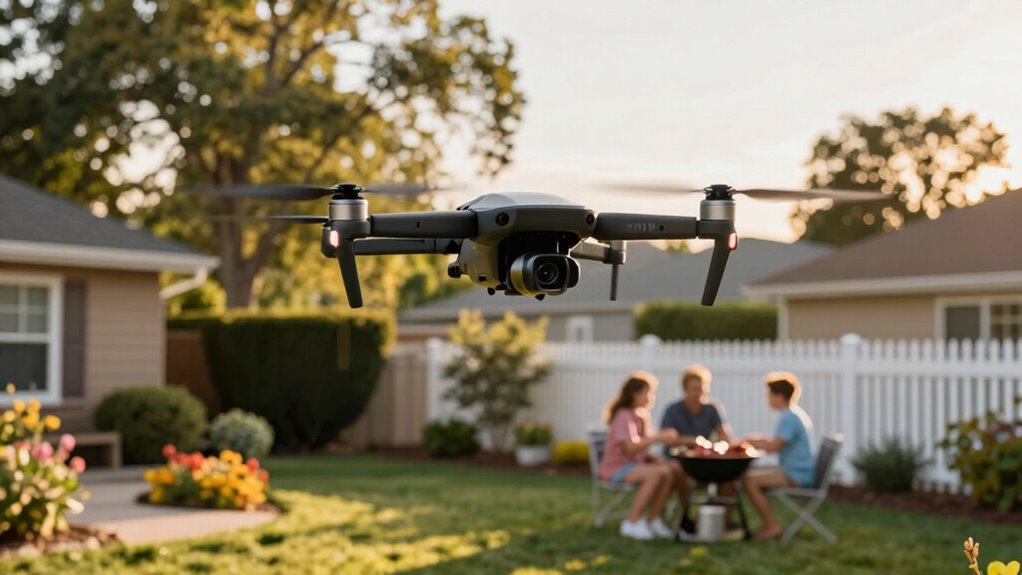
More homeowners are worried about drone privacy because these devices can fly over your property unnoticed and capture images or videos without permission. Drones are making it harder to keep personal space private, especially with limited rules regulating their use. As concerns grow, many seek stronger laws or practical solutions to protect their homes. If you want to understand what steps you can take, there’s more to explore that can help you safeguard your privacy effectively.

Get privacy and security gear delivered free with Prime
- Fast, free delivery on millions of items
- Prime Video, Amazon Music and more included
- Member-only deals all year
Key Takeaways
- Homeowners are increasingly worried about drones invading their private space without consent.
- Evolving regulations vary by region, making enforcement and compliance challenging.
- Unauthorized drone surveillance raises concerns about personal security and privacy rights.
- Community engagement and awareness can help advocate for stronger legal protections.
- Practical measures like fences and privacy screens provide immediate privacy without relying solely on laws.

Have you ever wondered how drones might be invading your privacy? With the rise of drone technology, many homeowners are increasingly concerned about their personal space and the potential for surveillance. Drones can easily fly over private property, capturing images or videos without your knowledge, and this has sparked a wave of questions about how to protect your privacy rights. As a result, discussions around drone regulation and privacy legislation have become more prominent, aiming to set clear boundaries on what drone operators can and cannot do.
Drone regulation is evolving to address these concerns, but the rules vary widely depending on where you live. In some regions, laws specify how high drones can fly, restrict them from flying over private property without permission, and require registration to keep track of drone operators. These regulations are intended to prevent intrusive surveillance and guarantee that drones are used responsibly. However, enforcement can be inconsistent, and many homeowners worry that unregulated drone activity might still infringe on their privacy. This uncertainty fuels the need for stricter privacy legislation that explicitly states what is permissible, including limitations on aerial photography over private land and the use of drones for stalking or harassment.
Privacy legislation plays a vital role in safeguarding your personal space from unwanted intrusion. Many laws now prohibit recording or capturing images of private property without consent, but enforcement is often challenging with drones, given their mobility and ease of access. As a homeowner, you might feel powerless against unauthorized drone surveillance unless local laws explicitly protect against it. That’s why advocacy for stronger privacy legislation is gaining momentum. Many experts argue that existing laws need to be updated to account for drone technology, making sure that individuals can maintain control over their privacy without fear of constant monitoring from the skies. Additionally, understanding drone regulations in your area can help you better navigate your rights and responsibilities as a property owner. Awareness of privacy laws and how they apply to drone activity is essential for homeowners wishing to protect their personal space. Moreover, community engagement can be an effective way to push for stronger legal protections against invasive drone practices.
While some drone owners use their devices responsibly, others may ignore these regulations altogether. This creates a dilemma: how do you defend your privacy when the rules are still catching up with the technology? You might consider installing physical barriers like fences or using privacy screens, but ultimately, clear legislation is what will provide extensive protection. Until then, staying informed about your local drone regulation and privacy legislation helps you understand your rights and what actions you can take if you suspect someone is invading your personal space. As drone technology continues to advance, so will the need for laws that strike a balance between innovation and individual privacy, ensuring that your home remains a private sanctuary rather than an open-air surveillance zone.
Frequently Asked Questions
Can Homeowners Legally Restrict Drone Flights Over Their Property?
You can’t outright prevent drones from flying over your property, but you can take steps to restrict their activity. If a drone causes excessive noise or invades your privacy, you can contact local authorities or report it to the FAA. Respect property boundaries and focus on privacy rights, as pilots generally have the right to fly over open areas. Document drone noise or disturbances to support your case if needed.
What Are the Legal Penalties for Invading Privacy With a Drone?
If you invade someone’s privacy with a drone, you could face serious legal consequences. Privacy invasion laws vary by state, but you might be charged with harassment, invasion of privacy, or even criminal trespass. Penalties often include fines, restraining orders, or jail time. It is crucial to respect others’ privacy rights and avoid flying your drone where it could intrude on someone’s personal space or private life.
How Effective Are Privacy Shields or Barriers Against Drone Surveillance?
Privacy shields are like impenetrable force fields—almost impossible for drones to breach. Their effectiveness depends on proper barrier installation, ensuring no gaps or weak spots. You need to weigh height, material, and surrounding structures to maximize protection. When installed correctly, these shields create a formidable barrier that greatly reduces drone surveillance, making it feel like you’ve sealed your entire property in a protective bubble.
Are There Specific Laws for Commercial Drone Operators and Privacy?
Yes, there are specific privacy legislation laws that govern commercial drone operators. These laws aim to protect your privacy by regulating how drone data is collected, stored, and used. As a commercial operator, you must adhere to these regulations to avoid legal issues. It’s essential to stay updated on privacy legislation, ensuring your drone activities respect individuals’ privacy rights, especially when capturing drone data in populated areas.
What Steps Can I Take if My Privacy Is Violated by a Drone?
Imagine a shield protecting your personal space from the intrusive drone camera. If your privacy is violated, document the incident with photos or videos, noting the date and time. Contact local authorities to report the invasion and request enforcement of privacy zones. Consider installing privacy screens or signage to deter drones. You can also file a complaint with the FAA or local law enforcement to help safeguard your home from future surveillance.
Conclusion
Ultimately, addressing drone privacy concerns demands diligence and direct dialogue. By defining boundaries and deploying defenses, you can protect your property and peace of mind. Stay vigilant, voice your values, and verify your vantage point. When you’re aware and assertive, you’re actively aligning your ambitions with your privacy. Remember, your right to privacy is precious—practice precaution, promote protection, and empower your personal peace of mind.
Fall Picks
fall essentials
As an affiliate, we earn on qualifying purchases.