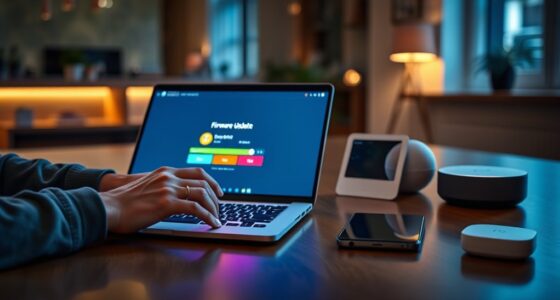
Monitoring your smart-home logs is vital for security, device performance, and accountability. Audit trails give you detailed records of activities, helping you quickly identify irregularities or security breaches. They also assist in troubleshooting device issues and improving energy management. While safeguarding your privacy, strict security measures guarantee your personal data stays protected. Continuing with this focus will reveal more about how maintaining audit trails can keep your smart home safe and efficient.
Key Takeaways
- Audit trails provide detailed records of device activity, essential for security, troubleshooting, and accountability in smart homes.
- Monitoring logs helps detect irregularities, unauthorized access, and security threats promptly.
- Maintaining comprehensive logs enables quick incident resolution and supports warranty and legal claims.
- Proper log management balances data analysis benefits with privacy concerns through encryption and access controls.
- Regular review of audit trails ensures compliance, enhances device performance, and safeguards user privacy.

Monitoring smart-home logs is essential for maintaining security and optimizing device performance. When you keep a close eye on these logs, you gain valuable insights into how your devices are functioning and can quickly identify any irregularities. However, as you analyze this data, it’s important to be aware of potential privacy concerns. Smart-home logs often contain sensitive information about your daily routines, device usage, and even personal habits. If not handled properly, this data can become vulnerable to breaches or unauthorized access. That’s why understanding the importance of privacy and implementing strict security measures is vital when managing your logs.
Data analysis plays a significant role in making smart-home logs useful. By reviewing the logs regularly, you can detect patterns that indicate security threats, such as unauthorized access attempts or unusual device activity. This proactive approach helps prevent potential breaches before they escalate. Additionally, analyzing device performance logs can reveal inefficiencies or malfunctions, allowing you to troubleshoot problems more effectively. For example, if a smart thermostat is frequently resetting or a security camera is losing connection, examining the logs can pinpoint the root cause, saving you time and effort. Monitoring devices like electric bikes and generators can also provide insights into their efficiency and maintenance needs, further enhancing your home’s security and energy management.
Maintaining detailed audit trails through meticulous log monitoring also helps you establish accountability. If an incident occurs—say, an unexpected device activation or security breach—you can trace back through the logs to understand what happened. This not only aids in resolving issues quickly but also provides a record that can be useful for warranty claims or legal purposes. Furthermore, audit trails foster transparency, giving you confidence that your smart home devices are operating as intended and that your data is being managed responsibly.
To maximize the benefits of monitoring smart-home logs, you should implement best practices for data analysis. Regularly review logs for anomalies, but also verify that your data collection is compliant with privacy regulations. Use encryption and secure access controls to safeguard sensitive information, and limit data sharing to trusted parties. Keep in mind that the more detailed your logs are, the more insights you’ll gain, but this also increases the importance of protecting that data from potential misuse. Striking a balance between thorough data analysis and privacy preservation is key to maintaining a secure and efficient smart home environment. Additionally, understanding electric power generation with bike generators can help you incorporate renewable energy solutions into your home, promoting sustainability and energy independence.
Frequently Asked Questions
How Do Audit Trails Enhance Smart-Home Security?
Audit trails enhance your smart-home security by allowing you to track behavior analysis and quickly respond to incidents. When you review logs, you can identify unusual activity, such as unauthorized device access or suspicious movements. This proactive approach helps you detect threats early, making incident response faster and more effective. By maintaining detailed records, you strengthen your overall security, ensuring your smart home remains safe and protected at all times.
What Technologies Are Used to Monitor Smart-Home Logs?
You use technologies like log analysis tools to monitor smart-home logs effectively, helping you identify suspicious activity quickly. Data encryption secures your log data from unauthorized access, ensuring privacy. These tools automatically analyze logs for anomalies and potential threats, giving you real-time insights. By combining log analysis with data encryption, you strengthen your smart-home security, making it harder for intruders to exploit vulnerabilities and ensuring your home stays safe.
Can Audit Trails Prevent Smart-Home Hacking Incidents?
Think of audit trails as your home’s security camera, catching device tampering and unauthorized access. They can indeed help prevent hacking incidents by providing a detailed record of activity, making it easier to spot suspicious behavior early. When you actively monitor logs, you act like Sherlock Holmes, catching intruders before they cause harm. This proactive approach strengthens your smart home’s defenses, reducing the risk of cyber threats and ensuring your peace of mind.
How Often Should Smart-Home Logs Be Reviewed?
You should review your smart-home logs daily to guarantee security and spot any suspicious activity early. Set up automated alerts for unusual actions, so you’re notified immediately when something’s off. Regular log review frequency helps you catch potential threats quickly, minimizing risks. Combining consistent manual checks with automated alerts creates a strong defense, keeping your home safe and secure from hacking attempts or unauthorized access.
Are There Privacy Concerns With Detailed Smart-Home Logs?
Yes, there are privacy implications with detailed smart-home logs. You might unintentionally expose sensitive information about your routines or habits. To protect yourself, guarantee logs are anonymized through data anonymization techniques, which hide personal details. Regularly reviewing privacy settings and limiting data sharing can also help minimize risks. Being aware of these privacy concerns allows you to enjoy smart-home benefits without compromising your personal security.
Conclusion
By keeping a close eye on your smart-home logs, you’re like a vigilant captain steering through a sea of data. Audit trails act as your lighthouse, illuminating any suspicious activity before it becomes stormy waters. Don’t let unseen breaches sneak past you—regular monitoring turns your home into a fortress, not a soft target. Stay attentive, stay secure, and remember: in the world of smart homes, logs are your best allies guiding you safely home.